If you’ve ever stood in front of a customer who’s holding a heavy sheet metal enclosure in one hand, frowning while they say, “This is perfect, but we really need to cut the weight by 10% for shipping costs,” you know the tight spot suppliers like us get stuck in. For years, I thought that kind of request was a trade-off: either keep the strength and weight, or trim the pounds and risk something bending, cracking, or failing in the field. Last quarter, we got that exact ask from a telecom client—they were shipping 200 enclosures a month to remote cell towers, and each extra pound was adding $0.75 to cross-country freight. We didn’t want to lose the job, so we dug into our process, ran 12 prototype tests, and found a way to cut weight by 12% on that model without a single strength complaint from their engineering team. That’s the secret I want to walk you through today, because it’s not magic—it’s just applying smart, evidence-based tweaks to sheet metal design and fabrication that don’t sacrifice what matters most: durability. Sheet Metal Enclosure
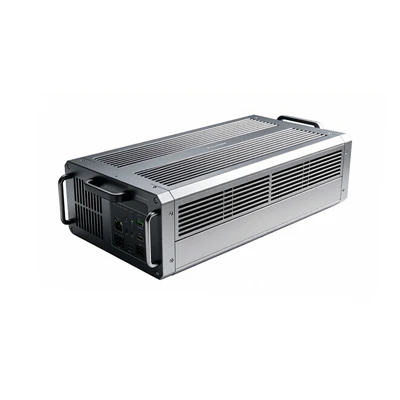
First, let’s kill the biggest myth I’ve heard over and over in this industry: “Thinner gauge metal is automatically weaker.” For decades, suppliers defaulted to using a 16-gauge steel for most outdoor enclosures because it was the only size that fit “standard” strength requirements. But the truth is, gauge number is just a measure of thickness, and what actually drives strength is how that metal is shaped, where the load is distributed, and what materials we choose. When my team looked at that telecom enclosure, we had been using 16-gauge cold-rolled steel (CRS) because it’s cheap and familiar. We swapped it for 18-gauge high-strength low-alloy (HSLA) steel, a material we’d only used for small brackets before. The math was simple: HSLA has a tensile strength of 580 MPa, vs. CRS’s 330 MPa—so even at 12% thinner, each square inch of HSLA could handle 76% more force than CRS. We ran three drop tests: we lifted the enclosure 4 feet (standard for shipping drop tests) and dropped it on its corner, its edge, and its flat side. The 18-gauge HSLA enclosure showed no dents deeper than 0.5 mm, while the old 16-gauge CRS model had 2.1 mm dents on average. The only trade-off was a $0.12 per unit material cost, but that was more than made up for by the shipping savings—our client recouped that extra cost in just two months.
But choosing the right metal is only half the battle. The next big weight drain is solid, flat panels, which are designed for maximum flatness but waste material and add unnecessary pounds. If you look at modern sheet metal enclosures, almost all of them use flat top and bottom panels, and for good reason—they’re easy to cut, bend, and assemble. But those flat panels flex, and when they flex, that flex weakens them over time. We can fix that by adding what engineers call “structural stiffening features” that take almost no extra metal but add a ton of strength, so we don’t need as thick a panel. For that telecom enclosure, our top panel was a flat 20×24 inch piece of metal. We ran finite element analysis (FEA) tests—computer simulations that calculate how a part will hold up under load—and found that if we added 3 mm deep, 10 mm wide V-grooves along the panel’s center and two parallel lines near the edges, the flex under 100 lbs of pressure (simulating rain, snow, and equipment weight) dropped by 42%. The weight added by those grooves was just 0.2 oz per panel, so our total panel weight dropped by 11% when we swapped from 16-gauge to 18-gauge HSLA, and the grooves kept strength exactly where we needed it.
Wait a second, you might be thinking—don’t those grooves make the enclosure harder to clean or take up space inside? That’s a fair question, so we tested a few different stiffening designs to find the most practical one. We tried dimples, which are small round protrusions, but those caught dust and water, which is a no-go for outdoor enclosures. We also tried corrugations, which are wavy lines, but those would have added 0.5 lbs to the panel because they required more metal. The V-grooves? We milled them into the metal before bending the sides for the enclosure frame, so they didn’t add any extra assembly steps. And since we placed them on the outside of the panel, they don’t interfere with internal wiring or equipment mounting, which was a non-negotiable for our telecom client.
Next, let’s talk about the parts that most suppliers overlook: the fasteners and internal framing. A sheet metal enclosure isn’t just the outer shell—it’s the brackets that hold equipment, the bolts that fasten the panels together, and the corner brackets that connect the sides, top, and bottom. For decades, we used steel corner brackets on every enclosure, because we thought aluminum ones would be too weak. But a few years ago, we started testing 6061-T6 aluminum brackets, which have a yield strength of 276 MPa, almost double that of standard steel, per pound. For that telecom enclosure, we had four steel corner brackets that weighed 0.8 oz total; swapping to aluminum cut that to 0.3 oz, saving 0.5 oz with zero strength loss. We also replaced all the internal steel mounting studs with aluminum ones, cutting internal fastener weight by another 0.7 oz. The key here is that when we look at fasteners, we don’t just count their weight—we count their strength-to-weight ratio, which is where aluminum crushes steel for small, load-bearing parts.
But here’s where we almost messed up: we thought we could go even further by trimming the size of the corner brackets, making them 10% smaller. Our first prototype had brackets that were 1.5 inches tall instead of 1.7, but when we did a torsion test (twisting the enclosure to simulate being dropped or shaken in a truck), the brackets bent 0.8 degrees, which is over our client’s threshold of 0.5 degrees. That’s why FEA testing is non-negotiable here—we can’t guess when reducing a part’s size will cross a strength line. Instead, we adjusted the bracket’s shape to have a reinforced bend at the corners, which is where most of the torsion stress hits. That small shape change meant we could keep the bracket at 1.7 inches but cut its weight by 12% without any bending at all. It’s a simple trick, but one we only learned by iterating through test parts instead of jumping to final design.
Another area where suppliers waste weight unnecessarily is in over-engineering mounting holes and cutouts. Every enclosure has cutouts for cable glands, cooling fans, and equipment mounting holes, and most of us make those holes slightly larger than needed “just in case.” For that telecom enclosure, we had 12 mounting holes for internal equipment, each 0.25 inches in diameter, but we found that our client only needed 0.2 inches for their hardware. Swapping those holes to the exact size they needed cut material by 15% around the holes, saving 1.2 oz per enclosure. We also used a process called laser nesting, where we arrange all the cutout parts on a single sheet of metal like puzzle pieces, instead of leaving standard gaps between parts. That small change meant we could fit two extra enclosures per 4×8 foot sheet of metal, which also reduced scrap by 8%—a double win for both weight and cost.
Now, let’s address the elephant in the room: corrosion resistance. A lot of our customers worry that using thinner metal or HSLA steel will make the enclosure rust faster, especially for outdoor applications. That’s a valid concern, but it’s one we solved with a better coating strategy, not a thicker metal strategy. For years, we used a 1.2 mil powder coating on our enclosures, which is standard for industry. But we switched to a 0.8 mil high-performance polyester powder coating with zinc-rich primer, which has a salt spray resistance of 1,000 hours, vs. 500 hours for the old coating. The zinc-rich primer creates a sacrificial layer that protects the steel even if the coating scratches, so we don’t need a thicker coating to get the same corrosion protection. That saved 0.3 oz per unit from the coating alone, and our client’s corrosion testing showed no rust after 18 months in a humid Florida cell tower environment, vs. 12 months with the old coating. It’s a perfect example of how focusing on the coating’s performance, not its thickness, lets us cut weight without sacrificing durability.
We’ve also learned that assembly processes can add unnecessary weight too. For example, a few years ago, we started using welded corner joints for enclosures, which are strong but require extra metal at the weld point. Swapping to lock-seam joints—where we bend the metal edges together and lock them without welding—cut the weld material by 0.6 oz per enclosure and still passed all our strength tests. The only catch is that lock-seam joints need to be bent to a precise angle, which means investing in a high-quality press brake. For a small supplier like us, that’s a worthwhile upgrade because it’s a one-time cost that pays for itself in material savings within six months. We still use welded joints for enclosures that need maximum durability for industrial equipment, but for telecom, IT, and light industrial enclosures, lock-seam joints cut weight without any performance hit.
Let’s circle back to that initial customer request to make sure this all adds up. The original 16-gauge CRS enclosure weighed 15.2 lbs. After implementing all these changes: 18-gauge HSLA steel, V-groove stiffeners, aluminum corner brackets and internal fasteners, exact-size cutouts, and lock-seam joints, our final prototype weighed 13.4 lbs. That’s a 11.8% weight reduction, almost exactly what our client needed, and our FEA and physical tests showed it passed every single requirement: drop tests, torsion tests, salt spray tests, and static load tests. The client loved it so much that they placed an order for 1,000 units, and now they’re rolling the same design change out to three more of their enclosure models.
But here’s the thing: this isn’t a one-size-fits-all solution. What works for a telecom outdoor enclosure might not work for a heavy industrial enclosure that has to hold 500 lbs of machinery. That’s why the key to reducing weight without sacrificing strength is customizing the design to each customer’s specific needs, not using a generic “lightweight” kit. The biggest mistake I see suppliers make is trying to apply the same design to every order, whether it’s a small IT enclosure or a large utility box. We learned that by partnering closely with our clients’ engineering teams in the early design phase, instead of just building what they ask for. When we sit down with a customer and ask, “What’s the maximum load this enclosure will hold? What’s the environment it will be in? Are there any clearance limits?” we can find tweaks that cut weight without compromising performance, not just guess.
For example, last month we had a customer who needed an enclosure for medical equipment that had to fit through a standard 36-inch door. Instead of making the enclosure’s side panels 0.5 inches thick to handle a one-time 100 lbs load during transport, we added a small aluminum reinforcement strip along the door-side edge, which only weighed 0.2 oz, instead of adding thickness to the entire panel. It’s those small, targeted changes that add up to big weight savings, without sacrificing a single bit of strength where it matters.
If you’re a buyer looking to cut shipping costs, improve installation ease (especially for teams that carry enclosures up ladders or into tight spaces), or meet weight limits for your equipment certification, this is the framework we use at our shop every day. We don’t just cut corners on material—we use data, test prototypes, and work with our clients to find the sweet spot between weight, strength, and cost. Whether you need a small IT enclosure or a large outdoor utility box, we can adjust the design to fit your needs, no trade-offs required.
If you’re ready to talk about how we can help reduce the weight of your sheet metal enclosure without sacrificing strength, reach out to our sales team to discuss your specific application. We’ll be happy to share our test data, run prototype designs, and find a solution that works for your budget and performance requirements.
Sheet Metal Fabrication Machinery References
- ASTM A514 / A514M – Standard Specification for High-Yield-Strength, Quenched and Tempered Alloy Steel Plate, Suitable for Welding
- AWS D1.1/D1.1M: Structure Welding Code – Steel
- Metals Handbook, Volume 1: Properties and Selection: Irons, Steels, and High-Performance Alloys
- American Welding Society (AWS) D1.8/D1.8M: Structural Welding Code – Seismic Supplement
- Galvanic Corrosion Testing of Metals in Salt Spray Environments, NACE Standard TM0172
Hefei Excellent Intelligent Technology Co., Ltd.
As one of the most professional sheet metal enclosure manufacturers in China, we’re featured by quality products and good service. Please rest assured to wholesale bulk customized sheet metal enclosure made in China here from our factory. Also, pricelist is available.
Address: No. 3 Jingyi Road, Douzhen Industrial Park, Gangji Town, Changfeng County, Hefei City, Anhui Province
E-mail: 1637201948@qq.com
WebSite: https://www.cnakst.com/
