Hey there — if you’ve ever had a custom part made that fit exactly like it was molded just for your project, you probably bumped into precision machining for custom parts. I’ve been in this game as a precision machining supplier for a hot minute, so let me break this down like I would over a coffee, no boring jargon dumps. Precision Machining
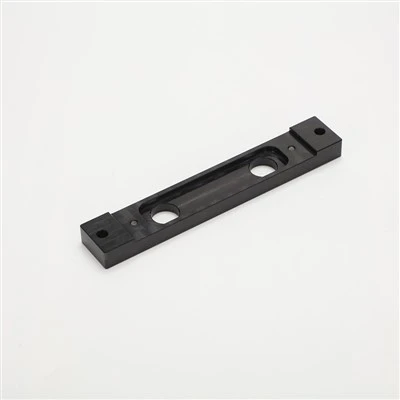
First off, let’s get the basics right: precision machining isn’t your run-of-the-mill machine shop where you crank out 1000 identical bolts for the hardware store. It’s all about making parts that match a custom design, with super tight tolerances — like, we’re talking thousandths of an inch here. Like, if you needed a part that slots perfectly into a tiny sensor, it can’t be off by even the width of a human hair. That’s the “precision” part, and the “custom” part means it’s built specifically for your project, not a mass-produced catalog item. A lot of folks mix this up with 3D printing, and while 3D printing has its place, precision machining has this raw, durable edge that makes it go-to for aerospace, medical devices, automotive, and even niche stuff like custom camera parts or industrial robotics components.
Let’s talk about how this actually works, no textbook steps here. First, you (the customer) send over your design files — usually CAD files, the blueprints of the part. I’ve had clients come to me with a napkin sketch that turned into a life-saving medical component, and that’s actually one of the coolest parts of this business. Then, our team takes that design and loads it into CNC (Computer Numerical Control) machines — these aren’t your old manual lathes that a guy has to lean over and tweak every 2 seconds. CNC machines run code that carves, drills, mills, or turns material with insane consistency. We work with all kinds of materials too: aluminum, stainless steel, titanium, brass, even plastics like Delrin or PEEK (that’s the high-grade plastic used in medical implants, by the way). The material choice depends on what the part needs to do — if it’s for a jet engine, titanium is non-negotiable; if it’s a custom gadget casing, aluminum is lightweight and easy to machine.
Wait, let’s get into those tolerances a bit more because that’s where precision machining earns its name. A typical mass-produced bolt might have a tolerance of ±0.005 inches, meaning it can be a little smaller or larger and still work. For custom precision parts, we’re looking at ±0.001 inches, sometimes even ±0.0005 inches for super critical parts. To put that in perspective, a grain of sand is about 0.002 inches wide. So we’re talking about holding parts to a standard smaller than half the width of a grain of sand. That level of accuracy doesn’t happen by accident, either. We use measurement tools like coordinate measuring machines (CMMs) that scan the entire part and compare it to the design, plus micrometers and calipers that can measure down to a millionth of an inch. Mistakes here aren’t just costly — they can be dangerous, especially in medical or aerospace. A part that’s even a hair off might make a sensor fail, or a surgical tool not work right, so we take quality control super seriously.
Now, let’s clear up the difference between custom precision machining and other manufacturing methods, because I get asked this all the time. 3D printing (additive manufacturing) is great for prototypes and complex, organic shapes, but for parts that need to be strong, consistent, and ready for real-world use (like holding up under heat, pressure, or repeated movement), precision machining (subtractive manufacturing — we’re cutting away material to make the part) is usually better. Injection molding is another one that people mix up, but injection molding requires custom molds that can cost thousands of dollars upfront, so if you only need 10 or 20 parts, machining is way more cost-effective. For low-to-medium volume runs, custom machining is the way to go, while molding is better for mass production. That’s one of the big reasons I love this work — we can handle one-off prototype parts for a startup, or small batches for a local aerospace company, no minimum order hoops to jump through (most of the time, at least).
Let me share a quick example to make this real. A while back, a small robotics startup came to me with a custom joint part for their new warehouse robot. They tried 3D printing it first, but the plastic part wore out too fast after a few hundred moves, and it was off by a tiny amount so the joint would stick. They needed a part that was strong, precise, and could handle thousands of cycles without failing. We machined it from 6061 aluminum, held to a tolerance of ±0.0008 inches, and added a surface finish so it slid smoothly. The client loved it — that one part helped their robot pass its safety tests, and they’ve been coming back to us for every custom component ever since. Stories like that are why I do this, not just cutting metal all day.
Another thing that makes custom precision machining different is the collaborative process. Unlike mass production, where you send a design and get a box of parts back, working with a precision machining supplier means you’re part of the process. A lot of times, clients will come to us with a goal, not a full design. Like, “I need a part that fits this sensor and can withstand 200 degrees heat.” Our engineering team will help tweak the design to make it machinable, suggest the best material, and even adjust the design to cut costs without sacrificing quality. I can’t tell you how many times we’ve saved a client from a design that would’ve been way too expensive to machine — small tweaks, like rounding a sharp corner or changing a hole size, can make a huge difference in time and cost. That’s the value we bring, not just a machine that cuts metal.
Now, let’s talk about the practical side for the customer. When you need custom precision parts, what should you expect? First, turnaround times — prototypes can be done in a few days, while larger batches might take a week or two, depending on complexity. Cost depends on a few factors: material (titanium is way pricier than aluminum), complexity (a part with 10 holes and curved edges will take longer to machine than a simple block), and tolerance (super tight tolerances mean more time measuring and adjusting, so higher cost). But the biggest thing is that you get exactly what you need, no compromises. No “close enough” parts that cause headaches down the line.
Wait, let’s address a common myth: some people think precision machining is only for huge companies with big budgets. Nope. I’ve worked with startups, hobbyists, small manufacturing shops, even artists who need custom metal or plastic parts for their sculptures. If you need a custom part that’s accurate and durable, we can work with you, no matter the size of your project. That’s one of the things I love most about being a small-batch precision machining supplier — we get to help people turn their ideas into real, working parts, whether that’s a prototype for a new medical device or a custom component for a vintage car restoration.
So why does precision machining matter in the grand scheme of things? Every product we use relies on custom parts, even if you don’t see them. The phone you hold has tiny precision machined parts inside it. The MRI machine at your doctor’s office has custom machined components that make it work accurately. The electric car on the road has engine parts and battery components made by precision machining. Without this process, a lot of the technology we take for granted wouldn’t exist. It’s the backbone of modern manufacturing, and the custom part side means it’s flexible enough to adapt to new ideas, small or large.
I know this was a lot, but I wanted to keep it real, not just regurgitate industry terms. At the end of the day, custom precision machining is all about turning your unique part ideas into reality, with the accuracy and durability to work when it counts. If you’ve got a project, no matter how big or small, and you need a custom part that fits perfectly and holds up, we’re here to help. We don’t do cookie-cutter parts — every project gets the same attention to detail, the same care in machining, and the same collaborative approach that got our repeat clients coming back time and time again.

If you’re ready to talk through your custom part needs, don’t hesitate to reach out. Whether you have a finished CAD file, a napkin sketch, or just an idea of what you need the part to do, we can walk through the options, talk about timelines and costs, and get your project moving. No pressure, no confusing sales pitches — just honest, straightforward advice and precision machining work that gets the job done right.
Automotive Plastic Injection Molding References
ASTM International. (2020). Standard Terminology for Additive Manufacturing – General Principles – Terminology. ASTM International.
Machining Data Handbook. (2018). 7th ed. Society of Manufacturing Engineers.
National Institute of Standards and Technology (NIST). (2021). Tolerancing and Measurement for Precision Machining. NIST Special Publication.
Zhejiang Hayi Technology Co., Ltd.
With abundant experience, we are one of the most professional precision machining manufacturers in China. We warmly welcome you to wholesale bulk precision machining in stock here and get quotation from our factory. All customized products are with high quality and competitive price.
Address: Room 112, 1st Floor, No. 103, Siwangdai, Pingzhai Village, Renhe Subdistrict, Yuhang District, Hangzhou City, Zhejiang Province
E-mail: 18368133797@163.com
WebSite: https://www.zhejianghayi.com/
