When I first started working in the impeller supply space, I spent half a decade just answering one question over and over: does impeller rotation matter? Early on, I’d get calls from production managers and maintenance techs panicking because their old impeller burned out after swapping it in backward on a pump, or a design engineer would sketch a part and ask if they could flip it to cut inventory costs. I used to just say “yes, it matters” and hang up before the call ended, but that’s a lazy answer, and over the years, I’ve learned how much is riding on that simple, seemingly binary question. Impeller

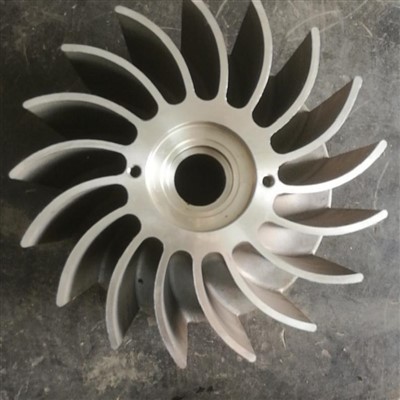
Let’s start with the basics, because there’s no way to get this right without grounding it in what an impeller actually does. If you’ve ever watched a centrifugal pump move water, you know the impeller is the spinning metal (or plastic, for softer stuff) piece inside that casing. It doesn’t just push fluid around—it creates two key forces: velocity and pressure. When it spins, it slings fluid from the center eye outward along the curved blades, turning that rotational energy into the flow that pushes through your pipes. The direction of that spin—clockwise or counterclockwise, if you’re looking at the pump shaft end—isn’t just a random factory setting. It’s tied to how those blades are shaped, how the impeller mates with the pump casing, and even the specific application it’s built for.
I remember working with a food and beverage client two years back, a mid-sized brewery out in the Midwest. They were expanding their beer canning line and needed to upgrade the pumps moving wort from the fermentation tanks to the brewing kettles. Their old pump supplier sent over an impeller that looked identical to the old one—same diameter, same number of blades— but it was backward. They installed it without checking, and within 20 minutes, the pump was making a terrible noise, the flow rate was 30% lower than they needed, and they had to shut down production for three hours to tear it apart. The issue? Those curved blades on the wort impeller are bent a specific way to channel the thick, sugary wort smoothly without causing shear. When you spin it backward, the blades act like brakes instead of propellers, creating turbulence instead of flow. That’s not just a small mistake—that’s tens of thousands of dollars in lost production, plus cleanup costs. That was the day I stopped just saying “yes” to the rotation question and started walking clients through the details that matter.
Let’s break down the science a little, because that’s where the real answer lives. Centrifugal impeller design uses blade angle, often called the blade exit angle, which is measured relative to the tangent of the impeller’s outer diameter. For forward-curved blades (used in some low-pressure, high-flow applications like HVAC fans), the angle leans in the direction of rotation. For backward-curved blades, which are the most common in industrial pumps because they’re more efficient for high pressure, the angle leans opposite the direction of rotation. If you flip the impeller, that angle is reversed, and the way fluid moves through the blades flips too. No matter the blade type, spinning it backward disrupts the pressure gradient the impeller is built to create.
That pressure gradient is critical. The space between the impeller and the pump casing (called the volute) is also shaped for the impeller’s spin. The volute widens as it wraps around the impeller to catch the fluid being slung outward, converting velocity to pressure. If your impeller is spinning the wrong direction, the fluid isn’t being delivered to the volute’s wide point—it’s hitting the narrow part of the volute, causing recirculation, cavitation, and excess wear. Cavitation is a big one here—those tiny bubbles that form when pressure drops too low, then collapse with enough force to pit metal and destroy impellers over time. I’ve seen impellers get chewed up in months because of backward rotation, when a simple check at installation would have prevented it.
But wait—there are cases where rotation doesn’t matter, right? I don’t want to paint with too broad a brush. Impellers with symmetric blades, for example, are sometimes used in very low-demand applications, like small aquarium pumps or simple transfer pumps for thin, non-abrasive fluids. Those blades are straight, so spinning them clockwise or counterclockwise doesn’t change the flow path much, if at all. But those are the exception, not the rule. 90% of the impellers we supply go into industrial, municipal, or commercial pumps where the blade curve and volute shape are optimized for a specific rotation. Even for plastic impellers used in chemical processing, asymmetric blades are standard because they create the exact flow needed to move corrosive fluids without breaking down the material prematurely.
I also want to talk about a common misconception: some people think that as long as the impeller fits on the shaft, it works. That’s a dangerous myth. Shaft keyways—those small notches that keep the impeller from spinning on the shaft—are also directional. If you flip an impeller, the keyway might align, but the balance of the part is off. Imbalance at high speeds (many industrial pumps spin at 1,800 or 3,600 RPM) causes vibration, which wears out pump seals, bearings, and the impeller itself. I once had a client call me in a panic because their pump was vibrating so bad it was shaking the entire base. Turns out, their new impeller had the keyway aligned, but the blade mass was unevenly distributed because it was flipped, leading to imbalance that no balancing machine could correct. We had to make a new impeller overnight, and they lost a full day of production. That’s avoidable, all because someone assumed “fit” equals “works.”
Let’s get practical, since I’m an impeller supplier, not just a textbook writer. The steps I walk every client through when confirming rotation are simple, but they save everyone a ton of headache. First, check the pump’s original documentation—most manufacturers specify the rotation direction clearly, usually stamped on the pump casing or in the manual. If you don’t have the original docs, you can do a quick flow test: run the pump for 10 seconds (make sure no one is near the discharge line) and measure the flow rate. If it’s 20-30% lower than the rated flow, you almost definitely have the impeller rotated wrong. For larger pumps, you can also watch the rotation with a strobe light, but the flow test is easy enough for anyone with a measuring jug and a stopwatch.
Another common question I get: can you make an impeller that works either direction? The short answer is yes, but it’s not always worth the cost. A bidirectional impeller has symmetric blades and a symmetric volute, so it works either way, but it’s less efficient than a unidirectional one. Efficiency means energy costs—over the life of a pump, a slightly less efficient impeller can add thousands to your utility bills. For example, a 100 HP pump running 24/7 for a year uses about 876,000 kWh. If a unidirectional impeller is 5% more efficient than a bidirectional one, that’s 43,800 kWh saved a year—enough to power a small warehouse. So while bidirectional impellers have their place (like in backup pumps, where you might not have time to check rotation), they’re not the standard for most applications.
I’ve been doing this for 12 years now, and I’ve seen every mistake you can make with impeller rotation. I’ve seen a municipal water treatment plant shut down because a new impeller was rotated backward, leading to low flow that left a neighborhood with no water for four hours. I’ve seen a mining company’s pump run backward so long that the impeller eroded enough to cause a leak in a slurry line, leading to a cleanup that cost six figures. The worst part is, almost all of these issues could have been avoided with a 5-minute check before installation.
So when someone calls me and asks “does impeller rotation matter?” my answer is no longer just “yes.” It’s “yes, and here’s why, and here’s how to confirm you’ve got yours right.” At the end of the day, impellers are precision parts. Every curve, every angle, every millimeter is designed to work a specific way. Rotation isn’t just a setting—it’s part of that design. Flip it, and you’re not just swapping the direction of spin—you’re disrupting flow, wasting energy, damaging equipment, and losing money.
If you’re working on a pump project, upgrading your impellers, or even just troubleshooting a pump that’s not performing like it should, don’t guess at rotation. Reach out to our team to confirm specifications, get guidance on design, and make sure your impellers are built to work the way your pump needs them to. We don’t just sell parts—we help you avoid the mistakes that cost you time and cash.
Glass Clamps References
Karassik, I. J., Messina, J. P., Cooper, P., & Heald, C. C. (2008). Pump Handbook (4th ed.). McGraw-Hill.
Giles, R. V., Evett, J. B., & Liu, C. (2017). Fluid Mechanics and Hydraulics (5th ed.). Cengage Learning.
American Society of Mechanical Engineers. (2019). ASME B73.1M-2019: Specification for Horizontal End Suction Centrifugal Pumps for Chemical Process. ASME.
Wudi County Shun Ye Stainless Steel Products Co., Ltd.
WUDI COUNTY SHUN YE STAINLESS STEEL PRODUCTS CO.,LTD. is one of the most professional impeller manufacturers and suppliers in China, also supports customized service. Welcome to buy bulk cheap impeller made in China here and get quotation from our factory. For price consultation, contact us.
Address: Duliu Village, Liubao Town, Wudi County, Binzhou City, Shandong Province
E-mail: sales@wdshunye.com
WebSite: https://www.shunyecasting.com/
