If you’ve ever worked in industries like oil and gas, chemical processing, power generation, or even water and wastewater treatment, you’ve likely seen ball valves that look identical on the surface, but serve wildly different critical functions. As a flanged trunnion ball valve supplier, I field dozens of calls each week from engineers and maintenance teams asking why we specify a “double block and bleed” (DB&B) configuration for certain applications—instead of a standard single ball valve setup. I get it; if your background isn’t in valve system design, this term can sound like just another piece of jargon manufacturers throw around to sound technical. But DB&B isn’t just a buzzword. It’s a safety feature that prevents catastrophic accidents, reduces downtime, and protects both personnel and equipment in some of the most high-stakes environments on the planet. Today, I want to break down exactly what DB&B is, why it matters specifically for flanged trunnion ball valves (my area of expertise, and the most common heavy-duty valve for high-pressure, high-flow applications), and the real-world purposes that make it non-negotiable for so many projects. Flanged Trunnion Ball Valve
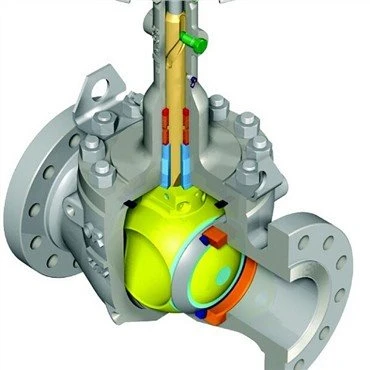
First, let’s start with the basics to level set. A standard flanged trunnion ball valve has a hollow, perforated ball inside the valve body, mounted on two trunnions (the support rods on either end) that hold the ball in place, especially when pressure pushes back on it. When the ball is rotated 90 degrees, it either opens a flow path through the perforation or closes it, sealing off flow. A single block valve is just one of these units—think of it as a single gate stopping flow. But a double block and bleed setup isn’t a single valve; it’s a system of two block valves plumbed in series, with a small vent port (the “bleed”) between them. For flanged trunnion ball valves specifically, this is often integrated into a single valve body or a matched pair of flanged trunnion valves bolted together with a vent connection between the two sealed ends. That integration is key because trunnion valves are built to handle extreme pressures—up to 15,000 PSI in some cases—so pairing two of them in series doesn’t create a weak point; it amplifies their sealing capability in a way that floating ball valves (the cheaper, lighter-duty alternative) can’t match.
Now, let’s get to the purpose, because that’s what everyone really cares about. The primary function of DB&B is to create a completely isolated, dead-end section of piping for maintenance, repairs, or inspection—without exposing workers or the environment to hazardous fluids, gases, or pressure. Let’s use a common example from a petrochemical plant: suppose you need to replace a section of pipe that’s part of a line carrying volatile, high-pressure propane. If you only used a single block valve to shut off flow, you’d be relying entirely on that one valve’s seal. But even the best flanged trunnion ball valves can have rare failure points: maybe a piece of debris got trapped in the seat during installation, or the seat wears down over years of use, or the valve’s stem seal has a micro-leak that only shows up under pressure. If that single valve fails, propane would flow into the section you’re trying to work on, creating an explosion hazard. That’s where the “double” part of DB&B comes in: two independent, redundant block valves, each with its own seat and trunnion support, so the chance of both failing at the same time is statistically negligible—like less than 0.0001% for most standard industrial valve setups.
But the double block isn’t enough on its own. You need the “bleed” to confirm that both blocks are sealed, and to release any trapped fluid or pressure that could get stuck between the two valves. Here’s how that works in practice: when you close both block valves, the space between them is pressurized by whatever is in the line upstream of the first valve, or even residual fluid that was left after the first valve closed. You open the bleed valve, and if fluid or pressure comes out, that means at least one of the two block valves isn’t sealing properly. If nothing comes out, you know both blocks are holding, so the section between them is completely safe to work on. That bleed isn’t just a test—it’s a fail-safe. It vents any accumulated pressure that could build up between the two valves if, say, the upstream line warms up and expands, or a micro-leak in the first valve slowly fills the space between the blocks. Without that bleed, that trapped pressure could create a hazard when you try to disconnect the downstream valve or pipe.
Now, you might be wondering: why flanged trunnion ball valves specifically for DB&B, instead of another valve type? That’s a question I get a lot, especially from engineers who work with floating ball valves. Floating ball valves are great for low-pressure, general-purpose applications like residential plumbing or light industrial water lines, but they rely on the upstream pressure to push the ball against the downstream seat to create a seal. That works for single valves, but when you put two floating ball valves in series for DB&B, the upstream valve’s pressure pushes the ball of the downstream valve away from its seat, which can break the seal. Trunnion ball valves, by contrast, have the two trunnions that support the ball mechanically, regardless of line pressure. The seat seal is spring-loaded, so it presses against the ball consistently, even when there’s no upstream pressure. That makes them ideal for DB&B because you can count on both seats sealing independently, even when the space between them is evacuated or has low pressure. Flanged connections also matter here because they create a tight, leak-proof joint between valves—no threaded connections to fail under high pressure, which is critical for DB&B setups that operate in high-stress environments.
Another purpose of DB&B, which is often overlooked, is environmental protection. For industries that handle toxic or environmentally damaging substances—think of chemical plants processing hydrochloric acid, or refineries handling crude oil—even a small leak can have serious consequences. A single valve leak might be small, but over time, or in high-pressure conditions, it can release millions of gallons of hazardous material into the ground or air. DB&B creates a secondary barrier: if the first valve leaks, the second valve catches it, and the bleed lets you know that there’s a leak before you open any section of piping. That reduces the risk of environmental fines, spills, and cleanup costs, which are a huge expense for industrial operators. I’ve seen cases where a plant saved hundreds of thousands of dollars in spill-related damages just by switching from a single valve to a DB&B setup with flanged trunnion ball valves, because they could catch a small leak before it became a major event.
Safety for personnel is, of course, the biggest purpose of all. Industrial workplaces consistently rank lockout/tagout (LOTO) procedures as a top safety priority, and DB&B is a core part of effective LOTO. When maintenance teams need to work on a valve, pipe, or instrument, they have to ensure that the equipment is completely isolated from energy sources (including fluid pressure). A single valve might seem closed, but line pressure can sometimes bypass it through debris in the line or a damaged seat. DB&B provides a tangible, testable isolation: after closing both valves and bleeding the space between them, maintenance teams can confirm with a pressure gauge that there’s no pressure in the work section, so they can safely disconnect equipment, weld, or perform repairs without fear of fluid or pressure releasing. In my 12 years as a flanged trunnion ball valve supplier, I’ve heard too many horror stories of workers being injured by sudden releases of pressurized fluid that wasn’t properly isolated—DB&B eliminates that risk by creating a proven, reliable barrier.
You might also be asking: when is DB&B required, and when is it just an extra cost? That’s a fair question. DB&B adds a little upfront cost compared to a single valve, but the tradeoff is huge for critical applications. OSHA (the Occupational Safety and Health Administration) recommends DB&B for all applications where personnel could be exposed to hazardous substances, and most process control standards (like API 6D, which is the global standard for valve design) mandate DB&B for pipelines carrying flammable, toxic, or high-pressure fluids. For non-critical applications, like a water line carrying non-hazardous municipal water, a single valve might suffice, but even in those cases, many plant operators choose DB&B to reduce downtime if a valve needs repair. For example, if a single valve in a water line fails, you have to shut down the entire line to replace it, which can cause service outages. With DB&B, you can isolate one of the two valves, repair it, and keep the line operating at reduced capacity—no full shutdown required.
As a flanged trunnion ball valve supplier, I’ve worked with hundreds of customers to design DB&B setups tailored to their specific needs. One of my most memorable projects was for a midstream pipeline company that was upgrading a crude oil transmission line. They were used to using floating ball valves for most of their lines, but when they had to replace a valve in a stretch that ran through a populated area, they opted for a DB&B setup with flanged trunnion ball valves. The reason? If there was a leak during maintenance, it couldn’t flow into the nearby neighborhood. They also used the DB&B setup to isolate one valve at a time for scheduled maintenance, without shutting down the entire pipeline, which saved them over $2 million a year in lost product revenue. That’s the kind of real-world value DB&B delivers when it’s implemented correctly with the right valve type.
It’s important to note that not all DB&B setups are equal. A lot of lower-quality valve manufacturers will pair two cheap floating ball valves for DB&B, but as I mentioned earlier, floating ball valves can’t maintain a consistent seal when placed in series. That’s why it’s critical to use flanged trunnion ball valves for DB&B—their mechanical support for the ball and spring-loaded seats ensure that both blocks seal independently, even under the fluctuating pressure that’s common in pipeline and process applications. I always tell customers that skimping on valve quality for DB&B is like buying a cheap padlock for a safe: it seems like a way to save money, but it leaves you with a false sense of security that could lead to disaster.
So, to wrap this up, the purpose of double block and bleed in ball valves isn’t just a technical detail—it’s a combination of safety, reliability, environmental protection, and cost savings. It’s a system that creates a redundant barrier against fluid release, provides a test to confirm isolation, and works specifically well with flanged trunnion ball valves, which are designed to handle the high pressures and harsh conditions that demand this level of protection. Whether you’re working in oil and gas, chemical processing, power generation, or any industry where hazardous fluids flow through piping, DB&B isn’t an optional extra—it’s a critical component of a safe, efficient, and compliant operation.
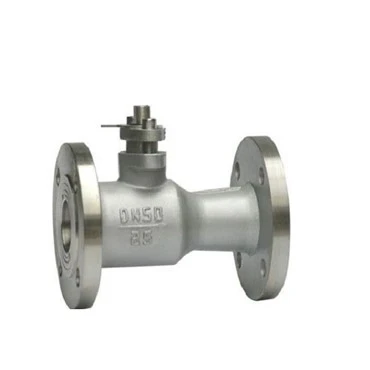
If you’re evaluating your valve setups for critical applications, or if you need guidance on designing a DB&B system with high-quality flanged trunnion ball valves that meet industry standards, we’re here to help. Don’t hesitate to reach out to our team to discuss your project needs and get tailored recommendations.
Flanged Trunnion Ball Valve References
API Specification 6D, Pipeline Valves, 24th Edition, American Petroleum Institute, 2021
OSHA 29 CFR 1910.147, The Control of Hazardous Energy (Lockout/Tagout), Occupational Safety and Health Administration, 2023
Trunnion Ball Valve Design and Application Guidelines, Valve Manufacturers Association, 2022
Zhejiang Bergamo Technology Co., Ltd.
As one of the most professional flanged trunnion ball valve manufacturers and suppliers in China, our products have good reputation in the market. Please feel free to wholesale durable flanged trunnion ball valve for sale here from our factory. Quality products and reasonable price are available.
Address: No.5 workshop, No.807 Jiulong Street, Bihu Town, Liandu District, Lishui, Zhejiang 323000 People’s Republic of China
E-mail: sales@bjm-valve.com
WebSite: https://www.bjmvalve.com/
