If you’re even just casually thinking about adding a smart coffee vending machine to your office lobby, gym break room, or retail space, the first question that’s probably bouncing around your head is this: how much is this actually gonna cost me? And let’s be real—this isn’t a “one-size-fits-all” answer, right? I’m not some suit wearing a blazer who’ll quote you a random number and ghost you later. I’m the co-owner of a small smart coffee vending company, and I’ve sat across from 100+ business owners just like you who were stressed about the numbers. Today, I’m breaking down every real cost, hidden fee, and sweet spot so you can stop guessing and start planning. Smart Coffee Vending Machine
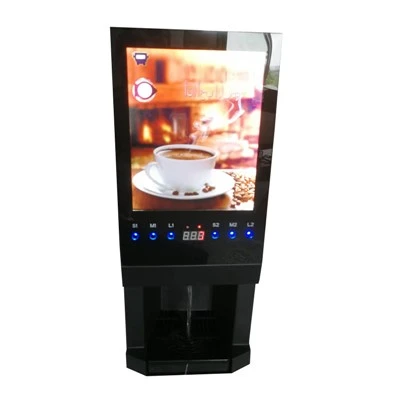
First off, let’s get one thing straight: when most people say “installation cost,” they often mix it up with the machine itself. But here’s the tea—for most of our standard smart models, we bundle the basic installation for free. Wait, let me clarify that. The machine base model is between $3,500 and $7,000, depending on how many drinks it holds, but we don’t charge extra to get it set up and working. That’s a huge difference from old-school vending companies that’ll charge you $500 just to drop a machine off. But before you start celebrating, there are a few variable costs that can sneak up on you if you don’t plan ahead.
Let’s start with the most common “oh, I didn’t think about that” expense: site prep. Most small offices or gyms have a random wall spot that looks like it’d fit a vending machine, but not all walls are created equal. A standard smart coffee vending machine is about 4ft wide, 7ft tall, and 3ft deep—so it’s not tiny. If you’re dropping it on a concrete floor, that’s easy peasy, no extra cost. But if you want to put it on a second floor without a freight elevator, you’re gonna need a team to haul it up. We once had a client who wanted to put one in a 3rd-floor co-working space with only a skinny service elevator—we had to rent a small lift and two extra guys for 4 hours, which added $800 to their total. Even worse: if your spot doesn’t have a grounded 120V outlet within 10ft of where the machine goes, you’ll need an electrician to run a new line. That’s usually $200–$500, depending on how much wiring they have to do. And don’t forget plumbing! If you opt for a water line connection (which is way easier for restocking coffee and keeps drinks tasting fresh), that’s another plumber visit—typically $150–$300. I always tell clients to draw an X where they want the machine before we come look; if it’s more than 10ft from a power outlet and water, factor that in.
Next, the fun smart features that make these machines worth the upgrade, not just a fancy coffee dispenser. Let’s be real—why get a smart vending machine over a regular old one? Because you can track sales from your phone, let people pay with Apple Pay or Google Pay, and even adjust drink temperatures remotely. The base model has basic contactless pay and sales tracking, so that’s included in the price. But if you want the really useful extras that save you time and money long-term? Those add a bit to installation. For example, if you want a built-in touchscreen with customized ads (like your office’s team meme of the week or a 10% off coupon for your gym members), we have to calibrate that screen and link it to our cloud software—adds $300–$600. Another big one: if you want the machine connected to a Wi-Fi network (you’ll need this for remote sales tracking and restock alerts), most sites have Wi-Fi, but some older buildings have super weak signals, so we might have to add a small Wi-Fi repeater to make it work—around $100. I once had a client in a historic building with concrete walls that blocked signals; we ended up running a small Ethernet cable from their router to the machine, which cost an extra $150, but it was totally worth it because now they never have to worry about the machine going offline mid-rush.
Wait, what about if you don’t want to buy the machine outright? A lot of business owners ask about leasing, and that changes the installation game too. If you lease a machine, the monthly payment is usually $100–$250, and most of the time, installation is still free. But there’s a catch with leasing: some companies will make you pay a “site assessment fee” of $100–$200 just to send someone to check your space, but we don’t do that—our assessments are 100% free, no strings attached. We’ve had clients who were on the fence about buying vs leasing, so we brought two options, no pressure, and they loved that we didn’t nickel-and-dime them for basic checks.
Now, let’s talk about hidden costs that no one tells you about, because these are the ones that throw people’s budgets off. First, permits. A lot of cities require a business license or a vending machine permit to operate a food and beverage machine in a public or semi-public space. That’s usually a $50–$200 one-time fee, but some areas charge yearly. I once had a client in a small suburb where their town required a $150 annual permit, which they forgot to budget for, and it added a tiny extra cost. Another hidden one: if you want to put the machine in a high-traffic area like a mall or a college campus, some spaces charge a “placement fee” to use their floor space. That’s not an installation cost, but it’s something you need to factor into your total budget—usually $50–$200 a month, depending on the space. And don’t forget insurance! Most general business insurance will cover a vending machine, but some places charge a small extra fee (like $20 a month) to add it to your policy. That’s a long-term cost, not upfront, but worth mentioning.
Let’s break this down with a real example, because numbers are way easier to get than vague ranges. Last quarter, we installed a machine for a 50-person marketing agency in downtown Austin. Their space had a concrete floor, a grounded outlet 8ft away from their desired spot, and they didn’t need plumbing. They opted for the base smart model ($4,200), free basic installation, plus the touchscreen ad feature ($400) and Wi-Fi repeater ($100). They had to get a city permit ($100), and no extra site work. Their total upfront cost was $4,800. Another example: a gym in Dallas that wanted to put a machine on the 2nd floor with no elevator, needed a new power line, and wanted plumbing for easy water refills. They got the base model ($5,500), installation cost was $800 for hauling up stairs, $300 for the electrician, $250 for the plumber, plus they opted for the ad screen ($500) and Ethernet cable ($150). Their total upfront? $7,500. That’s a big difference, but both clients were happy because we told them exactly what to expect before we showed up, no surprise bills.
Now, let’s talk about what affects the cost most, because that’s what’ll help you plan. First, location: is your spot accessible? No stairs, no narrow hallways, no bad Wi-Fi? That lowers cost a ton. Second, features: do you just want basic coffee, or custom drinks like lattes, cold brew, and flavored syrups? More drink options mean a bigger machine, which means slightly higher installation costs. Third, local rules: some cities are way stricter about food permits, which adds small fees. And finally, do you want to buy or lease? Leasing is way lower upfront, usually $0 down or a $200 deposit, vs buying which is a few thousand upfront.
Wait, a common question I get: is there a way to lower installation costs? Short answer, yes, if you plan ahead. First, pick a spot that’s near a power outlet and water line (if you can) — that cuts down on electrician and plumber fees. Second, opt for the base model if you don’t need fancy extra features like ads or custom cold brew; those are nice, but not necessary to have a working smart machine. Third, work with a local company that knows the area’s rules — we know exactly what permits Austin, Dallas, and Houston require, so we don’t waste time or money on extra steps. And fourth, ask about package deals! We sometimes run deals where if you buy a machine and set it up before the end of the quarter, we throw in free setup of the sales tracking software, which is a $200 value.
I know this all sounds like a lot, but here’s the thing: a smart coffee vending machine isn’t just a expense. It’s an investment. For the marketing agency I mentioned earlier, that machine makes about $300 a week in coffee sales, so they paid back their upfront cost in 16 weeks. The gym in Dallas makes $450 a week, so they paid back in under 18 weeks. That’s way faster than most other office investments, and the smart features mean you don’t have to restock as often, so you save time too.
At the end of the day, the installation cost isn’t just about the money you hand over when we set up the machine. It’s about planning for those small extra fees, knowing what features you actually need, and working with a company that won’t hit you with surprise charges. If you’re ready to chat about your space, we can send someone to look at it for free, no obligation, and give you a exact quote. No jargon, no hidden fees, just straight talk about what you’ll pay and what you’ll get.

If you’re thinking about adding a smart coffee vending machine to your space, hit us up to chat through your specific needs. We can answer any questions you have, walk you through the numbers, and help you pick the right machine for your budget and your people. Don’t guess at the cost—get a real quote from a company that actually installs these every single week, not one that just sells them online.
Commercial Coffee Vending Machine References
- National Automatic Merchandising Association. (2023). Smart Vending Machine Installation and Operational Cost Benchmarks.
- Small Business Administration. (2024). Guide to Permits and Fees for Food Service Equipment in Commercial Spaces.
- Vending Market Research. (2023). 2023 Smart Vending Features and Installation Fee Trends.
- Local Government Association for Texas. (2023). Commercial Food Vending Machine Permit Requirements.
Hangzhou Vending Robot Manufacturing Co., Ltd.
As one of the most professional smart coffee vending machine manufacturers and suppliers in China, we also support custom service. We warmly welcome you to wholesale advanced smart coffee vending machine made in China here from our factory. If you have any enquiry about cooperation, please feel free to email us.
Address: Floor 4th, Building 5, No.4 Yangcheng Road, Fengdu Industry Park, Pingyao Town, Yuhang District, Hangzhou City, Zhejiang Province, China
E-mail: China_vending@163.com
WebSite: https://www.chinavendingmachine.com/
