If you’ve ever worked with wireless devices, satellite communications, or even medical imaging equipment, chances are you’ve heard the term “RF power” thrown around—maybe during a design review, a troubleshooting call, or a quick conversation with a component supplier like myself. For a long time, I used to gloss over the nuance, assuming it was just “power for radio stuff.” Then a few years back, a customer came to me in a panic: their new 5G base station was dropping connections in a nearby industrial park, and their in-house engineers couldn’t figure out if the issue was weak RF power, signal interference, or something else entirely. That day, I realized “RF power” isn’t just a jargon term—it’s the backbone of how all wireless systems work, and understanding it can make or break a design. RF

Let’s start with the basics: RF stands for Radio Frequency, which is a range of electromagnetic waves between roughly 3 kHz and 300 GHz. These waves carry information—whether that’s a phone call, a Netflix stream, or a GPS signal—from a transmitter to a receiver. RF power is the amount of energy these radio waves carry, measured in units that might look familiar if you’ve ever shopped for electronics: watts (W). But here’s the thing: RF power isn’t the same as the power you see on a light bulb or a kitchen appliance. For one, RF signals spread out as they travel, so their strength drops off the farther they get from the source. A 100-watt RF signal blasting from a cell tower won’t deliver the same power to a phone 1 mile away as it would to a phone 100 feet away. That’s why engineers often use decibels (dB) to describe RF power instead of plain watts—decibels make it easier to measure very large or very small changes without using unwieldy numbers. For example, a 3 dB increase in power means the signal strength doubles, and a -3 dB decrease means it’s cut in half. It’s a small shift that translates to big changes in real-world performance.
Now, not all RF power is created equal. There are two key types we care about: transmit power and receive power. Transmit power is the energy a device sends out through its antenna. For a Bluetooth headphone, that might be just a few milliwatts (mW)—less than a tenth of a watt—because it only needs to communicate with a phone a few feet away. A 5G base station, though? Its transmit power can be hundreds of watts, designed to cover a mile or more of urban area. Receive power is the opposite: the amount of RF power a device picks up from the air. If your phone is too far from a cell tower, its receive power might drop to a level too low for the device to decode the signal, leading to dropped calls or slow data. That’s why network engineers often tweak both transmit power from towers and antenna placement to make sure every device in a coverage area gets enough receive power.
As an RF component supplier, I see how easy it is for design teams to overlook the fine details of RF power. Last quarter, a startup making portable IoT sensors came to me with a prototype that kept failing their field tests. They’d used a 100 mW transmitter module they found online, but when they deployed the sensors in a forested area, coverage only reached 50 feet instead of the expected 200 feet. When we dug into it, we found two issues: first, their antenna was mismatched to the transmitter, so almost 40% of the RF power was lost as heat instead of being sent into the air. Second, they were running the transmitter at full power 24/7, draining their battery in less than a week. We worked together to swap in a matched antenna and adjust the transmit power to 20 mW most of the time, only ramping up to 100 mW when the sensor needed to send data through dense foliage. Suddenly, their coverage hit 180 feet and battery life stretched to 2 years—proof that RF power isn’t just about cranking up the watts.
That leads us to a critical concept: power efficiency. For most RF systems, especially battery-powered ones like IoT sensors, drones, or medical wearables, wasting RF power is a death sentence. If a transmitter turns 50% of its power into heat instead of radio waves, your battery will die twice as fast—and heat can even damage sensitive components over time. That’s why we (as RF suppliers) focus on components like power amplifiers (PAs) that get more of the input energy into RF signals. A high-efficiency PA might convert 70% of its input power into usable RF, while a low-efficiency one could top out at 30%. For a small Bluetooth earbud, that 40% difference might mean the difference between 8 hours of battery life and 12 hours. For a satellite transponder, which runs on solar power and is impossible to fix once it’s in orbit, that efficiency is make-or-break.
Another big factor in RF power is path loss. When an RF wave travels through air, it encounters obstacles—buildings, trees, rain, even atmospheric gases like water vapor or oxygen. Each of these absorbs or scatters the signal, so the power at the receiver drops off exponentially with distance. The inverse square law here is key: as a wave travels twice as far, its power is cut to a quarter of its original strength. That’s why a cell tower works so well in open fields but struggles in a dense city—skyscrapers act as obstacles that block or weaken the RF signal before it reaches phones on the other side. For design teams, that means they can’t just rely on a generic power number; they have to calculate path loss specific to their environment to choose the right RF components.
I also get a lot of questions from customers about RF power vs. voltage, and it’s a common mix-up. Voltage is the electrical force that pushes current through a wire, but RF power is the combination of voltage, current, and the frequency of the signal. You can have two transmitters with the same voltage output but very different RF power—if one is tuned to a frequency that matches its antenna and has a high-efficiency PA, it will send more usable power than the other. That’s why we work closely with customers to match our components to their specific frequency bands and antenna designs; a one-size-f-all approach almost never works for RF power.
One of the most exciting areas I’ve worked in lately is 5G and millimeter-wave (mmWave) technology, which is pushing RF power into higher frequencies (24 GHz to 100 GHz). Unlike sub-6 GHz 5G, which is similar to old 4G frequencies, mmWave has much shorter wavelengths, so it can carry way more data—but it also suffers from way more path loss. Rain, even light rain, can absorb a large chunk of mmWave power, and obstacles like windows or walls block it almost entirely. That means mmWave base stations need to use beamforming: multiple small antennas that work together to focus RF power into a narrow, directional signal instead of broadcasting it in all directions. As a supplier, we’ve had to develop custom power amplifiers and phase shifters for these beamforming systems, since off-the-shelf components didn’t have the efficiency or frequency range needed. It’s been a fun challenge, and seeing our components go into 5G home internet devices that let people stream 8K video in their living room? That’s why I love this work.
Let’s talk about a real-world example that ties all this together: a medical device customer I worked with last year. They were making a portable ECG machine that used wireless connectivity to send heart data to a doctor’s office. Early prototypes had a big problem: the RF signal would drop every time the patient walked into a metal exam room. Their initial design used a low-power 2.4 GHz transmitter, which was great for the patient’s small battery but weak against metal obstacles. We suggested a higher-efficiency power amplifier and a slightly higher transmit power, along with a tiny, directional antenna that fit inside the device’s casing. We also added a power management circuit that only boosted power when the signal was weak, so the battery didn’t drain. The result? The ECG device worked reliably through exam room walls, and battery life stayed at 5 years—no more complaints from users or doctors about dropped data.
Of course, RF power isn’t just about performance; there are also regulatory limits to consider. Governments around the world set strict rules for how much RF power a device can transmit, to prevent interference with other wireless systems. For example, in the U.S., the FCC limits Wi-Fi devices to 1 watt of transmit power in the 2.4 GHz band, and cell phones can’t exceed specific power levels to avoid overwhelming nearby cell towers. As an RF supplier, we make sure all our components meet these regulations, so our customers don’t run into legal or compliance issues when they build their products. That’s another part of the job that often goes overlooked, but it’s critical—you can’t sell a wireless device if it violates RF power rules.
So, why does all this matter if you’re not an RF engineer or a component supplier? Maybe you’re a product manager building a new wireless gadget, or a small business owner deploying IoT sensors to track inventory. Understanding RF power helps you ask the right questions: Do I need a higher-power transmitter for outdoor use? Will my antenna match my transmitter’s output? How much path loss will my signal have in my environment? That’s where a good supplier comes in—someone who doesn’t just sell parts, but helps you work through those questions to build a reliable, efficient product.
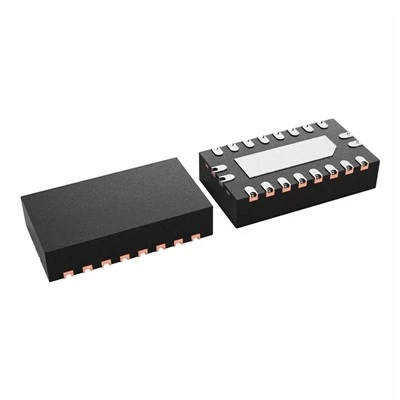
If you’re working on a project that depends on RF power, whether it’s a new 5G device, an IoT network, a medical wearable, or something else entirely, I’m here to help. We’ve spent years developing high-efficiency power amplifiers, matched antenna systems, and custom RF components that work across every major frequency band, from sub-6 GHz to mmWave. Don’t waste time troubleshooting power issues on your own—reach out, and let’s talk through your needs.
Amplifiers Chip References
- Pozar, D. M. (2012). Microwave Engineering (4th ed.). John Wiley & Sons.
- Seiden, J. S. (2005). RF Circuit Design for Wireless Communications. McGraw-Hill.
- Federal Communications Commission. (2023). Part 15: Radio Frequency Devices. U.S. Government Publishing Office.
- Rappaport, T. S. (2019). Wireless Communications: Principles and Practice (2nd ed.). Prentice Hall.
- IoT World Forum. (2022). RF Power Optimization for Battery-Powered Wireless Devices. IoT World Media Group.
Hainan Huanyu Technology Co., Ltd.
As one of the most professional rf manufacturers and suppliers in China, we’re featured by quality products and good service. Please rest assured to wholesale durable rf in stock here from our factory. Customized orders are welcome.
Address: Jingrui Building, No. 18 Longkun North Road, Jinmao Street, Longhua District, Haikou City, Hainan Province
E-mail: Business-mall@hy-kj.ltd
WebSite: https://www.hykj-chip.com/
