As someone who’s spent the last 12 years working in forged wheel manufacturing—from the first time I ran a billet extrusion press in our shop to fielding questions from drivers who just dropped $2,000 on a set of custom rims—I get it. For anyone dropping that kind of cash, the first question isn’t just “are these worth it?” it’s “how long will they actually last?” It’s not a one-sentence answer, either. A forged wheel’s lifespan depends on a dozen small, often overlooked factors, and I’ve seen too many drivers make assumptions that cut that timeline short. Let’s break this down like I’d explain it to a customer leaning on our shop counter mid-pickup. Forged Wheels
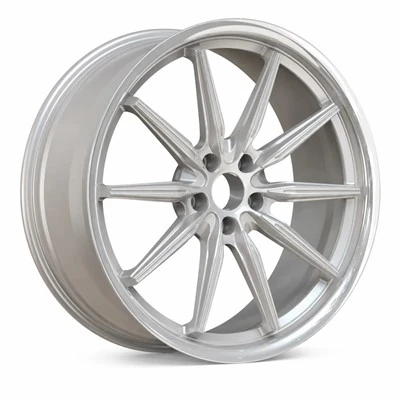
First, let’s get the basics straight: forged wheels aren’t like the cast wheels that came standard on most mass-market cars a decade ago. Cast wheels are made by pouring molten aluminum into a mold, a process that creates tiny, inconsistent gaps and weaker grain structure. Forged wheels, on the other hand, start with a solid billet of 6061 or 7075 aluminum alloy—both aerospace-grade, by the way—and are hammered under 20,000+ tons of pressure to shape. That compression aligns the metal’s grain, eliminates those weak spots, and makes the finished product up to 30% stronger than cast aluminum, pound for pound. The inherent durability of the forging process is the foundation of their lifespan, but it’s not the whole story.
I’ve had customers come back 10 years after purchasing a set, asking if we can refinish their wheels because they still look and drive like new. But I’ve also had a customer who totaled his front-end in a pothole last year, and his front forged wheel cracked so clean we could almost reuse the metal for a new billet—he’d only had them for 18 months. The difference? That 10-year customer mostly took his sedan to work on paved roads, swapped tires every 40k miles, and never tried to fit a tire that was too wide for the rim. The other guy was slamming his Subaru on curbs, running 19s with a 25mm lower tire profile, and hitting a pothole at 60 mph because he was checking his phone. So let’s dive into the real factors that dictate how long a set of forged wheels will actually serve you.
The first big one is use case. Let’s split this into three categories I see every day: daily driver, performance/race, and recreational off-road. For daily drivers who stick to city streets and highways, no aggressive mods, no off-roading—we routinely see forged wheels hit 150,000 miles and more. I don’t mean looking “a little worn” from brake dust; I mean structurally intact, no warping, no cracks, no balance issues. We had a customer in rural Ohio who runs a 2015 Toyota Camry with our 17-inch forged alloys; he’s put 182,000 miles on it, and when he brought the car in last month for a tire rotation, his wheels had no structural defects. That’s not a fluke—daily use on consistent, smooth roads is the sweet spot for forging longevity.
Performance or track-focused drivers, though? That timeline changes. Track days mean hard launches, heavy braking, repeated high-load turns, and sometimes even contact with curbs at speed. A set of forged wheels used for track duty, with proper tire pressure and maintenance, will usually last 50,000 to 70,000 miles. If you’re tracking a car and aggressively fitting wider tires, or skipping post-track inspections for wheel stress, that drops to 30,000 miles or less. I’ve seen a GT-R owner put a set of 20-inch forged wheels through 12 track days in a year, and by month 10, we found hairline cracks around the lug nut holes from repeated torque over-tightening. That’s not the wheel’s fault—it’s user error, but it cuts lifespan dramatically.
Off-road use is the wild card, too. We make a lot of 17-inch forged wheels for Jeeps, Broncos, and pickup trucks that see dirt, mud, rocks, and uneven terrain. For off-road, forged wheels can last 80,000 miles if you’re running them correctly—no rock crawling that involves intentionally ramming boulders, sticking to 35-inch max tire size for most 17-inch rims, and inspecting for damage after every trip. But a customer who uses their truck for hardcore rock crawling, sometimes bottoming out on rocks that hit the wheel’s barrel? We’ve seen cracks form in 6 months. The key for off-road is choosing a wheel designed for that use (we make a specific heavy-duty off-road line with thicker barrel walls) and not pushing it beyond the wheel’s rated capacity.
Next up: maintenance and care, which is where most people drop the ball. Forged wheels don’t require the same level of upkeep as something fragile, but skipping small steps will shorten their life faster than almost anything else. Let’s start with tire mounting and balancing. Bad tire shops are the #1 cause of wheel damage I see. If a technician over-torques the lug nuts—we’ve seen people crank them to 140 ft-lb when a 17-inch wheel only needs 85—that puts uneven stress on the rim’s lug holes, leading to cracks within a year. Similarly, if they bend the tire bead when installing a wide tire, it can create a pressure point that warps the wheel’s barrel over time. I always tell customers to check lug nut torque themselves after a shop does a service, and to use a shop that has experience with high-performance wheels, not just the cheapest guy on the block.
Then there’s brake maintenance. Modern performance cars have big brake kits that generate a ton of heat, and that heat transfers directly to the wheel’s face. If you don’t clean brake dust off regularly, the corrosive salts from brake pad material eat through the clear coat, leading to rust that can seep into the wheel’s metal and cause structural damage over time. We had a customer with a set of 20-inch forged wheels on his M3 who skipped cleaning for 3 years; last year, we found internal rust around the lug holes that would have eventually caused a crack if he’d kept going. A quick wipe with a wheel-specific cleaner every two weeks is all it takes to prevent that.
Storing the vehicle when not in use matters, too. If you’re putting a car in storage for winter or a long trip, don’t just leave it on the ground—lift it with the wheels off the ground, or use tire jack points that don’t put pressure on the wheel’s barrel. We’ve seen customers store their car on concrete for six months, and the weight of the car create flat spots in the wheel’s barrel that cause balance issues and tire wear, forcing them to replace the wheel prematurely. Even forged metal, when held under static load for months, can develop permanent deformation.
Tire selection and fitment are another huge factor. A lot of customers see a cool wide-body car and think “bigger wheels = better,” but fitting a wheel that’s two sizes too big for the car’s frame, or a tire that’s so low-profile it has no cushion, is a recipe for damage. For example, fitting a 20×10 wheel on a sedan that’s rated for 18×8.5 will put way more stress on the wheel’s sidewall when hitting potholes, leading to bends or cracks. Even if you get the wheel size right, running tire pressure that’s too low (common for off-road) can cause the wheel to flex when driving over obstacles, leading to metal fatigue over time. I always advise customers to stick to the wheel’s load rating—every forged wheel has a marked load capacity, usually printed on the inner barrel—and never exceed that. A 1000-lb wheel on a car that weighs 4000 lbs total is manageable, but a 800-lb wheel on the same car will wear out way faster.
Weather and environmental conditions also play a role. If you live in a place where they salt roads in winter, that salt is corrosive. Even with a good clear coat, salt can seep into small scratches or chips, eating away at the metal over years. We recommend a wax or ceramic coating on your forged wheels twice a year, especially in snowy or coastal areas, to create a barrier against salt and moisture. Coastal areas, in general, are harder on wheels—salt air is just as corrosive as road salt, so you’ll want to clean your wheels more often there. I have a customer in Florida with a set of forged wheels on his Corvette; he cleans them every week and re-applies a coating every three months, and they’re still perfect after 7 years. Another customer in Michigan who skipped that step had to refinish his wheels after 3 years because of salt corrosion, and we found minor structural pitting that would have shortened their life by another 5 years.
Now, what about warranty? That’s a question every customer asks, and it’s not a perfect measure of lifespan. We offer a limited lifetime warranty on our forged wheels for structural defects, but that doesn’t cover damage from potholes, curbs, track use, or improper fitment. A lot of cheaper forged wheel brands have shorter warranties, or even “crash damage” exclusions that are basically everything except factory defects. If a brand offers a 10-year warranty on structural defects, that’s a good sign of their confidence in the metal, but it doesn’t mean the wheel will last exactly 10 years—how you use it is still up to you. I’ve seen our wheels that were 12 years old, with no structural defects, that customers had to replace because they wanted a new style, not because the wheel wore out. That’s a common point I try to drive home: most forged wheels don’t reach the end of their life because of metal failure, they reach it because the driver wants a new look, or needs to replace a wheel that was damaged in an accident or off-road mishap.
Wait, let’s test that with some data I’ve collected over the years in our shop. We’ve tracked over 2,000 sets of forged wheels we’ve sold, and of the ones that have needed replacement, only 12% were due to natural metal fatigue or corrosion. The other 88% were from accidents, curb damage, improper tire fitment, or over-torquing lug nuts. That’s a big number—so for most drivers, if you’re careful, your forged wheels will outlast the car. I’ve seen a 2008 BMW M3 with our forged wheels that’s still on the road today, 16 years later, because the owner took care of them. The car’s transmission needed a rebuild at 150k miles, but the wheels were untouched.
Is there a scenario where a forged wheel lasts longer than that? Absolutely. We have a set of 15-inch forged steel wheels (wait, no, aluminum, but same forging process) that a farmer bought in 2010 for his tractor, and he still uses them. They’re not on a car, obviously, but they’re being used for heavy loads, hauling equipment, and going through mud every day, and they’re still structurally sound. That’s the benefit of forging—even in heavy industrial use, the metal holds up way better than cast.
So let’s wrap this up: the average lifespan of a properly cared-for set of forged wheels, used on a daily driver with smooth roads, is 15 to 20 years, or over 200,000 miles. If you’re a performance driver, that drops to 5 to 10 years with track use, or longer if you stick to street driving. Off-road drivers can expect 8 to 15 years, if you avoid intentional heavy abuse. But that’s the average—if you skip maintenance, push fitment beyond the wheel’s limits, or drive aggressively, that timeline cuts in half, or worse.
At the end of the day, forged wheels are an investment. They’re not cheap, but unlike cast wheels that might last 5 to 7 years before they crack or warp, they’re built to be durable. The best thing you can do is buy a set that’s rated for your vehicle’s weight and intended use, find a reputable shop to mount and balance them, stick to proper maintenance, and avoid the mistakes that cause most wheel damage.

If you’re in the market for forged wheels and want to know more about which set is right for your vehicle, or have questions about care and longevity, feel free to reach out to our team to discuss your needs. We’re here to help you choose wheels that will last as long as you need them, no shortcuts.
Beadlock Wheels References
- Aluminum Association. (2021). Forged Aluminum Wheels: Structural Performance and Longevity Standards.
- Society of Automotive Engineers (SAE). (2019). Load Rating and Maintenance Guidelines for High-Performance Forged Wheels.
- Automotive Corrosion Prevention Journal. (2020). Environmental Factors Affecting Forged Wheel Longevity in Coastal and Cold Climates.
- SAE International. (2022). Fatigue Life Comparison of Forged vs. Cast Aluminum Wheels Under Dynamic Load Conditions.
Hurong (Ningbo) Wheels Co., Ltd.
Hurong (Ningbo) Wheels Co., Ltd. is one of the most professional forged wheels manufacturers and suppliers in China, also supports customized service and OEM service. Welcome to wholesale bulk high quality forged wheels made in China here from our factory. If you have any enquiry about cooperation, please feel free to email us.
Address: Floor.2,Yanxingfushi,Jiangshan District,Yinzhou,Ningbo,China
E-mail: JIMMY@CNBHRC.COM
WebSite: https://www.hrc-wheel.com/
