If you’re an industrial facility manager or operations lead, you’ve probably stood in a conference room at 2 a.m. staring at outage alerts, wondering if your existing generator is going to cut out when you need it most. Or maybe you’re in the market for a new set, scrolling through specs and seeing terms like “low-power” “medium” and “high-power” thrown around like they mean the same thing—only to realize you’re about to buy a unit that’s either underpowered for your manufacturing line or wasting thousands on capacity you’ll never use. As someone who’s worked in the generator set power range classification business for nearly 12 years, I’ve heard every version of that frustration: a food processing plant that installed a 500 kVA set and watched two production lines grind to a halt when a refrigeration compressors kicked on at the same time, a mine that bought a 2,000 kVA unit only to later find out its primary load needed double that, and dozens of warehouses that skimped on power and lost inventory during a regional blackout. That’s why clarity around high-power industrial generator sets isn’t just a technical detail—it’s a make-or-break for your operations, your bottom line, and your team’s peace of mind. Let’s cut through the jargon and break down what “high-power” actually means for industrial use, how we categorize it, and why getting this number right matters more than any shiny spec sheet. Generator Sets Classified by Power Range
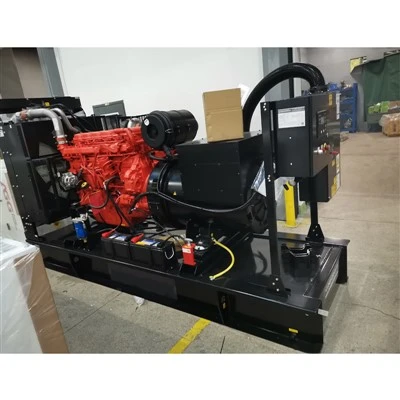
First, let’s set a baseline: we don’t pull “high-power” out of thin air. When we classify generator sets by power range, we anchor every number to kilovolt-amperes (kVA) — the standard for electrical load capacity in industrial settings, rather than kilowatts (kW), because kVA accounts for the total power a generator can deliver, including the reactive power that runs motors and compressors, which most facilities rely on. A quick rule of thumb for industrial use: kW is roughly 0.8 times kVA for resistive loads, and 0.6 to 0.7 times kVA for inductive loads like motors, so don’t fall for vendors who quote kW and skip kVA— that’s a common trick to make a smaller set sound bigger.
Most industrial generators fall into three broad buckets: low-power (under 500 kVA), medium-power (500 kVA to 2,000 kVA), and high-power, which is where it gets specific. For industrial applications, we define high-power generator sets as those rated at 2,000 kVA and above. That’s not a random number— it’s a standard we’ve aligned with through decades of working with manufacturers, facility engineers, and industry groups. To put that in perspective: a 2,000 kVA set can power a small retail center, but a 5,000 kVA unit? That’s enough to run an entire mid-sized manufacturing plant, including heavy machinery, lighting, and critical HVAC. There’s a reason this range is split at 2,000 kVA: below that, you’re typically powering single discrete loads or small backup systems, not full industrial operations that require syncing with multiple heavy loads or tying into a microgrid during outages.
Let’s make that concrete with real-world examples, because I’ve seen these scenarios play out too many times to count. A high-power generator set isn’t a one-size-fits-all for “big” businesses—it’s tailored to the load profile of your industry. Take a metal stamping plant: their core load is a series of 75 kVA hydraulic press motors, plus a 300 kVA ventilation system, a 200 kVA air compressor, and 100 kVA of lighting and controls. Total running load is around 675 kVA, but when the stamping line ramps up, all those motors kick on at once, creating a “power surge” of up to 120% of the running load. That means the plant needs a generator that can handle that surge, so they’d look at a 1,200 kVA set—well under the high-power threshold. Now contrast that with a large chemical processing plant, which has 10 identical 350 kVA reactor motors, a 400 kVA distillation column compressor, 250 kVA of critical safety systems, and a 200 kVA backup fire suppression system. Their total surge load hits around 4,500 kVA when all core systems activate—so that’s a 5,000 kVA high-power set, right in the range we define. Another example: a regional data center, which needs constant, zero-fail power for servers, cooling, and UPS systems. A mid-sized colocation center will often spec a 6,000 kVA high-power set—enough to cover their entire primary load, plus the safety margin needed for any temporary overloads.
What about the edge cases? We regularly get asked about sets that land right at the 2,000 kVA line, or vendors who label a 1,800 kVA unit “high-power” to upsell customers. That’s where context matters. A food and beverage plant with a mix of small process loads and cold storage might need a 2,100 kVA set just to cover their refrigeration and packaging lines, making that a high-power set for their operation. Conversely, a small manufacturing shop that only runs a single 1,500 kVA machine and a small office backup system will never need to cross the 2,000 kVA threshold. So while our industry standard for high-power industrial generators is 2,000 kVA and up, the real test is whether the set can handle your peak load plus a 10-15% safety margin—something we always emphasize with customers, because that safety margin is what prevents outages during critical moments.
Now, why does this power range distinction matter more now than ever? Industrial operations are pushing the boundaries of generator capacity for two big reasons: first, the rise of remote mining and off-grid industrial sites, which rely on generators as their sole power source (no grid to fall back on), and second, the push for microgrid integration, which requires high-power generators to sync with solar, wind, and battery systems to ensure stable power. For off-grid mines in remote areas of northern Canada or Western Australia, for example, a high-power set rated at 10,000 kVA isn’t just a backup—it’s the primary power source for the entire site, including extraction equipment, processing plants, and worker housing. If that generator fails, production stops, and that can cost tens of thousands of dollars per hour in lost revenue. For microgrid projects, high-power sets need to be able to ramp up and down quickly to balance variable renewable energy, a capability only available in units rated at 2,000 kVA and above—smaller low or medium-power generators can’t handle the dynamic load changes required for microgrid stability.
I’ve also seen the cost tradeoffs play out when businesses misclassify their needs. A few years back, we worked with a mid-sized brewery that bought a 1,800 kVA medium-power set thinking it was “high-power” enough for their brewing lines and canning equipment. During a 2019 regional outage, their canning line’s 500 kVA compressor and their fermentation tanks’ 700 kVA chillers both kicked on at the same time, pushing the generator to its absolute limit. It ran for 20 minutes before overheating, shutting down, and spoiling 300 barrels of beer—costing them over $120,000 in lost product and downtime. A year later, they upgraded to a 2,200 kVA high-power set, which cost them 15% more than the original, but the difference in peace of mind and uptime has been immeasurable. On the flip side, a large auto parts manufacturer once came to us looking for a 6,000 kVA high-power set, but after auditing their load profile, we found their peak surge was only 4,800 kVA. We adjusted their spec to a 5,000 kVA high-power unit, saving them $250,000 upfront and reducing their annual fuel and maintenance costs by 10% because they were running the generator at a more efficient load level (70-80% of rated capacity, which is the sweet spot for generator performance).
Let’s talk about the technology that makes high-power industrial generator sets unique, because it’s not just a bigger engine. Unlike low-power sets, which are often single-phase and built for small backup loads, high-power industrial generators are three-phase, designed for heavy-duty continuous operation, and built with features that handle the demanding load profiles of industrial sites. That includes reinforced alternators to handle surges, fuel injection systems that can run on diesel, natural gas, or even biodiesel (a big plus for businesses looking to reduce their carbon footprint), and digital control systems that sync multiple generators together for even more capacity—something you can’t do with smaller units. For example, a 10,000 kVA high-power set can be paired with another identical unit to create a 20,000 kVA system, for facilities that need to expand their operations without replacing their entire setup. We also see high-power sets used for peak shaving—when industrial facilities run their generators during high grid demand periods to avoid expensive utility surcharges, a strategy that only works with generators sized to handle large, consistent loads.
Common misconceptions about high-power industrial generator sets are also worth calling out. First, many people think high-power means it’s only for huge corporations, but that’s not true. A 2,000 kVA high-power set can power a mid-sized distribution warehouse, a regional hospital’s critical systems, or a small food processing plant—all businesses that don’t qualify as “Fortune 500” but still need reliable backup or primary power. Second, some think higher kVA equals more efficiency, but that’s not the case—efficiency depends on how much load the generator is running at, not just its rated capacity. A 5,000 kVA set running at 50% load is less efficient than a 2,000 kVA set running at 80% load, so matching the power range to your actual needs is always the best call. Third, people often forget about environmental regulations—high-power generators are subject to stricter emissions standards than smaller units, especially in areas with tight air quality rules. We work with all major engine brands to offer high-power sets that meet EPA Tier 4 standards, EU Stage V, and other global emissions requirements, so you don’t have to worry about fines or compliance issues.
As someone who’s been in this space for years, the best advice I can give to anyone looking for a high-power industrial generator set is to do two things before you buy: first, conduct a full load audit of your facility. That means mapping every piece of equipment, its running load, its surge load, and how often those surges happen. Don’t just go off the nameplate ratings on individual machines—many nameplates list the rated load, not the surge load, which is where most outages happen. Second, talk to a provider who actually specializes in classifying generators by power range, not just selling one-size-fits-all units. We’ve worked with over 1,000 industrial facilities of all sizes, so we know the specific load profiles for different industries: mining sites need different capacity rules than data centers, food processing plants have different surge requirements than automotive manufacturing. We can help you not just pick a high-power set that fits your needs now, but one that can accommodate future expansion—no need to replace your generator every 5 years as your operations grow.
If you’re currently facing an outage that’s costing you revenue, or planning for a new installation or expansion that requires high-power capacity, the biggest mistake you can make is guessing at your power needs. A generator set is a long-term investment—we’ve had customers who’ve run their sets for 20 years with minimal maintenance, saving millions in downtime costs over that time. A poorly sized generator, though, can cost you far more in a single outage than the cost of a new unit. We’ve helped hundreds of clients avoid that mistake over the years, auditing their load profiles, recommending the right power range, and providing ongoing maintenance and support to keep their generators running reliably when they need them most.
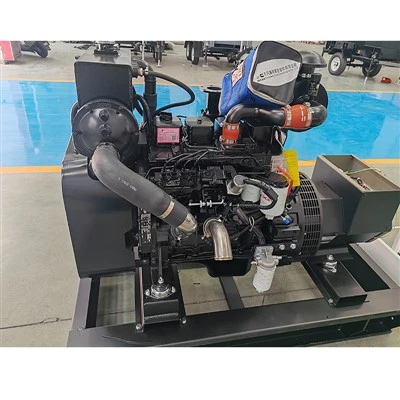
To learn more about what a high-power industrial generator set can do for your operations, or to get a custom assessment of your power needs, don’t hesitate to reach out. We specialize in matching generator sets to your exact load requirements, no matter the size of your industrial facility, and we’re here to answer any questions you have about power range classification, specs, emissions, and maintenance.
Generator Sets Classified by Engine Brands References
- International Electrotechnical Commission (IEC) Standard 60034-1: Rotating Electrical Machines – Rating and Performance
- U.S. Environmental Protection Agency (EPA) Generator Emissions Standards for Industrial Power Systems
- Industrial Generators Association (IGA) Power Range Classification Guidelines
- National Electrical Manufacturers Association (NEMA) Standard MG 1: Motors and Generators
- Global Power Equipment Group: Industrial Generator Load Profile Analysis Report
Taizhou Jinte Electromechanical Technology Co., Ltd.
We are one of the most professional generator sets manufacturers and suppliers in China. With abundant experience, we offer a wide range of generators with superior quality. Please rest assured to buy advanced generator sets for sale here from our factory. Customized orders are welcome.
Address: Room 207-214, Eurasia International Garden Commercial Center, Hailing District, Taizhou City
E-mail: Sales@generatorschina.com
WebSite: https://www.jintepower.com/
