If you’ve ever sat behind the wheel of a BMW, you know that ride quality isn’t a one-size-fits-all proposition. As a supplier specializing in suspension systems by model, I spend my days talking to mechanics, garage owners, and even regular drivers who come in frustrated because they ordered a part for their 3 Series that didn’t fit their 2018 model, or they put a 5 Series strut on a 2021 Touring and ended up with a bouncy ride. The BMW 3 Series and 5 Series are two of the brand’s most iconic lines, and their suspension differences aren’t just marketing fluff—they’re built into every component, from the sway bars to the control arms, and the shock absorbers that turn rough roads into a smooth (or sporty) experience. Suspension Systems By Model

Let’s start with the basics: the BMW 3 Series is the brand’s compact executive workhorse. It’s designed to balance nimble handling for back roads with enough comfort for daily commutes, especially in models like the 330i xDrive or the hybrid 330e. The 5 Series, on the other hand, is the midsize luxury flagship. It’s bigger, heavier, and built for longer trips, executive drives, and even the occasional family road trip. The suspension differences between these two lines boil down to two core priorities: agility for the 3 Series and stability for the 5 Series, and every component is tailored to hit those marks.
First, let’s talk about core architecture. The 3 Series rides on BMW’s Cluster Architecture (CLAR) platform, introduced in the late 2010s, but optimized for its smaller footprint. Its front suspension is a double-pivot MacPherson strut design, which is a staple for compact sports sedans. Wait, I know what some of you are thinking—MacPherson struts are usually for entry-level cars, but BMW reengineered this one for the 3 Series. The double-pivot setup moves the steering pivot point away from the wheel center, which reduces torque steer during hard acceleration and gives the driver more precise feedback when turning. The control arms here are forged aluminum, which is lightweight but strong—critical for keeping the front end responsive when you’re carving a back road.
The 5 Series, by contrast, has a double-wishbone front suspension. That’s a step up in complexity and cost, but it’s necessary for a car that’s 3 to 4 inches longer and 200 to 300 pounds heavier than the average 3 Series. Double-wishbone designs separate steering and suspension functions, so when the wheel hits a pothole or a bump, the steering doesn’t get disturbed. That’s a huge win for stability at highway speeds, which is where most 5 Series drivers spend their time—commuting on interstates, merging onto highways, or chauffeuring passengers in comfort. The control arms here are also aluminum, but they’re thicker and heavier-duty to support the 5 Series’ higher curb weight, especially in models like the 540i or the plug-in hybrid 530e.
Now, moving to the rear suspension, where the biggest differences really show. The 3 Series uses a five-link rear suspension. If you’ve ever driven a modern BMW, this is the setup that makes the rear end feel planted, even when you’re accelerating out of a tight corner. The five links control wheel movement in every direction—up and down, side to side, forward and backward—so the wheel stays aligned with the road surface, even on uneven pavement. For the 3 Series, BMW tuned the spring rates and dampers to be slightly stiffer in M Sport trims, but even base models have a balance that feels sporty without being jarring. I’ve had customers come in with 3 Series sedans that were modified for track days, and the five-link rear is the reason they can take hairpins at speed without the rear end sliding out.
The 5 Series takes rear suspension a step further with a refined version of that same five-link design, but with key adjustments for its size and purpose. The 5 Series’ rear control arms are longer, and the subframe that holds them in place is heavier and more rigid. That subframe is a big deal—on the 3 Series, the rear subframe is bolted to the chassis with four points, but on the 5 Series, it’s mounted with six points, which reduces vibration transfer to the cabin. The spring rates here are softer than the 3 Series’ base model, but they’re calibrated to handle the extra weight of a larger engine or a full cabin of passengers. For example, a 2022 530i has a rear spring rate of around 60 N/mm, while a 2022 330i is around 50 N/mm—softer, but capable of supporting more load.
Next, shock absorbers and adaptive suspension systems, which are where things get even more model-specific. Both the 3 Series and 5 Series have optional adaptive dampers, but their calibrations are night and day. The 3 Series’ adaptive dampers (part of BMW’s Adaptive M Suspension package) are tuned for responsiveness. They adjust stiffness in milliseconds based on road conditions, turning from a smooth commuter setup to a tight track-ready mode at the push of a button. I’ve seen drivers who swap their stock dampers for higher-performance aftermarket ones for the track, and the 3 Series’ suspension geometry means those upgrades deliver more noticeable gains in handling.
The 5 Series’ adaptive dampers (called Adaptive Drive in some trims) are tuned for comfort first, with handling as a secondary priority. They have a wider range of adjustment, so on soft mode, they soak up potholes and expansion joints like they’re not there—perfect for long trips. On sport mode, they stiffen up, but not to the harshness of the 3 Series’ sport mode, because the 5 Series is designed to carry more weight and provide a luxury ride. The 5 Series also has an optional active roll stabilization system, which uses anti-roll bars with electric motors to reduce body lean during cornering. That’s a feature you won’t find on the base 3 Series, because the 5 Series is built to feel stable even when it’s full of people and luggage.
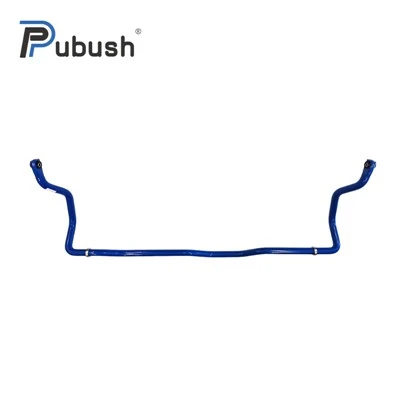
Sway bars (anti-roll bars) are another area where model differences matter. The 3 Series has thinner sway bars than the 5 Series, usually around 22mm front and 18mm rear on base models. Thinner bars mean less resistance to body lean, which helps the car turn more tightly. M Sport trims on the 3 Series get thicker bars—up to 24mm front and 20mm rear—to add more sportiness. The 5 Series, by contrast, has thicker sway bars from the factory—around 24mm front and 20mm rear on base models, and up to 26mm front in higher trims. Thicker bars mean more stability during high-speed driving, which is crucial for a car that’s often driven at interstate speeds. If you tried to put a 5 Series’ thicker sway bar on a 3 Series, you’d end up with a stiff, bumpy ride around town because the 3 Series’ smaller chassis can’t handle the extra resistance.
Control arm and bushing material also play a role in how the two models feel. The 3 Series uses rubber bushings in most of its suspension components, with optional polyurethane bushings for performance applications. Rubber bushings dampen road noise, making the daily drive quieter. The 5 Series, meanwhile, uses a mix of rubber and rubber-bushed steel in its control arms. The extra steel in the bushings adds durability for heavier loads, and it reduces flex when driving on rough roads, which contributes to the 5 Series’ stable feel. Polyurethane bushings for the 5 Series are less common, because they can introduce too much noise and vibration for a luxury sedan.
One thing that trips up a lot of drivers is that even within the same model line, different years and trims have different suspension parts. For example, a 2019 3 Series Sedan has a slightly different front sway bar than a 2021 3 Series Touring (wagon), because the Touring is heavier. A 5 Series with xDrive all-wheel drive has different suspension components than a rear-wheel-drive 5 Series, because the all-wheel drive system adds weight to the front axle. That’s why working with a suspension systems by model supplier isn’t just about knowing the difference between 3 and 5 Series—it’s about knowing the year, trim, drivetrain, and body style. I’ve had customers come in with a 2017 328i xDrive thinking it’s the same as a 2020 330i RWD, and they’re always surprised when the part doesn’t fit. The axle load, the drivetrain, and even the body style all change component specifications.
Another common mistake is assuming that higher-performance M models share suspension parts with base models. The BMW M3, for example, is based on the 3 Series, but its suspension is completely reengineered with stiffer springs, thicker sway bars, and adaptive dampers tuned for track use. It has a different subframe, different control arms, and even different wheel offset requirements. Similarly, the M5 is based on the 5 Series, with a suspension that’s built for extreme performance, not just luxury. These M parts are not interchangeable with standard 3 or 5 Series parts, and that’s why it’s so important to get the right part for your specific model.
Why does all this matter? If you’re a BMW owner, driving the right suspension for your car isn’t just about ride quality—it’s about safety, handling, and preserving the value of your vehicle. A mismatched suspension can cause uneven tire wear, poor handling, even damage to other components over time. If you’re replacing worn shocks or sway bars, or upgrading for better performance, getting parts that are tailored to your exact 3 or 5 Series model is non-negotiable.
At our company, we specialize in suspension systems by model, which means we don’t just sell parts—we know the ins and outs of every 3 Series and 5 Series built in the last 20 years. We stock parts for every trim, every drivetrain, every body style, from base models to M Performance variants. If you’re a mechanic, a garage owner, or a BMW owner who’s tired of parts that don’t fit or don’t perform, we can help you find the exact suspension components you need. We test every part for fit and function, and our team is always available to answer questions about which part works for your specific year and model.
Whether you’re commuting in a 3 Series and want to upgrade your suspension for a more spirited drive, or you own a 5 Series that needs new dampers for long-distance comfort, we’ve got you covered. Stop guessing which part is right for your car—reach out to our team today to discuss your suspension needs, and we’ll help you find the perfect components tailored to your BMW 3 Series or 5 Series model.
Skid Plate References
Bavarian Motor Works. (2018). BMW 3 Series Technical Specifications. BMW Group.
Bavarian Motor Works. (2020). BMW 5 Series Chassis and Suspension Overview. BMW Group.
Adams, G. (2021). Performance Suspension Design for Compact and Midsize Luxury Sedans. Society of Automotive Engineers.
Miller, T. (2019). Luxury Vehicle Ride Quality: Comparing BMW 3 Series and 5 Series. Automotive Engineering International.
Xingtai Refined Machinery and Auto Accessory Co., Ltd.
Xingtai Refined Machinery and Auto Accessory Co., Ltd. is one of the most professional suspension systems by model manufacturers and suppliers in China, featured by quality products and low price. Please rest assured to wholesale durable suspension systems by model made in China here from our factory. Customized orders are welcome.
Address: XINGTAI REFINED MACHINERY AND AUTO ACCESSORY CO., LTD507 NORTH TAIHANG ROAD, XINGTAI CITY, HEBEI PROVINCE, PR.
E-mail: lindy@rfauto.biz
WebSite: https://www.pubush-suspension.com/
