Hey there! If you’re running a paper converting business—whether you’re doing tissue rolls, corrugated stock, label paper, or even specialty kraft for packaging—you’ve probably stared at your paper slitting machine and wondered, “Just how much can this thing actually crank out in a day, a week, a month?” I get it. When I sell paper slitting machines, the first question most folks ask after “Does it handle 60-inch wide jumbo rolls?” is always some version of “What’s its production capacity?” It’s not just a random number, either. Get that wrong, and you’re ordering a machine that’s too slow to keep up with orders, or wasting cash on one that’s way more powerful than you need. Paper Slitting Machine
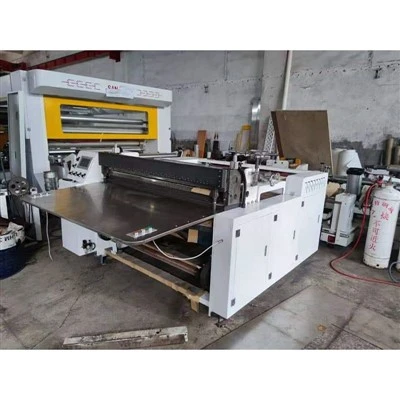
Let’s cut through the jargon, no fancy formulas that’ll make your eyes glaze over. I’ve been selling slitting machines for 12 years, and I’ve watched so many clients mess up their capacity calculations because they ignored small, real-world things—like roll changes or material jams. This is the stuff I actually tell my customers, not the textbook stuff.
First, let’s break down what “production capacity” even means here. It’s not just how fast the blade runs. It’s the total usable paper you can slit and wind into finished rolls, minus downtime, right? A lot of new operators only look at the machine’s top speed, but that’s like judging a car’s gas mileage only at 80 mph on the highway—totally not how it works when you’re driving in stop-and-go traffic.
Step 1: Figure Out Your Machine’s Core Speed (The “Actual Working” Speed, Not Max)
Every slitting machine has a rated max speed. For entry-level models, that’s usually around 1,000 feet per minute (FPM); mid-range ones can hit 3,000 FPM, and high-speed specialty ones go past 5,000. But here’s the thing: that max speed is almost never what you’ll actually run. Why? Because if you run tissue paper at 3,000 FPM, you’ll get jams, uneven slits, and maybe even damage the web. For heavy corrugated stock, you might only run 800–1,200 FPM to keep the edges clean and the rollers from slipping.
So start with a realistic operating speed. Let’s use an example: if your machine’s max speed is 2,500 FPM, but you average 1,800 FPM for most of your orders (standard office paper, medium kraft), that’s your base number. Why not use the max? I once had a client who cranked their new machine to 2,200 FPM for label stock and wasted 3 hours fixing jams before they realized 1,600 FPM was all they needed. Lesson: talk to the machine’s manual, but also look at material specs. Thin, delicate paper (like tissue or photo paper) needs slower speeds; thick, rigid stuff (corrugated, heavy kraft) can handle faster.
Step 2: Account For The Jumbo Roll Size You Actually Use, Not The Machine’s Max
Your machine can handle a jumbo roll that’s 70 inches wide and 40 inches in diameter, but if your suppliers only deliver 60-inch wide, 32-inch diameter rolls, that’s what you’ll work with. This matters because the length of paper on a jumbo roll directly affects how many times you have to stop to change it. A big roll has way more linear footage than a small one, so fewer roll changes = more running time.
Let’s do a quick roll length calculation to make this simple. The formula for linear feet of paper on a roll is:
Roll Length (ft) = (π × ((Outer Diameter/2)² – (Inner Core Diameter/2)²) × Paper Width) / 144
Wait, no need to panic—you don’t have to do this math yourself, but you should know the number. For example, a 60-inch wide roll, 32-inch outer diameter, 3-inch core: that’s about 5,800 linear feet of paper. A smaller roll, say 28-inch diameter, same core, is only around 4,500 feet. So if you’re changing rolls every 45 minutes vs. every 60 minutes, that’s 15 extra minutes of downtime per hour. Over a shift, that adds up.
Step 3: The Big One—Downtime. This Is Where 90% Of People Mess Up
I can’t stress this enough. A machine might run 1,800 FPM, but if it’s down 20% of the day for roll changes, blade sharpening, or jams, your effective capacity drops hard. Let’s break down downtime into categories, because not all downtime is equal:
-
Scheduled Downtime: This is stuff you plan for. Roll changes, blade adjustments, cleaning, routine maintenance. For most mid-volume shops, scheduled downtime is about 15–20% of a work shift. High-speed machines might have less (10–15%) because they use automatic roll changers, while manual entry-level machines can have 25% or more because an operator has to stop, pull a new roll, thread the web, and start it back up.
-
Unscheduled Downtime: This is the bad stuff. Jams, broken blades, power outages, material defects (like a jumbo roll with a tear or a knot). Most shops ignore this, but it’s usually 5–10% of a shift, sometimes more if you’re working with tricky material like coated paper. I always tell clients to add an extra 5% buffer for unscheduled downtime, because it’s better to underestimate capacity a little than get stuck with a machine that can’t meet deadlines when a jam happens.
Let’s plug numbers into an example to make this concrete. Say you run an 8-hour shift (no overtime, no weekend work for this calculation).
- Operating speed: 1,800 FPM
- Scheduled downtime: 18% (so 8 × 0.18 = 1.44 hours lost)
- Unscheduled downtime: 5% (8 × 0.05 = 0.4 hours lost)
- Total running time: 8 – 1.44 – 0.4 = 6.16 hours, or ~369.6 minutes.
Now multiply that by your speed: 1,800 FPM × 369.6 minutes = 665,280 linear feet per shift. That’s the total you can produce in one 8-hour day. But wait—what if you’re slitting that jumbo roll into smaller finished rolls? You can’t just use that total linear feet; you have to account for the trim waste.
Step 4: Trim Waste—Don’t Throw Away Paper (Or Cash)
When you slit a wide jumbo roll into smaller finished widths, you have to cut off strips on the edges (trim) to get clean, straight edges on the finished rolls. How much trim depends on your machine and your finished width. Most modern slitting machines have a trim waste of 1–3% for standard widths. If you’re slitting into really narrow rolls (like 1-inch wide labels), you might have a little more, around 4%, because you need extra space for the blades to track.
In our example, let’s say trim waste is 2%. So take that 665,280 linear feet, multiply by 0.98, and you get ~651,000 finished linear feet per shift. If you’re selling your paper by the pound, you can convert that to weight—just look at the paper’s basis weight (e.g., 20 lb copy paper is 3,000 square feet per 500 sheets, but linear weight is easy: divide linear feet by 3,000 × 500 × 20, but honestly, your machine’s manual can give you a conversion factor).
Step 5: Adjust For Your Specific Orders (This Is The “Real-World” Part)
Here’s where I tell clients to stop using generic numbers. If 70% of your orders are narrow rolls (1–5 inches) and 30% are wide rolls (20–30 inches), your capacity is going to be different than a shop that does mostly wide rolls. Why? Because slitting narrow rolls takes a little more time for blade spacing, and you might have more trim waste on narrow cuts. But if you’re doing a mix, average your order sizes to get a better number.
Also, if you’re running multiple shifts? Double it, but remember that second shift might have a little more downtime because operators are less experienced, or maintenance is harder to schedule. I’ve had clients who bought a 1-shift capacity machine and tried to run two shifts, only to find out they needed a bigger machine because of extra downtime on the second shift.
Wait, let’s test a common mistake I see all the time. A client comes to me and says, “My old machine does 2,000 FPM, so I need a new one that does 3,000 FPM, so I’ll get 50% more capacity.” But their old machine had 20% downtime, and the new one has 15% downtime. Let’s do the math: Old machine: 2,000 × (8 hours × 0.8) = 2,000 × 6.4 = 12,800 ft/hour. New machine: 3,000 × (8 hours × 0.85) = 3,000 × 6.8 = 20,400 ft/hour. That’s not 50% more—it’s almost 60% more. The downtime difference matters way more than the speed difference. That’s why just looking at max speed is stupid.
How To Make This Easier: Use A Simple Cheat Sheet
If you’re not a math nerd (no judgment, most of my clients are not), here’s a quick cheat sheet for mid-volume operations (1–5 million pounds of paper a year):
- Entry-level slitting machine (manual roll change): ~500,000–700,000 finished linear feet per 8-hour shift.
- Mid-range slitting machine (automatic roll change): ~700,000–1,100,000 finished linear feet per 8-hour shift.
- High-speed slitting machine (for specialty paper): ~1,200,000+ finished linear feet per 8-hour shift.
But this is just a ballpark. Your actual number will change based on material, order mix, and downtime. The best way to get a precise number? Tell me what you’re slitting, how many shifts you run, and your average roll size, and I’ll help you work it out—no pressure.
Wait, one last thing: don’t forget about roll winding quality. If your machine has bad tension control, you might have to slow down to keep the finished rolls from being loose or wrinkled. I once had a client who bought a cheap slitting machine that had terrible tension control, so even though it was rated for 2,500 FPM, they only could run 1,200 FPM because every 10 minutes they’d have to fix a wrinkled roll. So quality of the machine’s parts (blades, rollers, tension systems) is just as important as speed.
When Should You Re-Calculate Capacity?
Your business changes, so your capacity should too. If you start taking more wide rolls, you’ll have less trim waste and higher capacity. If you switch to more delicate coated paper, you’ll have to run slower. If you add a third shift, you might need to account for overtime fatigue causing more unscheduled downtime. I always tell clients to recheck their capacity every 6 months when their order mix changes, because it’ll save you from buying a machine that’s wrong for your current business.
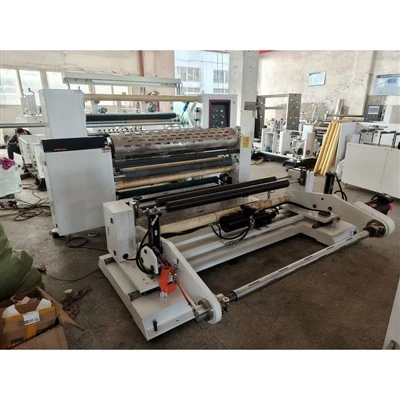
Look, I sell paper slitting machines, but my job isn’t to just sell you the biggest one. It’s to sell you one that fits your actual needs. If you’re a small shop that only runs one shift a day on tissue rolls, a high-speed 5,000 FPM machine is overkill—it’ll cost you 30% more and you’ll never use its full capacity. If you’re a big packaging company running two shifts on corrugated, you need that mid-range machine with automatic roll changes to keep up.
Film Slitting Machine I’ve helped hundreds of clients figure out their exact capacity before they even buy a machine, so they don’t end up with something that’s too slow or too expensive. If you’re trying to plan your next order, or you’re tired of your current slitting machine holding you back, hit me up. We can walk through your numbers, talk about material specs, and find a machine that works for you—no confusing jargon, no hidden fees, just straight talk about what your operation actually needs.
References
- Paper Converting Machine Company. (2022). Guidelines for Calculating Slitting Machine Production Capacity. International Converting Association Technical Paper Series.
- European Paper and Board Converting Association. (2021). Downtime Factors in Slitting Operations. EPCBA Industry Best Practices Report.
- Smith, J. (2020). Optimizing Slitting Speed for Different Paper Grades. Journal of Converting Technology and Management, 14(2), 45–52.
- US Environmental Protection Agency. (2019). Trim Waste Reduction in Paper Converting. EPA Small Business Sustainability Guide.
Wenzhou Sanhui Machinery Manufacturing Co., Ltd.
Wenzhou Sanhui Machinery Manufacturing Co., Ltd. is one of the most professional paper slitting machine manufacturers and suppliers in China. We have world-leading production equipment and strong manufacturing capabilities. Please feel free to wholesale advanced paper slitting machine made in China here from our factory. Customized orders are welcome.
Address: B17-8, Mechanical Industry Park, Wanquan Light Industry Production Base, Wanquan Town, Pingyang County, Wenzhou City, Zhejiang Province
E-mail: sanhui.slittingmachine@gmail.com
WebSite: https://www.sanhuislittingmachine.com/
