If you’ve ever needed to lift heavy construction materials, industrial equipment, or even load oversized cargo onto a truck bed, you know a truck mounted crane is far more versatile than relying on a manual crew or a separate crane and truck. As a supplier who’s been fielding calls from construction managers, small business owners, and event planners across North America for 12 years, one of the most common questions I get is: “How much does a truck mounted crane actually cost?” The answer isn’t a single number—there’s no one-size-fits-all price tag. Over the years, I’ve learned that buyers don’t just care about upfront cost; they care about what that cost buys them: reliability, lift capacity, mobility, and long-term value. Let’s break down the factors that shape the price, so you can make a choice that fits your project needs and budget without overspending. Truck Mounted Crane
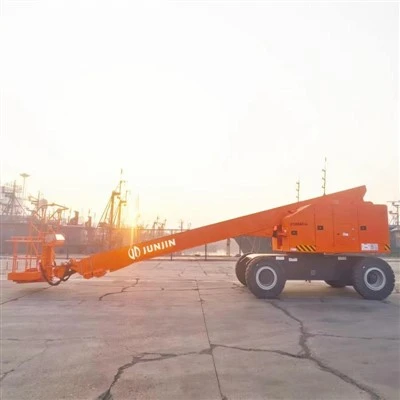
First, the biggest driver of cost is load capacity. Truck mounted cranes are categorized by their maximum lifting weight, usually measured in tons (short tons, for U.S. markets). The smallest, most entry-level models are 2 to 5-ton cranes, typically mounted on a compact pickup truck chassis. These are perfect for small residential jobs: lifting roof trusses, HVAC units, or moving construction debris around a job site without needing a full-size truck and separate crane. I’ve sold dozens of 3-ton models over the years to general contractors working on home additions and landscaping companies installing large trees. Their price ranges from $25,000 to $45,000. This includes the compact truck chassis, a hydraulic crane arm, and basic controls. The key here is that these cranes are light, easy to maneuver through narrow residential streets or tight backyards, which cuts down on setup time—something small crews value. But they have limits: a 3-ton crane can safely lift about 6,000 pounds at a 10-foot radius; go beyond that, and you risk strain on the crane arm or the truck’s frame.
Move up to mid-range models, and you enter the 10 to 25-ton capacity bracket. These are the workhorses of the construction industry, the most popular models for small to mid-sized commercial projects: building a 4-story office addition, installing utility poles, or lifting heavy steel beams. The chassis for these models is a medium-duty work truck, like a Ford F-750 or International MV, with a reinforced frame to handle the extra weight. The crane here has longer booms—some extend up to 80 feet with hydraulic extensions, so you can reach higher or lift further out from the truck. The price for mid-range models starts at $60,000 and goes up to $120,000, depending on the features. For example, a 15-ton model with a flatbed for hauling materials as well as lifting will be at the higher end of that range, while a similar capacity model with a remote control (instead of cab-only controls) will cost a bit more because it lets the operator stand at the load to position it more accurately, reducing the chance of damage. I recently sold a 12-ton model to a concrete contractor in Ohio, who used it to lift pre-cast wall panels onto new commercial garages. He told me it paid for itself in 8 months because he no longer had to rent a separate crane for those jobs, which was saving him $1,500 per rental.
Then there are the heavy-duty truck mounted cranes, with capacities of 30 tons or more. These are built for large-scale commercial and industrial projects: bridge construction, moving heavy industrial machinery, or lifting pre-fabricated building components for high-rises. The chassis here is a heavy-duty semi-truck or a specialized 8×4 truck, with dual rear axles and heavy-duty suspension to support the crane’s weight. The booms on these models can extend over 100 feet, and some have the option to add a jib for even higher lifts or to reach over obstacles. These cranes are also designed for sustained heavy use, with higher-grade steel in the boom and more powerful hydraulic systems. The price for a new 30-ton heavy-duty model starts at $150,000 and can exceed $300,000 for models with extra features like outriggers that extend wider for stability, a cab with air conditioning for long workdays, or built-in tools like a winch for pulling heavy materials. A 35-ton model I quoted last year for a road construction company in Texas had a custom flatbed and extended outriggers, totaling $275,000. For companies that do big jobs, the cost is justified by the ability to take on higher-value contracts that require heavy lifting, without renting expensive mobile cranes for every project.
Another big factor that affects price is whether you buy new or used, and where you source it. A lot of first-time buyers assume used is the only way to save money, but that’s not always the case. A late-model used crane (less than 5 years old, with under 5,000 lift hours) can cost 30% to 50% less than a comparable new model. That’s a great option for small businesses or crews just getting started, as long as you have it inspected by a certified technician to make sure the hydraulic systems, boom, and truck frame are in good shape. I’ve seen used 5-ton models go for $12,000 to $20,000, and 15-ton used models for $40,000 to $70,000. The downside of used cranes is that they might not have the latest safety features, or they might require more maintenance down the line. New models, while more expensive, come with a manufacturer’s warranty, which covers parts and labor for 1 to 3 years, and you get the latest safety standards, like load moment indicators that prevent overloading—something that’s non-negotiable for many construction companies.
You also have to factor in additional costs that aren’t included in the base price. First, there are customizations. Most buyers don’t realize that a basic crane can be modified to fit their needs: adding a flatbed, a tool box, a winch, or upgraded seating. A 200-pound winch can add $2,000 to $5,000 to the base price, while a custom flatbed with sides and tie-downs adds another $3,000 to $8,000. Then there’s delivery: most suppliers charge $1,000 to $3,000 to transport the crane to your job site or business, though if you’re local, you can sometimes pick it up yourself and save that cost. Safety is another hidden cost. OSHA requires that any crane operator be certified, so if you or your crew don’t have the certification, you’ll need to pay for training courses, which cost around $1,500 per person for a 3-day course. You’ll also need to invest in safety gear: hard hats, harnesses, and load markers, which add a few hundred dollars. Finally, maintenance and insurance. Regular oil changes, hydraulic fluid flushes, and boom inspections cost about $1,000 to $2,000 per year for mid-range models, and insurance for a truck mounted crane is a bit higher than a regular work truck, usually $500 to $1,000 more per year, depending on your coverage.
I’ve also noticed that regional differences can play a role in price. In areas with high demand for construction—like the Southeast, where home building is booming, or the West Coast, where commercial construction is surging—prices tend to be 5% to 10% higher than in the Midwest or Plains states, where there’s less competition for cranes. That’s because demand drives up both new and used prices. For example, a 10-ton model that costs $70,000 in Iowa might cost $77,000 in California, simply because there are fewer suppliers and more buyers vying for limited inventory. Seasonality also matters: buying a crane in the off-season, like late fall or winter when construction slows down, can save you 5% to 10% compared to buying in spring, when contractors are gearing up for busy project schedules.
Now, let’s talk about value, because the upfront cost is only part of the picture. A lot of small business owners I work with focus on getting the cheapest model possible, but that can lead to costly mistakes. I had a customer last year who bought a 2-ton entry-level crane for $22,000 because it was cheaper than a 3-ton model. He tried to lift a 7,000-pound HVAC unit at a residential job, and the crane’s frame bent, leaving him with $5,000 in repairs and a delayed job that made him lose a client. That’s a common mistake: underbuying capacity to save a few thousand dollars, only to end up paying more in repairs and lost revenue. The right truck mounted crane should match your most common lift needs. If you’re only lifting small loads, a 3-ton model is perfect; if you’re doing medium-sized commercial jobs, don’t skimp on a 10-ton model. It’s better to pay a bit more upfront than to deal with downtime and safety risks.
Over the 12 years I’ve been in this business, I’ve built relationships with buyers who come back year after year because I don’t just sell a crane—I help them figure out what they actually need. I had a first-time buyer, a landscaping company owner in Indiana, who initially wanted a 5-ton crane because it was $10,000 cheaper. I showed him that most of his jobs were lifting large stone boulders and 500-gallon water tanks, which averaged 4,500 pounds at a 15-foot radius—well within the 3-ton model’s capacity. He ended up buying the 3-ton model for $38,000, and a year later he came back to buy a second one, saying it had cut his job time by 50% and he’d made back the cost in extra contracts he could take on without renting a crane. That’s the value that matters.
If you’re in the market for a truck mounted crane, the best way to get an accurate price is to tell a supplier about your specific needs: what’s the maximum weight you’ll lift most often, how high do you need to reach, what kind of chassis do you prefer, and any custom features you need. Avoid generic questions like “how much is a crane” because that doesn’t give suppliers enough information to give you a real number. At the end of the day, a truck mounted crane is an investment, not just a purchase. It’s a tool that will help you take on more jobs, work more efficiently, and avoid the cost of renting separate equipment.
If you’re ready to explore your options or have questions about which model fits your projects, reach out to us for a personalized consultation. We can walk you through new and used models, compare pricing, and help you factor in any additional costs so you can make a decision that works for your budget and business.
Articulated Boom Lift References
American Society of Mechanical Engineers. (2020). Safety Standard for Truck-Mounted Cranes.
Occupational Safety and Health Administration. (2021). Crane Operator Certification Requirements.
Construction Equipment Guide. (2022). 2022 Truck Mounted Crane Market Report.
Yantai Quanrui International Trading Co., Ltd.
As one of the most reliable truck mounted crane manufacturers and suppliers in China, we’re featured by high quality customized products. Please rest assured to buy discount truck mounted crane made in China here from our factory. Contact us for pricelist and quotation.
Address: No. 278, Sanya Road, Gaotuan Town, Fushan District, Yantai City, Shandong Province, China
E-mail: Info@quanjin1588.com
WebSite: https://www.qr1588.com/
