Hey everyone, let’s cut to the chase—if you’re in manufacturing, logistics, or warehouse operations, you’ve definitely found yourself staring at a stack of pallets thinking, “Wait, how much is a new plastic pallet actually going to run me? I get that wooden ones are cheap, but they break, splinter, and waste so much time. But plastic pallets? There’s no one-size-fits-all price, right?” That’s exactly the question I get asked 5 or 6 times a day—from startup operations managers to big-name supply chain directors—and it’s way more nuanced than just a number. Let’s break this down like I would chatting with you over a quick coffee, no stuffy industry jargon, just real info from someone who’s been supplying plastic pallets for 12 years now. Plastic Pallet
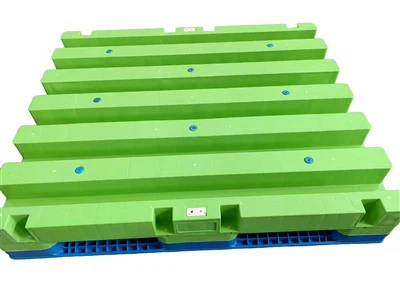
First off, let’s get the average baseline out of the way because that’s what most people actually want. If you’re buying a standard, medium-duty flat plastic pallet—think 48×40 inches, the same size as a standard wooden GMA pallet you see in grocery stores—you’re looking at a range between $80 and $150 per pallet. Yeah, that’s way more than a wooden pallet (which is usually $10-$30, depending on quality), but wait a second—you can’t just compare upfront cost, right? That $80-$150 is the average for the most common type, and that’s before factoring in durability, no maintenance, and reuse. Let’s not gloss over why there’s a huge gap between that $80 entry and the $150 mark. The key here is the “duty rating” and the materials used, which are the two biggest price drivers.
Let’s start with materials, because that’s where the cost starts to add up. The cheapest plastic pallets out there are usually made from 100% recycled plastic. Wait, recycled doesn’t mean bad—those work for light-duty, infrequent use, like a small e-commerce shop that ships 100 pallets a month only for local drops. Those recycled ones clock in around $65-$90, which is closer to the lower end of that average. But here’s the catch: recycled plastic pallets only last about 1-3 years if you’re moving heavy loads, and they can get warped if left outside in extreme heat or cold. Then there’s the mid-tier: pallets made from a mix of recycled and virgin high-density polyethylene (HDPE), which is the workhorse material for most commercial plastic pallets. Virgin HDPE is way more durable, doesn’t warp, and stands up to forklift impacts, repeated load cycles, and even outdoor storage. Those mixed-material mid-duty pallets are the ones most small to mid-sized businesses go for, running $85-$120. The top tier? 100% virgin HDPE, maybe even with reinforced ribs for super heavy loads (like 4,000+ lbs) that you’re moving every day. Those are the industrial-grade ones, $120-$150, and they can last 7-10 years. That’s why the average lands where it does—most orders are for that mid-tier mixed-material pallet, so the sweet spot is around $95-$110 per pallet, which is the number I throw out when someone asks for a straightforward average.
Next, size matters a ton, and not just the 48×40 standard. If you’re a specialty shop, like a food and beverage warehouse that uses pallets for dairy or produce, you might need a custom size—say, 42×42 inches for smaller crates, or 50×48 for oversized industrial parts. Custom sizes automatically add 10-20% to the cost, because we have to mold new tooling runs, and that’s not cheap. Even a small custom tweak, like adding corners for forklift access or anti-slip surfaces, can bump up the price a bit. Then there’s special features: if you need a pallet that’s food-safe (which most of our pallets are, but some require FDA-certified virgin HDPE to meet strict food industry regulations), that adds another $10-$20. Or if you need a pallet that’s static-dissipative (for electronics manufacturing where static can fry parts), that’s another $15-$25. Those features aren’t random—they serve a purpose, so you’re paying for performance that saves you money down the line, not just a plastic box.
Wait, let’s talk about volume, because no one buys pallets one at a time, right? If you’re a small business buying 50 pallets, you’re going to pay the full retail price, no discounts. But if you’re a big operation buying 500, 1,000, or even 5,000 pallets, the price drops—usually by 5-15% off that average range. A lot of my repeat clients, like a regional distribution center that buys 2,000 pallets a year, get their per-pallet cost down to around $80-$90, because bulk orders let us cut production costs and pass that savings along. The flip side: if you’re buying only a handful of pallets, maybe as a replacement for broken ones, you might be looking at the higher end, like $130, because we don’t do small runs for the lowest possible price. That’s a no-brainer, but it’s a detail a lot of first-time buyers miss.
Also, let’s not forget the hidden costs that make plastic pallets way cheaper in the long run. I get it—$100 for a pallet feels steep when you can grab a wooden one for $20. But a wooden pallet lasts maybe 6-12 months if you’re moving heavy loads; a mid-tier plastic pallet lasts 5-7 years. So over 7 years, that $100 plastic pallet works out to about $14 a year, vs. a $20 wooden pallet that’s replaced every year, which is $20 a year. Plus, wooden pallets get splinters, so you have to pay for workers to fix them, or deal with damaged products that get snagged on splinters. Plastic pallets are easy to clean—just hose them off, no pesticides or splinters, so they’re perfect for food, pharma, or even retail. And you don’t have to dispose of them every year; when they reach the end of their life, you can recycle them (most plastic pallets are 100% recyclable) instead of sending wooden ones to the landfill. A lot of clients come to me after buying wood for years and say, “Wait, I’ve spent $10k on wood pallets in 5 years, and the same number of plastic pallets would’ve cost $8k—plus I don’t have the waste hassle anymore.” That’s the math that matters, not the upfront sticker shock.
Now, let’s address some myths I hear all the time. First, “All plastic pallets are the same price.” No way—someone selling a $50 plastic pallet? That’s probably super thin, made of cheap blended plastic, and will crack the first time a forklift drops it. I once had a client who tried those cheap ones and had to replace 30 pallets in 2 months, costing them way more than if they’d bought the mid-tier ones from the start. Another myth: “You can’t rent plastic pallets, so they’re a bad investment.” Wait, you can rent them! A lot of 3PLs offer rental programs, but if you’re using pallets more than 20 times a year, buying is way cheaper. Renting runs about $10-$15 per pallet per month, so if you’re using it for 6 months, that’s more than buying a new one. And if you don’t want to buy all new, we also sell used plastic pallets that are like new, for 30-40% off the price of new—perfect for smaller operations that don’t need a huge fleet all at once.
Wait, let’s test this with real numbers from my own orders, so you can see it’s not just a random range. Last quarter, we shipped:
- A small e-commerce shop: 50 light-duty recycled plastic pallets, 48×40, $72 each (total $3,600)
- A grocery distribution center: 500 mid-tier mixed-material pallets, FDA-approved, $98 each (total $49,000)
- An electronics manufacturer: 2,000 industrial 100% virgin HDPE static-dissipative pallets, $135 each (total $270,000, with 10% bulk discount)
That lines up exactly with the average range I was talking about earlier. The grocery place is the most common order, so their $98 is right in that $95-$110 sweet spot we talked about.
Is there a way to get a more exact price? Yeah, but it depends on your needs. The biggest factors are: how much weight are you moving per pallet? How often are you reusing them? Do you need special certifications (food-safe, chemical-resistant, etc.)? What size and quantity do you want? That’s why I never give a hard number over the phone without asking a few quick questions.
For anyone reading this who’s trying to crunch numbers for their next fleet, let me give a quick tip: don’t just look at upfront cost. Ask suppliers what the expected lifespan is, if they offer bulk discounts, and if they take back pallets for recycling at the end of their life. A lot of suppliers will give you a trade-in credit for old pallets, which cuts your total cost even more.
At the end of the day, the average cost of a new plastic pallet isn’t just a number—it’s a reflection of what you’re actually using it for. If you’re moving light loads infrequently, you can get a solid one for under $80. If you’re running a busy warehouse moving heavy loads daily, you’re looking at $90-$120. And if you need industrial-grade for specialized use, up to $150. The key is to match the pallet to your needs, not just pick the cheapest one, because that’s where you save money long-term.

If you’re ready to get a quote tailored to your operation, or just have questions about which pallet works best for your space, don’t hesitate to reach out to us. We’ve worked with everything from small startup shops to big national logistics firms, so we can help you find something that fits your budget and your workflow.
Drum Dollies & Trolleys References
- Industrial Plastic Pallet Market Report, 2024
- HDPE Pallet Durability and Cost Analysis, Supply Chain Logistics Journal, 2023
- Food-Safe Packaging Material Standards, FDA Food Safety Modernization Act (FSMA) Guidelines
Enlightening Pallet Industry Co., Limited
Enlightening Pallet Industry Co., Limited is one of the most professional plastic pallet manufacturers and suppliers in China, featured by quality products and competitive price. Please rest assured to wholesale cheap plastic pallet for sale here from our factory.
Address: No.339 Hui Xi Road, Jiading District, Shanghai
E-mail: elaine@cnplasticpallet.com
WebSite: https://www.binpallet.com/
