When I first started working in the flexible metal hose industry 12 years ago, a plant manager in the chemical sector told me, “We’ve always used rigid pipe—why would we need something bendable that costs more?” That conversation stuck with me because it’s still one of the most common questions we get as a flexible metal hose supplier: Are these products actually worth the investment for industrial applications? Back then, I had to rely on training materials and product manuals to answer. Today, after countless on-site visits, client installations, and troubleshooting sessions, I can speak from real-world experience: flexible metal hoses aren’t just a “nice-to-have” for many industrial operations—they’re often the difference between smooth production and costly downtime. Flexible Metal Hoses
Let’s start with the basics. Industrial environments are defined by constant movement, vibration, temperature extremes, and harsh chemicals. Rigid steel pipe can handle pressure, but it breaks when exposed to those other factors. Take manufacturing lines with large pumps or compressors, for example. Every time a pump cycles, it vibrates. Over time, rigid piping connected directly to the pump develops cracks at the joints, leading to leaks, unplanned shutdowns, and expensive repairs. A properly installed flexible metal hose absorbs that vibration, preventing stress on the pipe and connections. A client in the oil and gas sector told me once that switching to our hoses cut their pump-related downtime by 70% in the first year alone. That’s not a sales pitch—it’s data from a facility that had been struggling with pipe failure for years.
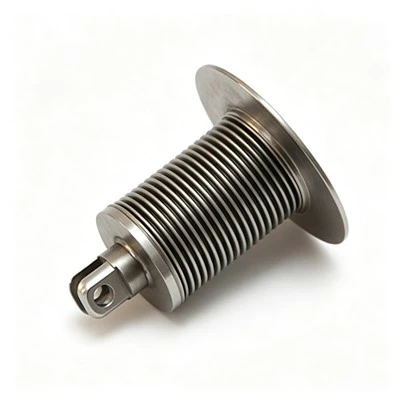
But it’s not just vibration. Thermal expansion and contraction are a huge issue in industries like power generation and food and beverage processing. When a boiler heats up, metal pipes expand. If they can’t move, the pressure builds until joints leak or pipes buckle. Flexible metal hoses have a corrugated structure that allows them to expand and contract without sacrificing integrity. I remember a food processing plant making pasteurized cheese that had to switch between heating milk to 180 degrees and cooling it to 40 degrees every hour. Their rigid pipe system expanded so much that it pulled valves out of alignment monthly. After installing our stainless steel hoses between the heat exchanger and storage tanks, those misalignments stopped entirely. No more stopping production to reset valves, no more lost product from small leaks. That’s a tangible return on investment that’s hard to ignore.
Of course, skepticism comes from cost. Flexible metal hoses do have a higher upfront price than some rigid pipe alternatives. But we always advise clients to calculate total cost of ownership, not just initial cost. Let’s do the math: A 10-foot section of rigid carbon steel pipe might cost $200. But if that pipe fails every 6 months, costing $1,500 in repairs, $5,000 in lost production, and 8 hours of downtime each time, that’s $1,800 every 6 months—$3,600 a year. Our comparable flexible metal hose costs $800 upfront, and if it lasts 5 years, that’s $160 a year. Even if you factor in installation differences, the numbers add up fast. We’ve had clients tell us they recouped the cost of their flexible metal hoses in less than 3 months because they avoided a single unplanned shutdown.
Another point: harsh chemical environments. Industries like chemical processing, mining, and wastewater treatment use corrosive fluids that eat away at standard pipe materials. Flexible metal hoses can be made from alloys like 316 stainless steel, Hastelloy, or even Inconel, which resist corrosion far better than carbon steel or brass. I recently worked with a mining company that transports acidic ore slurry. Their previous hose, a rubber-lined variety, would crack within 3 months from the acid, leading to slurry leaks that contaminated nearby soil. Switching to our 316 stainless steel hoses, which are resistant to that specific acid, they’ve gone 18 months without a leak. That’s not just better for their maintenance schedule—it’s better for compliance with environmental regulations, which can carry fines of thousands of dollars for spills.
But flexible metal hoses aren’t one-size-fits-all, and that’s a key point I make to every client. You can’t take a hose designed for low-pressure air and use it for high-temperature steam, and expect it to work. We spend time with each customer to assess their specific application: what fluid are they moving? What’s the pressure and temperature range? Is there vibration or movement in the system? What’s the space they have to work with? We had a client in the aerospace industry once who needed a hose for a tight space in a satellite testing lab. A standard industrial hose was too bulky, and a rigid pipe would interfere with the test equipment. Our engineers worked with them to design a custom-sized hose that fit the exact space, handled the cryogenic fluids they were using, and didn’t disrupt their tests. That’s the kind of tailored solution that makes flexible metal hoses work—you can’t just buy a generic hose and hope it fits.
I’ve also seen clients use flexible metal hoses for applications where they never would have considered it before. Fire protection systems, for example. In some industrial warehouses, rigid sprinkler piping can shift when forklifts bump into racks, leading to misaligned nozzles. Flexible metal hoses installed between the main pipe and sprinkler heads prevent that shift, ensuring the system works when it’s needed most. Another example: shipbuilding, where piping has to handle the constant motion of a vessel at sea. Rigid pipe would crack under the rolling and pitching, but flexible hoses move with the ship, maintaining a tight seal.
Now, I want to address a common misconception: that flexible metal hoses are hard to maintain. The truth is, when installed correctly, they require very little maintenance. We provide installation guides to every client, and we always advise having them inspected annually, just like any other industrial equipment. A quick visual check for corrosion, kinks, or loose fittings is all it takes. I’ve seen clients skip that check and run a hose until it fails, but that’s the same with any pipe. When maintained properly, our hoses can last 10 to 15 years, sometimes longer, depending on the environment.
I know that as a supplier, I have a stake in this conversation, but I don’t want to overstate the case. There are applications where flexible metal hoses aren’t the best choice. If you’re moving a low-pressure, non-corrosive fluid in a straight line with no movement, rigid pipe might be more cost-effective upfront. But for any application with vibration, thermal change, corrosive materials, or limited space, flexible metal hoses outperform rigid pipe almost every time.
The industrial sector is always evolving, and so are flexible metal hoses. We’re working on new alloys that can handle even higher temperatures, and designs that are easier to install in tight spaces. We’re also focusing on sustainability—our hoses are made from recyclable metal, and their long lifespan means less waste from frequent replacements. That’s important to a lot of our clients now, who are looking for ways to reduce their environmental impact.
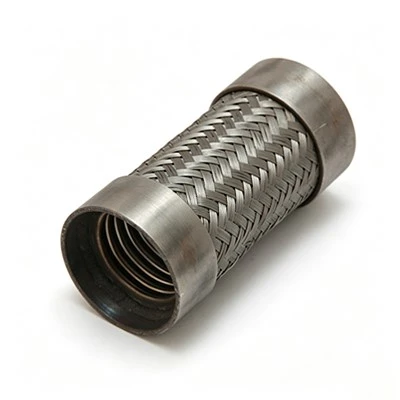
At the end of the day, the question “Are flexible metal hoses suitable for industrial applications?” doesn’t have a one-word answer. It depends on your specific operation, your fluid, your environment, and your priorities. But based on 12 years of working with industrial clients across sectors, I can say this: when chosen and installed correctly, flexible metal hoses solve problems that rigid pipe can’t, save money on downtime and repairs, and create safer, more reliable operations.
Expansion Joints If you’re currently dealing with pipe failures, unplanned shutdowns, or leaks in your industrial system, we’d be happy to walk through your specific application with you. We don’t believe in one-size-fits-all solutions, and we take the time to understand your challenges before recommending a product. Whether you’re in chemical processing, food and beverage, power generation, or any other industrial sector, we can help you find the right flexible metal hose to meet your needs. Reach out to our team to discuss your requirements and schedule a consultation.
References
- Industrial Hose and Fittings Association. (2022). Flexible Metal Hoses for Industrial Piping Systems. North American Manufacturing Council.
- Occupational Safety and Health Administration (OSHA). (2021). Guidelines for Industrial Pipe and Hose Installation and Maintenance. U.S. Department of Labor.
- Center for Chemical Process Safety (CCPS). (2020). Vibration Mitigation in Industrial Process Piping. American Institute of Chemical Engineers.
- National Fire Protection Association (NFPA). (2021). Standard for the Installation of Sprinkler Systems. NFPA 13.
- Journal of Industrial Corrosion Protection. (2023). "Alloy Selection for Flexible Metal Hoses in Harsh Industrial Environments." Vol. 18, No. 2.
Yixing Blog Pipeline Equipment Co., Ltd.
As one of the most professional flexible metal hoses manufacturers and suppliers in China, we’re featured by quality products and good service. With abundant experience, we warmly welcome you to wholesale bulk flexible metal hoses in stock here and get quotation from our factory. Customized orders are welcome.
Address: Zhizao Park, No.50 Chunjiang Road, Industrial Cluster Zone, Heqiao Town, Yixing City, Wuxi City, Jiangsu Province
E-mail: 1351116816@qq.com
WebSite: https://www.blogbellows.com/
