Hey everyone, Beads Embroidery Machine
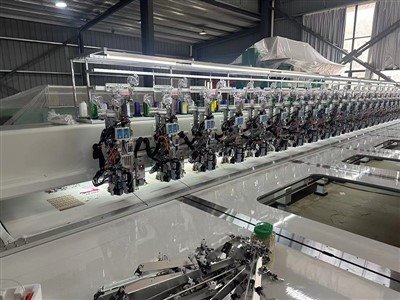
If you run a bead embroidery business, you know the drill: one minute you’re cranking out custom designs for a bulk order, the next your machine hits a snag—maybe a looper’s bent, a thread guide’s cracked, or that tiny gear that feeds beads keeps skipping. I get it, because I’m the owner of a beads embroidery machine supplier, and this is the question I get at least three times a day: Where do I actually find legit replacement parts? No sketchy eBay listings, no parts that break after two uses, no waiting weeks for a package that gets lost in the mail. Let me break this down like I would to a customer who just panicked because their 16-head embroidery machine died mid-run.
First off, let’s cut to the chase: not all replacement parts are created equal. Bead embroidery machines are specific—way different from regular embroidery machines. They have tiny, hyper-precise parts designed to handle small seed beads, sequins, or specialty beads that regular machines can’t even process. If you grab a random part for a standard embroidery machine? It’s gonna bend, skip beads, or ruin your fabric. So skip the big box hardware or generic online parts sites—those don’t get bead embroidery.
That’s why the first, most obvious spot is your original machine supplier. Wait, before you roll your eyes like “I paid them for the machine, now they’re gonna charge an arm and a leg,” hear me out. As a supplier, I keep a full stock of original equipment manufacturer (OEM) parts for every single machine I sell—from the entry-level single-head tabletop models to the high-end industrial multi-head setups. Why is this the best call? Because OEM parts are made exactly for your machine. I don’t have to guess if a looper will fit your 2022 model vs. a 2019 one; I built both, so I know. Last month, a customer from Atlanta messaged me at 8 PM saying their machine’s bead feed wheel broke right as they were shipping 50 custom jacket patches. I shipped that wheel via overnight for $25 (way cheaper than her losing the $1,200 order), and it worked perfectly on the first try. No guesswork, no returns, no wasting time. The only catch here is: if you bought your machine from a random seller on Alibaba or a random local dealer that went out of business, you might not have this option. That’s where the next spots come in.
If your original supplier is MIA, the next best bet is specialty bead embroidery machine parts dealers—not general embroidery part sites. Let’s be real, Google can be a trap here. Type “bead embroidery machine replacement parts” and you’ll get a mix of sites that list parts for all kinds of machines, not just bead-specific. I recommend looking for dealers that only focus on beads embroidery equipment. Why? Their techs actually know what a “needle bar assembly” for bead work is, vs. a standard embroidery needle bar. They stock parts that fit all major brands—like Brother, Baby Lock, or industrial brands I work with—so if your original brand is nowhere to be found, they might have cross-compatible parts that actually work. Last quarter, a customer from Chicago had a vintage 1998 bead embroidery machine that was a hand-me-down, so she couldn’t get parts from the original (they closed in 2005). She found a small specialty dealer in Texas that specializes in old and new bead embroidery parts, and they had a modified gear that worked for her machine. Yeah, it wasn’t OEM, but it was designed for bead work, so she’s used it daily for 8 months no issues. Pro tip for these dealers: check their reviews specifically for parts response time and fit. I’ve seen dealers that list parts as “for bead embroidery machines” but they’re actually generic, leading to 2-week waits and returned parts. Look for dealers that have active customer support, maybe a live chat (no bots!) that can ask your machine model and serial number before you buy.
Now, if you’re a hands-on type, and you have a little patience, you can check the secondhand market—but only specific parts of it. Not Facebook Marketplace (way too many random junk parts), but niche groups. I’m in a few bead embroidery machine owner groups on Facebook and Reddit, and people post used parts all the time. Last week, a member posted a set of looper needles for a 12-head industrial machine that they upgraded, and someone from Florida bought them in 10 minutes for half the cost of new. The key here is to only buy used parts from someone who also owns the same model machine. Don’t buy a looper for a single-head tabletop machine from someone with a multi-head industrial one—they’re totally different. Also, ask for clear photos, and if you can, ask them to show the part next to your machine’s old part (or a parts diagram, which most machines’ manuals have online) to confirm fit. One word of warning here: used parts can be worn out, so if you see a part that looks scuffed or has chips, skip it. But if it’s from a well-maintained machine, it’s a solid way to save money. Oh, and don’t sleep on Alibaba’s specialty bead parts sellers—but filter your search to “OEM replacement parts for bead embroidery machines” and check the seller’s feedback. I’ve seen some Alibaba sellers that make high-quality knockoff parts that work just as well as OEM, for 30% less. The only downside is shipping time—usually 2-3 weeks, so don’t wait until your machine is broken to order.
Wait, let’s talk about a common mistake I see new customers make: buying generic parts. I can’t stress this enough—bead embroidery machines run on micro-precision. A $5 generic thread guide that’s shaped wrong will make beads skip, and a skipped bead means you have to rip out half your design. That’s way more expensive than buying a $15 OEM part that works right. I had a customer last year who bought a generic looper from a random site, and it messed up her fabric so bad she had to re-make 10 wedding veil panels. She came back to me and said she wasted $200 on generic parts that day, vs. $100 for an OEM looper that would’ve saved her the work. So skip the cheap generic stuff—you’ll end up paying more in the long run.
Another spot that’s flying under the radar: local bead embroidery trade shows. If you’re in the US, there’s the International Bead Expo, and in Europe, there’s the Creativeworld show—both have vendors that sell parts for bead embroidery machines. Last year, I set up a booth at the Texas Bead Show, and I met a customer who’d been struggling to find a foot pedal for his vintage machine for 2 years. He found a vendor there that had the exact part, and he fixed his machine same day. The best part about trade shows is you can test the part right there—hold it up to your machine, make sure it fits, no guessing. Plus, you can meet the vendor face to face, so if something goes wrong, you have a contact name, not just a random email.
Now, let’s cover the red flags to avoid, because this stuff is important. First, if a site says “universal bead embroidery parts”—run. There’s no such thing as a universal part for bead embroidery machines. Every model, even from the same brand, has slight differences. Second, if a seller won’t ask for your machine model and serial number before you buy—they don’t know their stuff. Third, if the price is way too good to be true—like a $2 bead feed wheel when OEM is $15—that’s probably a cheap generic that’ll break in a week. And finally, if a seller can’t tell you what the part does—like, if they say “this is a part for bead machines” but can’t explain that it’s a bead guide or a looper—they’re just reselling junk, not actual parts for bead embroidery.
Let me wrap this up with a quick guide to help you when your machine breaks: first, check your machine’s serial number (it’s usually on a plate under the head, or on the back). Write that down before you need it—don’t panic and search for parts without it. Then, if you bought your machine from a reputable supplier like me, hit us up first. We can ship parts same-day, and since we know the machine, we can even talk you through replacing it if you’re not handy. If not, hit up a specialty bead embroidery parts dealer, then check the niche Facebook/Reddit groups, then trade shows, then Alibaba if you can wait.
And hey, if you’re still stuck—if none of these spots work, hit me up. As someone who’s in this industry, I hate seeing customers stress over broken machines. I don’t just sell machines, I help keep them running. So if you need help tracking down a part, or have questions about whether a part will work for your machine, just reach out. No weird required order minimums, no sales pitch—just real help for a real problem.

At the end of the day, finding the right parts is all about being specific, not cutting corners, and going to people who actually know bead embroidery machines. Skip the generic junk, skip the random sites, and go to the experts. Your beads (and your orders) will thank you.
Computerized Embroidery Machine References:
- International Machine Embroidery Association. (2023). "OEM vs Generic Parts for Specialty Embroidery Equipment." Industry Quarterly Report.
- Creativeworld Exhibition Series. (2022). "2022 Bead Embroidery Parts Vendor Directory." Trade Show Proceedings.
- Reddit r/BeadEmbroidery. (2024). "Community Tips for Sourcing Vintage and Modern Machine Parts." User-Guided Resource Compilation.
- Alibaba Global Trade. (2023). "Certified Vendors for Specialty Bead Embroidery Machine Components." Supplier Verification Guide.
- National Sewing and Embroidery Association. (2022). "Precision Requirements for Bead Embroidery Machine Replacement Parts." Technical Bulletin.
Yiwu Kuhao Import and Export Co., Ltd.
As one of the most professional beads embroidery machine manufacturers in China, our products have good reputation in the market. Welcome to buy discount beads embroidery machine made in China here and get quotation from our factory. All customized products are with high quality and low price.
Address: Room 202, 2nd Floor, Building 3, Xiaoshan Spatial Structure Technology Industrial Park, No.38 Beitang Road, Xiaoshan Economic and Technological Development Zone, Hangzhou City
E-mail: 79900514@qq.com
WebSite: https://www.kuhaoembroidery.com/
