Let me cut to the chase—if you’re in industrial fluid control, you’ve probably stared at a pneumatic ball valve in a factory, water treatment plant, or chemical processing site and wondered how that round, metal valve switches from open to closed so reliably. Half the magic isn’t in the valve itself, though. It’s in the thing bolted to its back: the actuator, and the kit that holds it all together. As a supplier who’s worked on these kits for years, I can tell you that a pneumatic ball valve actuator mounting kit isn’t just a random set of bolts and brackets—it’s the unsung component that keeps your entire valve assembly from failing when you need it most. Pneumatic Ball Valve
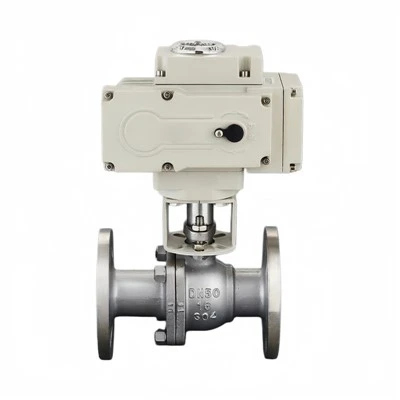
Let’s break this down simply, no stuffy engineer jargon (or at least, not too much). First, let’s recall what a pneumatic ball valve does. It’s a quarter-turn valve—twist it 90 degrees, and you go from letting water, gas, or chemical flow through to shutting it off entirely. The “pneumatic” part means it uses compressed air to make that twist happen, instead of a manual handle or electric motor. The actuator is the air-powered device that delivers that twisting force. But to attach it securely to the ball valve’s mounting flange (that flat, round rim on the back of most valves), you can’t just use any hardware. That’s where the mounting kit comes in. It’s a purpose-built bundle of parts designed to connect the actuator to the valve, align their shafts perfectly, and keep the whole unit stable while it cycles thousands of times a day.
A lot of folks new to industrial procurement mix up mounting kits with generic hardware. Let’s set the record straight: a quality kit isn’t just a box of bolts. It has four core components, each engineered to match specific valve and actuator sizes. First, there’s the mounting flange adapter—this is a precision-machined metal plate that acts as the middleman. It’s sized to fit exactly to the valve’s mounting face (you’ll hear us call this the “valve pad” in the shop) and the actuator’s mounting footprint. We don’t cut corners here; we use stainless steel or ductile iron for these, because they handle heavy torque, corrosion, and temperature swings way better than plain steel. Next, the shaft adapter. The ball valve’s stem (the part that sticks out of the valve body to twist the ball) rarely lines up exactly with the actuator’s output shaft. The shaft adapter fills that gap, a custom-machined component that connects the two shafts without causing misalignment, which is a top cause of premature valve failure. Third, you get the fasteners: high-strength bolts, nuts, and lock washers, not the cheap hardware you pick up at a home store. These are rated for the torque the actuator puts out—if you use a regular bolt, it could snap mid-cycle, and your valve would get stuck open or closed. Finally, most kits come with alignment tools or shims, small thin metal plates that let you adjust the fit if the valve or actuator is slightly out of spec, which happens more often than you think with off-the-shelf parts.
Now, why does this matter so much? Let’s talk about what goes wrong when you skip a proper mounting kit. Last year, a client in the municipal water treatment space called us at 2 a.m. Their actuator had fallen off a 3-inch ball valve that controls water flow to a main treatment chamber. Why? They’d used generic bolts from a local hardware store instead of a rated kit. The vibration from the daily cycles loosened the bolts, and over time, the actuator shifted, bending the shaft adapter and binding the valve. By the time our service team got there, they had to replace not just the broken kit, but half the valve assembly and parts of the actuator—costing them over $12,000 in downtime and repairs. That’s the thing about pneumatic ball valve assemblies: the weakest link is almost always the mounting kit. A $150 kit failure can turn into thousands of dollars in lost production, cleanup, and emergency service calls.
You might be wondering: how do I pick the right mounting kit for my application? That’s where we come in, because it’s not one-size-fits-all. The kit has to match three key specs: valve size, valve end connection type, and actuator brand. For example, a 2-inch flanged ball valve from a European manufacturer won’t fit the same kit as a 2-inch threaded valve from a domestic supplier. Actuators also have different mounting standards—some use NAMUR, others ISO 5211, which is the global standard for valve actuator mounting. Ignore that, and you’ll end up with a kit that doesn’t fit right, no matter how hard you force it. We’ve seen that mistake a hundred times: a plant engineer buys an actuator from one brand, a valve from another, and a generic kit, only to find the flange is 1/8-inch too small, so the whole assembly wobbles when it runs.
Another common question: do I need a separate mounting kit if I buy an actuator and valve from the same supplier? The short answer is maybe, but don’t assume. Some suppliers sell “matched” sets, but often the kit included is cheap, made from low-grade steel that rusts in outdoor applications. At our company, we build kits that work with any brand of valve and actuator, as long as you give us the part numbers for your valve’s mounting pad and your actuator’s footprint. We even send a quick verification sheet so you can double-check your specs before ordering—no surprises when the package arrives.
Let’s dive into real-world use cases, because this isn’t just for big factories. For water treatment facilities, mounting kits need to resist corrosion from chlorine, pH fluctuations, and outdoor humidity. We supply kits with 316 stainless steel fasteners for these applications, which hold up for 10+ years even in coastal plants where salt air is a problem. For chemical processing, where you’re dealing with acids or caustics, we use coated steel or Hastelloy components that don’t degrade when exposed to harsh fluids. For food and beverage plants, where cleanliness and sanitation are non-negotiable, our mounting kits are made from FDA-approved materials that don’t leach chemicals into food or drink products.
A lot of new technicians also ask about air pressure and mounting kit compatibility. A pneumatic actuator’s output torque is directly tied to the air pressure you run it at—too low, and it won’t fully open or close the valve; too high, and it puts extra stress on the mounting kit. Our kits are rated for specific torque loads, so we can tell you exactly which kit works for your air pressure setup. For example, a 6-inch valve running at 80 PSI needs a kit rated for 1,000 in-lbs of torque, minimum. Using a kit rated for only 500 in-lbs will lead to stretched bolts and eventual failure, just like the water treatment plant I mentioned earlier.
Now, let’s bust a common myth: some people think you can use a coupler instead of a mounting kit to connect the actuator and valve. A coupler only connects the two shafts—it doesn’t handle the side load, torque, or vibration that the mounting flange has to support. The actuator isn’t just twisting the stem; it’s also pushing and pulling slightly with each cycle, especially for large valves. The mounting kit distributes that load evenly across the entire flange, so no single bolt takes all the stress. Skip the kit, and you’ll have stress concentration at the bolt holes in the valve body, leading to cracks over time. That’s a failure that can cause major leaks, which is a huge safety and environmental risk for oil, gas, or chemical applications.
As a supplier, we also work with clients to customize mounting kits for unique applications. Last year, a solar power plant needed a set of kits for their cooling system valves. The valves were in a tight space, so standard kits were too bulky. We machined custom aluminum flange adapters that were 20% thinner than standard, while still meeting the torque rating, so the assembly fit in their compact piping layout. That’s the kind of value we bring—we don’t just ship a pre-made kit; we make sure it works for your exact setup.
Wait, let’s also talk about maintenance, because that’s part of why the mounting kit matters long-term. A good kit is easy to service. When you need to replace an actuator, you don’t have to take apart the entire valve or modify the piping—you just unbolt the old actuator, remove the old kit, and bolt on the new one with a matching kit. Cheap, generic kits make that hard: the bolts are rusted or stripped, the flange adapter doesn’t line up, so you end up wasting hours of labor to make it work. Our kits use corrosion-resistant fasteners that come with a zinc-chromate coating, so even after months of outdoor use, you can remove and reinstall parts without any trouble.
I’ve spent over a decade working with pneumatic ball valves and their components, and the number one issue we see across all industries is improper mounting kits. It’s easy to overlook when you’re focused on the valve’s size or the actuator’s power, but it’s the foundation of the whole assembly. Without a proper kit, even the best valve and actuator will fail prematurely, costing you time, money, and headaches.

If you’re in the market for a new pneumatic ball valve actuator mounting kit, or you need to replace an existing one to fix a recurring issue, we’re here to help. We work with everything from 1-inch valves for residential water systems to 12-inch valves for heavy industrial applications, and we can help you pick or customize a kit that fits your exact specs. Don’t wait for a failure to force you to act—reach out to our team to discuss your requirements today.
Safety Valve References:
- ISO 5211:2017, Industrial valves – Mounting of actuator and valve top face to quarter turn valves
- ASME B16.34-2021, Valves – Flanged, Threaded, and Welded End
- Water Environment Federation (WEF), Valve Maintenance and Operation Manual for Municipal Water and Wastewater Facilities, 2020
- National Association of Corrosion Engineers (NACE), Materials Selection for Valves in Industrial Service, 2019
- Fluid Controls Institute (FCI), Actuator Mounting and Alignment Best Practices for Pneumatic Valve Assemblies, 2022
Minasen Automation Technology Co., Ltd.
As one of the most professional pneumatic ball valve manufacturers in China, we have world-leading production equipment and strong manufacturing capabilities. Please rest assured to wholesale bulk durable pneumatic ball valve made in China here from our factory. Welcome to contact us for customized service and OEM service.
Address: Building A-3, Marine Science and Technology Entrepreneurship Park, Yongxing Street, Longwan District, Wenzhou City, Zhejiang Province
E-mail: team02@minasenvalve.com
WebSite: https://www.minasenvalves.com/
