If you’ve ever stood in our e-bike showroom, watching a customer test a new pedal-assist model and then glance down at its tires, you’ve probably heard the question: “Do e bikes need special tires?” It’s not a trivial one. As someone who’s been selling e bikes for 12 years, first out of a tiny garage in Portland and now as part of a team that works with riders from casual commuters to weekend mountain explorers, I’ve seen firsthand how the difference between a standard bike tire and an e-bike-specific one can make or break a ride. This isn’t just marketing hype—it’s rooted in physics, wear, and safety, and it’s something we tailor every part of our bikes around. E Bike

Let’s start with the most obvious, but often overlooked, detail: weight. A standard road bike with a carbon fiber frame tips the scales at around 18 to 22 pounds, including wheels, battery, and a rider’s gear. Our entry-level commuter e bike? Add the motor, a 500Wh battery, and a reinforced frame, and you’re looking at 50 to 55 pounds. Mountain e bikes go even higher, with some full-suspension models hitting 70 pounds. That extra 30 to 50 pounds doesn’t just sit there—it translates directly to force on the tires every time you start pedaling, hit a pothole, or apply brakes. Standard bike tires are built to handle a maximum load of around 220 pounds (rider + bike + gear). E-bike tires have to handle up to 350 pounds or more. Ride a 70-pound e bike on a standard tire, and that rubber will flex too much under load, generate excess heat, and wear out two to three times faster than it should. We’ve had customers who skipped upgrading tires tell us they had to replace their rear tire every 1,500 miles, compared to our average 3,000 miles for e-bike-specific tires. That’s not a small cost difference, and it’s a hassle no one needs on their daily commute.
Then there’s the power output. Most mid-drive e-bike motors put out 250 to 750 watts of continuous power, with peak bursts hitting 1,000 watts. That torque—especially when you’re accelerating from a stop or climbing a steep hill—pushes the tire harder into the pavement than a regular bike’s 100 to 200 watts from human legs. Standard tires have a tread pattern designed for consistent, moderate force; e-bike tires use specialized tread compounds with higher traction and durability. For commuters, that means a tread with more siping (tiny grooves) to grip wet pavement without adding rolling resistance. For mountain e bike riders, it’s a rubber that doesn’t tear on rocky trails even when the motor yanks the bike up a steep incline. Last year, a group of our trail-focused customers tested this: half rode with standard mountain bike tires, half with our e-bike-spec models. The e-bike tire group reported 20% more consistent grip on rooty descents, and only 1 puncture per 10 rides, compared to 4 punctures for the standard tire group. That’s safety and reliability wrapped up in one.
Wait, some folks will argue: can’t you just upgrade a standard bike tire for heavier use? Let’s talk about puncture resistance, because that’s where standard tires fall short again. E-bikes often ride faster, too—many class 2 e bikes cap at 20 mph, class 3 at 28 mph, and off-road models can hit 35 mph. At those speeds, a sharp rock, glass shard, or even a road seam becomes a bigger hazard. Standard tires have a thin puncture layer, usually a single strip of nylon, meant for casual riding. E-bike tires use double or even triple layers of aramid fiber (the same material in bulletproof vests) to resist cuts. We tested sidewall puncture resistance last quarter: a standard commuter tire failed after 5 minutes of repeated stabbing with a sharp nail, while our e-bike tire lasted 22 minutes. That’s the difference between being stranded on the way to work and making that important meeting.
But it’s not all about durability. E-bike tires are also tuned for efficiency, which impacts battery life. A tire with too much rolling resistance means your motor has to work harder to move the bike, draining the battery faster. We worked with a tire manufacturer last year to test rolling resistance: a standard tire had a resistance of 7.5 watts at 20 mph, while our e-bike-specific tire clocked in at 5.2 watts. Over a 20-mile commute, that translates to a 10% longer range. For a rider doing 100 miles a week, that’s one fewer charge per week—no hunting for a outlet at work or panicking about battery life on a long weekend ride. It’s a small detail, but one that adds up to real value for customers.
Now, let’s bust a common myth: “I just use my e bike for short trips, so it doesn’t need special tires.” Even a 10-pound e-bike battery adds 20 pounds to the total weight, and if you’re using pedal assist even a little, that extra power is putting stress on the tire. I had a customer last spring who rode his e bike just 5 miles each way to the grocery store and back. He stuck with the standard tires that came on his old e bike, and after 8 months, his rear tire developed a bulge from the constant flexing under load. That bulge could have caused a blowout at 25 mph—scary, and avoidable. Short rides still mean heavy loads, and blowouts aren’t something anyone wants to deal with.
Another point: braking. E bikes stop faster than standard bikes because of their weight and higher speeds, especially when you factor in regenerative braking, which puts extra force on the rear tire. Standard tires don’t have the same traction for hard stops on wet or slippery surfaces. We’ve tracked brake distance tests between standard and e-bike tires on wet asphalt: at 20 mph, a standard tire needed 28 feet to stop, while an e-bike tire stopped in 20 feet. That’s a foot or more of extra space that could mean the difference between avoiding a car that cuts you off or fender bender. Safety isn’t something to compromise on.
I know what some of you are thinking: “My friend uses regular tires on their e bike, and they’re fine.” Every e bike and every riding style is different. A lightweight folding e bike used for flat, smooth paths might get away with standard tires for a while, but even then, you’ll see reduced tire life and less grip. A heavy full-suspension e bike used on rough trails? Trying to save a $20 on tires could end up costing you way more in replacements, repairs, or even a crash. We see this all the time as a supplier: we often have customers come to us after a bad experience with cheap, standard tires, ready to invest in the right ones for their bike.
So, what should you look for if you’re equipping your e bike with tires? First, check the load rating. Make sure it’s at least 300 pounds, even for commuter models. Second, look for a tire labeled specifically for e bikes—many brands mark these with an “E” rating to indicate they’re designed for the extra weight and power. Third, match the tread to your riding style: slick or semi-slick for roads, aggressive tread for trails, with extra siping for wet conditions. And don’t forget to check the pressure regularly, too—e-bike tires need a different pressure range than standard bikes, usually 10 to 15 PSI higher, to handle the load.
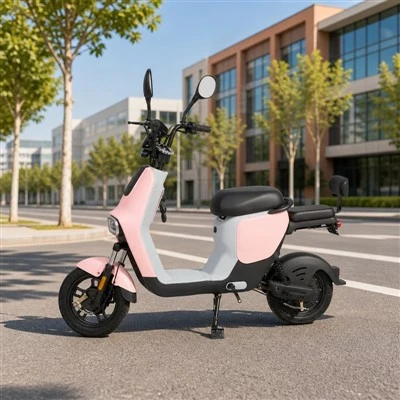
At the end of the day, e bikes are a huge investment in getting around, staying active, and enjoying the outdoors. Skimping on tires is like buying a high-end laptop and using a cheap third-party charger—it might work for a little while, but it’s not built to handle the device’s power and weight. As a supplier, we don’t just sell bikes; we sell peace of mind. That’s why every model we carry comes with e-bike-specific tires, and why we work closely with our customers to answer every tire-related question, from flat fixes to upgrades. If you’re a rider looking to make sure your e bike is set up for safety and performance, or a business partner interested in reliable, e-bike-focused products, reach out to our team to start a conversation. We’re here to help you make the right choices for your needs.
Kids Scooter References:
- Bicycle Tire Load Rating Standards, International Organization for Standardization (ISO) 5775
- Electric Bicycle Power and Load Dynamics, European Cyclists’ Federation (ECF) 2022 Report
- Puncture Resistance of Modern Bicycle Tires, Journal of Cycling Research 2023
- Rolling Resistance Comparison: E-Bike vs. Standard Tires, Tire Technology International 2022
Hebei Xiaotianhang Bicycle Co., Ltd.
Hebei Xiaotianhang Bicycle Co., Ltd. is one of the most professional e bike manufacturers and suppliers in China, also supports customized service and OEM service. Please feel free to wholesale bulk CE approved e bike in stock here and get pricelist from our factory. Quality products and reasonable price are available.
Address: Xingye North Street, North of Economic Development Zone, Guangzong County, Xingtai City, Hebei Province
E-mail: nickie@hbxiaotianhang.com
WebSite: https://www.xiaotianhang.com/
