If you’re running a production floor that deals with thermoformed plastic parts—say, packaging clamshells, disposable food containers, or automotive trim panels—chances are you rely on a four station thermoforming machine. These machines are the workhorses of mid-sized manufacturing operations, balancing speed, precision, and cost efficiency, but even the most reliable equipment hits snags. One of the most common and critical issues we get asked about at our thermoforming machine supply business is how to adjust the cutting blade properly. A misadjusted blade doesn’t just ruin parts; it can gum up your machine, slow down production, and cost you thousands in wasted material and downtime. I’ve walked dozens of production teams through this process over the years, so let’s break it down step by step, no confusing jargon, just what works on the floor. Four Station Thermoforming Machine

First, let’s start with why blade adjustment matters in a four station machine, specifically. Unlike a single-station machine that heats, forms, and cuts in one spot, four station machines cycle through four distinct stations: heating, forming, trimming, and stacking. The cutting station is where all the excess plastic (called flash) is removed from the formed part, and where individual parts are separated for packaging. If the blade is too high, it won’t cut all the way through the plastic sheet, leaving ragged edges and forcing your operators to rework parts after production. If it’s too low, it will dig into the machine’s lower platen, wearing down the blade prematurely, damaging the platen surface, and even causing misalignment across the other three stations. I’ve seen teams rush this step and end up with a blade that cuts through the platen, requiring a full machine repair that took three days and set a production line back a week. That’s why taking the time to do this right isn’t just a nice step—it’s a critical part of preventive maintenance.
Before you even touch the blade, you need to gather the right tools and prep the area. I always tell teams not to skip prep work, because a loose wrench or a dirty platen can turn a 10-minute adjustment into a 2-hour headache. What do you need? First, a set of Allen wrenches—most four station thermoforming machines use 5/16-inch or 3/8-inch hex bolts to secure the blade holder, but double-check your machine’s manual to be sure. Next, a feeler gauge (the thin, flexible metal strips you use to measure gaps) set to 0.015 inches—this is the standard gap for most 20-gauge thermoplastic sheets, which is the most common material our clients use. You’ll also need a clean cloth and a can of compressed air to wipe down the cutting area; any plastic dust or leftover flash on the platen or blade will throw off your gap measurement. Finally, grab a scrap sheet of the exact same material you’ll be running in production that day—don’t use a different gauge or color, because different plastics stretch and cut differently. I once had a team test adjustment on a thin 10-gauge sheet, then run 500 parts on a 30-gauge polypropylene sheet, and every single one came out with incomplete cuts. That’s a $2,000 mistake that could have been avoided.
Now, the step-by-step process. First, power down the machine and lock out the power source. This is non-negotiable. I don’t care how experienced your operator is; a four station machine is a high-speed piece of equipment, and a slip of the hand on a moving blade can cause serious injury. Once the power is off and locked out, move the cutting station to its home position—this is the position where the blade is fully extended and aligned with the lower platen. Most machines have a manual toggle switch for this, so set the machine to manual mode and jog the cutting station until it stops at the home position.
Next, inspect the cutting blade and lower platen. Wipe both down with the cloth and compressed air, checking for any nicks, burrs, or built-up plastic residue. A nick in the blade will cause uneven cuts, so if you see damage on the edge, you’ll need to replace the blade before adjusting it. We sell high-quality carbide blades for four station machines, and we always recommend replacing blades at the first sign of wear to avoid adjustment issues. If the blade is in good shape, clean the platen surface thoroughly—any dents or scratches here can also affect cut quality, so if you see damage, flag that for a machine repair before proceeding.
Now, adjust the blade height. On most four station thermoforming machines, the blade is mounted in a holder that slides up and down on the cutting station frame. Loosen the two Allen bolts that secure the blade holder—don’t remove them completely, just loosen them enough to let the holder move. With the feeler gauge, place a strip between the bottom of the cutting blade and the surface of the lower platen. The gap should be exactly 0.015 inches for most standard thermoplastics, but if you’re working with thicker materials (like 40-gauge polyethylene), you can adjust to 0.020 inches, and for thinner 10-gauge sheets, 0.010 inches is fine. Once the feeler gauge is in place and the blade is resting lightly on the gauge, tighten the Allen bolts just enough to hold the blade in position. Don’t over-tighten them—this can warp the blade, making it hard to cut straight lines.
Next, test the cut. Take your scrap sheet of the same material you’ll be using, place it over the platen, and jog the cutting station down to engage the blade. Run a test cut, then pull the scrap sheet up and check the edge. It should be clean and smooth, no ragged edges, and the cut should go all the way through the sheet without digging into the platen. If the cut is ragged, the gap is too big—loosen the bolts, tighten the blade holder slightly (reduce the gap), and test again. If the blade dug into the platen, the gap is too small—loosen the bolts, raise the blade slightly (increase the gap), and test again. Do this 2-3 times until you get a clean, consistent cut.
Once the test cut is good, double-check the alignment across the entire cutting area. A common mistake teams make is adjusting one side of the blade and forgetting the other, leading to uneven cuts on parts near the edges of the sheet. Walk the entire perimeter of the blade, placing feeler gauges every 6 inches, to make sure the gap is the same all the way around. If one side has a larger gap, adjust the blade holder on that side until the gap is consistent. I always recommend taking a second test cut from a different section of the sheet to confirm this—sometimes the edge of the platen is slightly uneven, so you need to make sure the adjustment works across the whole sheet.
After you’re happy with the gap and alignment, tighten the Allen bolts fully, then do one final test cut. Jog the cutting station through a full cycle to make sure the blade doesn’t bind as it moves, and check that the cut remains clean. Once that’s done, you can power the machine back on and run a small production batch—100-200 parts—to confirm everything is working before starting a full run.
Now, a few pro tips I’ve picked up over the years that make this process faster and more reliable. First, mark the home position of the cutting blade on the machine frame with a marker. This way, if the blade ever shifts during production, you can quickly set it back to that position instead of remeasuring from scratch. Second, don’t adjust the blade while the machine is hot—if you just finished a production run, the metal frame will be slightly expanded, leading to an incorrect gap measurement. Wait 30 minutes after shutting down the machine for it to cool. Third, if you’re running a new type of material, always test the blade adjustment on scrap first. Even a 0.005 inch change in gap can make a big difference in cut quality for different plastics, like ABS vs. PETG.
I also get asked a lot: how often should I adjust the cutting blade? The short answer is, it depends on your production volume. If you’re running 24/7, you should check and adjust the blade every 500 production hours, or whenever you start seeing ragged edges or incomplete cuts. For teams running 8-hour shifts, that’s about every two months. But even if you’re not seeing issues, adjusting the blade on a regular schedule is part of preventive maintenance that will extend the life of your blade and your machine’s platen.
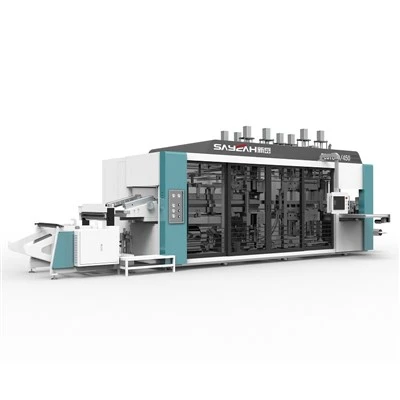
At the end of the day, the cutting blade is one of the most critical parts of your four station thermoforming machine—get it wrong, and you’re wasting time, material, and money. If you’re still having trouble adjusting the blade, or if you notice signs of wear that we didn’t cover (like a bent blade or a scratched platen), don’t hesitate to reach out. We’ve worked with hundreds of manufacturing teams to keep their thermoforming machines running smoothly, and we’re here to help you troubleshoot any issues, whether it’s a simple blade adjustment or a more complex machine repair. Contact us to discuss your thermoforming equipment needs, learn more about preventive maintenance, and find the right blade and parts for your production line.
Four Station Thermoforming Machine References
- Society of Plastics Engineers. (2021). Thermoforming Equipment Maintenance Guide. SPE Press.
- Four Station Thermoforming Machine Operation and Safety Manual. (2022). Industrial Thermoforming Solutions.
- Plante, J. (2020). “Cutting Precision in Thermoforming: Best Practices for Blade Adjustment.” Journal of Manufacturing Technology, vol. 18, no. 3, pp. 45-52.
- Occupational Safety and Health Administration. (2019). Lockout/Tagout Procedures for Industrial Manufacturing Equipment. OSHA Publication 3120.
- Plastics Packaging Association. (2021). Material-Specific Blade Adjustment Standards for Thermoforming. PPA Technical Bulletin 12-21.
Zhejiang Sayeah Machinery Co., Ltd.
Zhejiang Sayeah Machinery Co., Ltd. is one of the most reliable manufacturers and suppliers of four station thermoforming machine in China, also supports high quality customized service. Please feel free to buy CE approved four station thermoforming machine from our factory. For price consultation, contact us.
Address: Wanquan District Industrial Zone,West Of China National Highway 104, Sunlou Village, Wanquan Town, Pingyang County, Zhejiang Province. China
E-mail: sales@sayeahmachinery.com
WebSite: https://www.sayeahthermoforming.com/
