If you’ve ever driven a car, crossed a steel bridge, or lifted a steel beam to frame a new home, you’ve relied on hot rolled carbon steel. I’ve been supplying this material for 18 years now, and every time a customer asks how we make it, I don’t just give them a textbook answer— I walk them through the steps I’ve watched our team master, the little details that make our steel reliable, and why choosing the right hot rolled carbon steel supplier matters more than you might think. Let me break it down like I’d explain it to a fabricator who’s never run a mill themselves, no stuffy jargon, just real process knowledge. Hot Rolled Carbon Steel
It all starts with the raw material, and let’s be clear: cutting corners here ruins the final product. We use high-quality iron ore, metallurgical coal, and scrap steel (a good chunk of our feedstock is recycled, which is better for the planet and consistent for our grades) to make molten iron in a blast furnace. The blast furnace is a huge, refractory-lined tower—think 30 feet wide and 100 feet tall—where we heat the mix to nearly 3,000 degrees Fahrenheit. At that temperature, the coal burns to remove oxygen from the iron ore, turning solid ore into liquid pig iron. We then move that molten pig iron to a basic oxygen furnace (BOF), where we blow oxygen through the liquid to cut down excess carbon and other impurities. A few tweaks of alloy elements—nothing fancy here, just carbon (our core product is carbon steel, after all), manganese, and tiny traces of silicon to strengthen it—and we’re left with molten steel that’s exactly the chemistry we need for hot rolled carbon. If the chemistry’s off, the steel will crack when we roll it later, so our quality control team tests every batch mid-process; that’s non-negotiable for us.
Once the steel leaves the BOF, it goes through a continuous casting process, which is how we turn liquid metal into solid slabs. A continuous caster is a machine that pulls molten steel through a water-cooled copper mold at a steady rate. The mold cools the outer layer of the steel into a solid shell while the center stays molten, and as it moves, water sprays from the outside to cool the rest of the way. The end result is a long, thick rectangular slab—usually 8 to 12 inches thick, up to 8 feet wide, and 30 to 50 feet long. I’ve seen slabs that come out rough, with little wrinkles on the surface, and that’s normal right now; we fix that in the next step. The key here is consistent cooling: if the slab cools too fast or unevenly, it’ll have internal cracks that show up later in rolling, so our operators adjust water flow minute to minute based on slab temperature readings.
Now we get to the part that gives hot rolled carbon steel its name: heating and rolling the slab in a hot strip mill. First, we preheat the slabs in a reheat furnace to around 2,300 degrees Fahrenheit. This isn’t just making the slab soft—it’s also relieving the internal stresses from casting, which prevents warping during rolling. When the slab’s heated enough, we move it to the roughing mill, a series of large, heavy rollers that squeeze the slab back and forth to reduce its thickness from 10 inches down to a few inches. After the roughing mill, the slab goes to the finishing mill, a set of smaller, precision rollers that shrink it down to the exact thickness we need—think 1/4 inch up to 2 inches, depending on what our customers order. The temperature here is critical: we keep the steel above its recrystallization temperature (around 1,700 degrees) the entire time, so the rollers don’t have to force hard, brittle metal and cause uneven thickness or surface defects. A lot of suppliers will cut corners here, letting the temperature drop too low to save energy, but that makes the steel grain structure uneven, which weakens it. I’ve had customers bring us rolls of hot rolled steel that bent under a light load, and when we tested it, it was obvious they’d rushed the finishing mill temperature— that’s the kind of mistake we refuse to make.
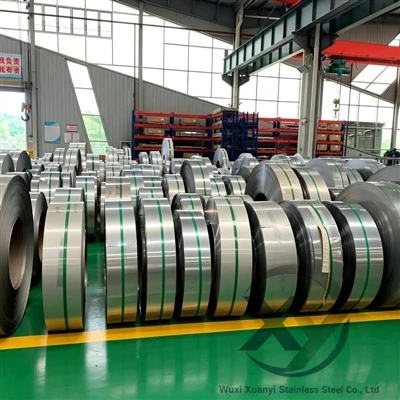
After finishing rolling, the steel strip moves through a laminar cooling system, where high-pressure water sprays cool it quickly to room temperature. This rapid cooling sets the grain structure of the carbon steel, making it strong and consistent. If we cooled it slowly, the grains would grow too large, leading to a softer steel that isn’t reliable for structural or industrial uses. Once cooled, we coil the strip into large rolls, called coils, that weigh 15 to 30 tons each. These coils are then tested for chemistry, thickness, tensile strength, and surface quality—our quality control team checks every coil before it leaves the mill. We look for things like surface scaling (that dark gray or black film that forms during heating), straightness, and dimensional accuracy; even a 1/32 inch thickness difference can cause problems for a fabricator cutting parts, so we hold tight tolerances.
A common question I get: what’s the difference between hot rolled and cold rolled carbon steel, and why does hot rolled matter for certain jobs? Cold rolled is rolled at room temperature, which gives it a smoother surface and tighter tolerances, but it’s harder and less ductile. Hot rolled, on the other hand, has a slightly rougher surface, is easier to bend and weld, and is more cost-effective for large structural parts, pipeline sections, heavy machinery, and even agricultural equipment. For example, a farm equipment manufacturer making plow blades needs steel that can withstand the force of soil without cracking—hot rolled carbon steel is perfect for that. A bridge builder needs steel beams that are strong enough to support hundreds of tons, and again, hot rolled carbon steel is the go-to here. That’s why so many of our customers rely on us: they need consistent, reliable steel for jobs that can’t afford to fail, and we deliver that every time.
Another point customers care about is surface quality, especially if they’re going to paint or coat the steel later. The scale I mentioned earlier is a natural byproduct of heating the steel, but it’s easy to remove with a simple shot blasting process we offer at our facility. We use small steel pellets to blast off the loose scale, leaving a clean surface that primes well and prevents rust. We also offer customized grades: whether you need low-carbon steel for deep drawing into parts, medium-carbon for structural beams, or high-carbon for tooling, we can adjust our process to match your specifications. Our team has been refining these processes for decades, and we’ve built relationships with fabricators, construction companies, and manufacturers across the country because they know they can count on us to deliver on time, every time.
Let’s talk about the small, unspoken details that make a good supplier vs. a great one. For example, during the rolling process, our operators monitor the rollers closely for wear; a worn roller can leave small dents or uneven edges on the steel, so we replace rollers on a strict schedule, not just when they break. We also keep detailed records for every coil: what grade it is, the exact temperature during rolling, cooling rate, and test results. That way, if a customer has a problem down the line, we can trace the issue back and fix it without wasting their time. We also invest in energy-efficient reheat furnaces and recycling programs for scrap, which not only reduces our carbon footprint but also keeps costs reasonable for our customers—no hidden fees, no price hikes at the last minute.
If you’re in the market for hot rolled carbon steel, you might be tempted to go with the cheapest supplier, but remember: poor quality steel can lead to project delays, safety issues, and extra costs down the line. I’ve seen a construction project get held up for two weeks because a supplier delivered hot rolled steel that was too thin for the beams specified, costing the contractor thousands in labor and lost time. We take pride in delivering steel that meets or exceeds industry standards, and we stand behind every batch we ship.

At the end of the day, hot rolled carbon steel is a foundational material for almost every modern industry, and making it well takes a mix of expertise, attention to detail, and commitment to quality. I’ve been in this business long enough to know that trust is everything—our customers don’t just buy steel from us; they partner with us to get the material they need, when they need it, at a price they can afford. If you’re working on a project that requires hot rolled carbon steel, whether it’s structural parts, machinery, or anything else, I’d be happy to walk you through our process in more detail, answer your questions, and help you find the right grade for your needs. Reach out to our team to connect for procurement discussions.
Stainless Steel Sheet References
- Steel University. (n.d.). Hot Rolled vs. Cold Rolled Steel: Key Differences. American Iron and Steel Institute.
- The Making of Hot Rolled Steel. (2021). Metal Service Center Institute Handbook.
- Continuous Casting Process Basics. (2019). World Steel Association Technical Paper.
- Quality Control Standards for Carbon Steel Products. (2020). American Society for Testing and Materials (ASTM) International.
Wuxi Xuanyi Stainless Steel Co., Ltd.
Wuxi Xuanyi Stainless Steel Co., Ltd. is one of the most professional hot rolled carbon steel manufacturers and suppliers in China. With abundant experience, we warmly welcome you to wholesale bulk durable hot rolled carbon steel made in China here from our factory. If you have any enquiry about cooperation, please feel free to email us.
Address: Room 1207, Building 11, Shengang Metropolis Plaza, No. 299 Fangcheng Avenue, Xinwu District, Wuxi City,China.
E-mail: jscherryxy@163.com
WebSite: https://www.xuanyisteel.com/
