Hey there, Automatic Surface Grinder
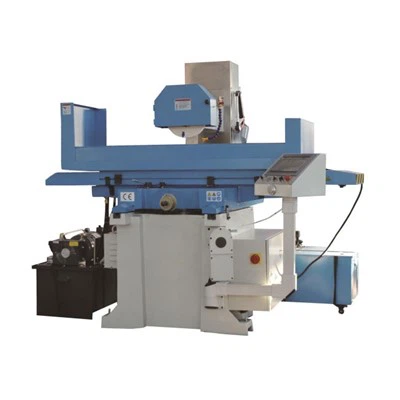
If you’re in the manufacturing game—whether you’re running a small machine shop, a mid-sized fabricating facility, or even a high-volume production line—you’ve probably stared at an Automatic Surface Grinder (ASG) spec sheet and thought, “Wait, what’s the actual maximum load this thing can handle without turning into a hot mess?” I’m on the front lines of this every single day, as a parts and service rep for an ASG supplier, so let me break this down like I would if you were leaning over my workbench, not reading a stuffy industry article.
First off, let’s cut through the confusion. When someone asks, “what’s the maximum table load capacity of an ASG,” they’re not just asking for a number—they’re asking, “Can I strap my 800lb block of hardened steel to that table and not watch it slide, scratch the surface, or break the grinder?” It’s one of those specs that sounds straightforward until you realize it’s tied to 10 other things no one tells you about. Let’s start with the core: most standard, production-focused ASGs (the ones we sell to shops that run parts 10 hours a day, not just a weekend hobbyist) have a base maximum table load that ranges from 500 lbs up to a solid 2,000 lbs. But here’s the catch: that number isn’t one-size-fits-all. I’ve seen too many guys plug a 1,800lb part onto a 1,000lb capacity table and wonder why their feed motor burned out by lunch. It’s not just about how heavy the part is—it’s about how that weight’s distributed, how you’re securing it, and even the type of work you’re doing with the grinder.
Let’s talk real-world examples because that’s where this matters. Last month, I had a guy from a die-making shop call us panicking. He’d bought a used ASG online, saw it had a “2,500lb table load” in the ad, and loaded a 2,200lb mold block onto the table with just two clamps. When he hit the start button, the table tilted ½ inch to the right, the grinding wheel scratched the side of the part, and he ended up with a $1,200 repair bill. Turned out, that 2,500lb number was the theoretical maximum—meaning if the load is perfectly centered, evenly distributed, and you use the right workholding. When he shifted 90% of the block’s weight to the front left corner and used bad clamps, that “theoretical” number went out the window fast. That’s a common mistake, and it’s why I always harp on to customers: that base spec is the ceiling, not the floor for what you can safely run.
Now, what actually determines that table load capacity? It’s not just the table itself, trust me. The three big factors are: 1) the linear motion bearings (you know, the balls or rollers that the table glides on), 2) the table’s support structure and ways, and 3) the feed motor’s torque. Let’s break those down simple. If your ASG uses linear ball bearings, the load capacity is tied directly to how many balls are in each row and their diameter. A cheap off-brand ASG might have 12mm balls with 4 per row, so they can only handle 500-700 lbs. Our ASGs use 20mm chrome steel balls with 8 per row, so that base capacity jumps to 1,500 lbs—way more reliable, even for daily heavy use. The ways matter too: hardened steel ways are stiffer than cast iron, so they don’t flex when you stack heavy stuff. Flex is the enemy here—if the table bends even a little under load, your surface finish gets ruined, and you risk misaligning the wheel to the part. Then there’s the feed motor: if you’re pushing a heavy table back and forth fast, the motor needs enough torque to overcome friction and the load. A 1HP motor is fine for a 500lb table, but you need at least 2.5HP for a 1,500lb load—skimp on that, and the motor will stall or burn out in weeks, not years.
Wait, but what about specialty ASGs? Because not everyone’s grinding small parts. We’ve got customers doing aerospace work, grinding titanium plates that are 3ft x 6ft and 1,800 lbs total. For those, we sell heavy-duty ASGs with extended table loads up to 3,500 lbs. But even then, we don’t tell them to run that max number unless they’re doing a few things right. First, load distribution: you have to spread the weight across the table. No piling all the heavy stuff in one spot—use a parallel shim if you need to level the part, or a custom workholding plate that distributes the weight evenly across the table’s support points. Second, workholding: vacuum chucks are great for flat parts, but if you’ve got a super heavy part, you need mechanical clamps too. I’ve seen a 1,700lb steel part slide 2 inches across the table because the vacuum wasn’t strong enough—thankfully no one was hurt, but the part was ruined. Third, speed: if you’re grinding a heavy part, don’t crank the feed rate to max. Slow it down 20-30%—that reduces friction on the table bearings, puts less strain on the motor, and gives the grinding wheel time to do its job without tearing up the part or the machine.
Let’s clear up another myth I hear all the time: “I can add a load to the table load spec, right?” No, not really. If your ASG has a 1,500lb max, adding an extra 200lbs (say, a workholding fixture that’s 250lbs instead of the 50lbs the spec assumes) will push you over the edge. The spec sheet’s table load already accounts for the weight of the standard workholding we sell with the grinder—so if you bolt on a custom 300lb fixture, you have to subtract that from your part’s weight to stay under the total. That’s another mistake guys make: they ignore the fixture weight and wonder why their grinder is acting up.
I should also mention that environment plays a tiny role. If you’re running your ASG in a super hot shop, the bearings expand a little, which changes their load capacity by 5-10%. If you’re in a dusty shop, grit gets into the bearings, which increases friction and lowers the effective load by 10-15%. That’s why regular maintenance matters—lubricate the bearings every week, clean the ways daily, and that max load stays consistent for years. I’ve been servicing machines for 12 years, and the best performing ASGs are the ones where the owner checks their ways at the end of every shift, no exceptions.
Now, if you’re shopping for an ASG and trying to figure out the right load capacity for your work, here’s my quick guide: first, weigh your heaviest, largest part, then add the weight of your workholding fixture, add 20% for safety (I don’t care what the spec says—use that buffer). If that number is under 1,500 lbs, a standard production ASG will work. If it’s over 2,000 lbs, you need a heavy-duty model with reinforced bearings and a bigger feed motor. And if you’re not sure? Don’t guess—call someone who knows, not the sales rep at the big box industrial supply store (no shade, but they don’t grind parts for a living). We offer free load assessments for potential customers—we’ll ask you what parts you run, how heavy they are, what you’re grinding (surface finish matters too, by the way—heavier loads can make finish rougher if you’re not set up right), and we’ll tell you exactly which model fits, no upsell.
Look, I get it—buying an ASG is a big investment. You don’t want to drop $10k+ on a machine that can’t handle your work, or waste money on a machine that’s overkill for your needs. The table load capacity isn’t just a number on a spec sheet—it’s the line between a machine that runs smoothly for 10 years and a headache that breaks down every month. I’ve seen guys go with the cheapest ASG with the highest “theoretical” load only to have it die after 6 months, and I’ve seen guys buy overspec’d machines and wonder why their feed rates are too slow. The sweet spot is matching that max load to your actual needs, with a little buffer built in for mistakes (trust me, we all make them).

If you’re currently in the market for an Automatic Surface Grinder, or you’ve got a machine that’s not performing how you want, hit us up. We can walk you through load calculations, show you models that fit your part sizes, and even connect you with a local tech to check your current grinder if you’re having issues. No pressure, no pushy sales talk—just honest answers from someone who’s been in your shoes, fixing grinders and helping shops keep their production running.
Wide-Wheel Centerless Grinder References:
- Machine Tool Industry Association. (2022). Automatic Surface Grinder Specification Standards.
- Industrial Bearings & Linear Motion Association. (2021). Load Capacity Guidelines for Machine Tool Table Systems.
- Surface Grinder Operation & Maintenance Manual, Edition 4.2. (2023). Global ASG Solutions.
Wuxi Mingxu Machinery Equipment Co., Ltd.
As one of the most professional automatic surface grinder manufacturers and suppliers in China, we’re featured by quality products and good price. Please rest assured to buy the best automatic surface grinder for sale here from our factory. Also, custom service is available.
Address: No. 5-5 Jinke Wealth Plaza, Changjiang North Road, Xinwu District, Wuxi City, Jiangsu Province
E-mail: yingyingmxjd@163.com
WebSite: https://www.mingxu-china.com/
