Let’s cut to the chase—if you’re an electrician, facilities manager, or even a small business owner who’s ever messed around with electrical installations, you’ve probably wondered if that fancy insulation and earth resistance tester is actually worth the cash. I get it, when I first started selling these things, I had a ton of customers asking the same thing: “Can’t I just use my multimeter for this?” Spoiler alert—no, you can’t. And today, I’m gonna break down exactly why this tool isn’t just a nice-to-have, it’s non-negotiable. No stuffy textbook jargon, just real talk from a supplier who’s seen both the good (saving lives and buildings) and the bad (clients skipping tests and dealing with the fallout). Insulation and Earth Resistance Tester

First, let’s get what insulation resistance actually means. Your electrical system’s wiring, right? That copper core carries all the juice, but it’s wrapped in that plastic or rubber insulation to stop that juice from leaking out to anything it shouldn’t—like metal conduits, walls, or even you. If that insulation gets cracked, old, or damaged, current can leak. That’s a huge fire hazard, not to mention a shock risk. A basic multimeter? It’s built to measure really low resistance, like when you’re checking if a wire is good or not. But insulation resistance is supposed to be super high—think millions of ohms, not just a few. A multimeter can’t read that accurately, so you’d never catch a tiny leak until it’s too late.
I remember a client last year—small café in downtown, had their wiring redone by a guy who swore his regular multimeter was enough. Six months later, a barista got a minor shock when she touched the espresso machine, and the back wall started smoking. Turned out, a section of wiring behind the fridge had insulation that was falling apart from heat, and there was a tiny earth leakage that the multimeter missed because it only reads up to a couple thousand ohms, not the 100,000+ that good insulation should have. The café closed for a week for repairs, got fined by the local electrical safety board, and that barista was out on workers’ comp. All because they skipped a proper insulation resistance test.
Then there’s earth resistance—this is the other half of the equation. The earth (or ground) connection is like a safety net. If a live wire touches a metal part of your installation, the earth path carries that current straight to the ground instead of through you. But that only works if the earth electrode (the metal rod you drive into the ground) has low enough resistance. If it’s too high, that current sits there, overheats wires, and again—shock or fire risk. Here’s the thing: soil conditions change all the time. Dry season makes soil drier, so earth resistance goes up. Rain makes it soggy, but if the rod is corroded, even wet soil won’t help. You can’t just drive a rod in and call it done—you have to test it regularly.
Let’s talk about the legal side, too. I’m in the US, but this is similar in most places. Electrical codes (NEC here in the US, IEC internationally) require that all new installations get tested with proper insulation and earth resistance testers, and existing ones get tested on a schedule—like every 1 to 5 years, depending on the setting (commercial vs residential, harsh environments like factories vs offices). If you get audited, or there’s an incident that leads to a lawsuit, the first thing safety inspectors or lawyers ask for is a test report from a calibrated insulation and earth resistance tester. A multimeter won’t cut it for that documentation. I’ve had clients come to me after getting a $10,000 fine because their old test logs were from a multimeter and deemed invalid.
“But wait,” I hear you say, “I’m a small electrician, I work on residential stuff, why do I need this? Just a few houses here and there.” Fair point, but residential fires from electrical faults are super common. The NFPA says electrical failures cause almost 50,000 home fires a year in the US alone. Most of those are from old insulation that’s broken down, or bad earth connections. I sold a small tester last month to a guy who does mostly residential work—he told me last week that he used it on an old 1970s house, found that the main earth rod had a resistance of 200 ohms when it should be under 25. He replaced the rod, and the homeowner didn’t have to worry about a fire or anyone getting hurt. That’s a job that cost him a few hundred bucks, but it saved the homeowner thousands in repairs and medical bills.
Another thing people sleep on is calibration. Insulation and earth resistance testers drift over time—they’re tools, after all, not perfect. If you don’t calibrate them, your readings are wrong, which defeats the whole purpose. A multimeter might drift a little, but insulation testers use higher voltages (usually 500V, 1000V, even 2500V for bigger installations) to test insulation, so drift can be way more extreme. Calibrating your tester means it’s accurate, so you’re not wasting time and money fixing problems that don’t exist, or missing problems that do. I always tell my customers to calibrate their testers once a year—super easy, and way cheaper than a lawsuit or a fire.
I also hear a lot about “portable vs fixed testers.” For field work, portable is non-negotiable. You’re not gonna haul a huge fixed tester around to job sites. Our portable models are light, fit in a tool bag, have digital displays so you can read numbers even in bright sun, and store test logs so you don’t have to write everything down on a notepad (which you’ll lose or smudge). Some even have Bluetooth to send test reports straight to your phone, which is a huge time-saver. That’s the kind of stuff that makes your job easier, not harder.
Wait, let’s address the counterargument I know someone’s gonna make: “I use a clamp meter for earth resistance.” Yeah, clamp meters work for some stuff, but only if the installation has a separate earth electrode that’s not connected to other grounding systems. If you’ve got a building with multiple earth rods, or a system that’s connected to a utility ground, clamp meters give false readings. The only way to get a truly accurate earth resistance test, every single time, is with a proper insulation and earth resistance tester that uses the fall-of-potential method or the stake method. I’ve had clients come back saying their clamp meter said earth resistance was fine, but our tester found it was double the limit—because the clamp couldn’t pick up the actual isolated reading. That’s the difference between a safe installation and a dangerous one.
Let’s talk about long-term cost savings, too. Sure, a good insulation and earth resistance tester might set you back a few hundred or a thousand bucks, depending on the model. But how much does it cost to fix a fire? How much does a lawsuit cost? How much does your reputation suffer if you skip tests and something goes wrong? I had a customer a few years ago who skipped testing on a commercial warehouse, and a faulty insulation led to a fire that destroyed $2 million in inventory. He had to close his business, and he still comes to me now, buys replacement testers, because he learned his lesson. The cost of a tester is nothing compared to that.
Also, safety for you, the electrician. When you’re working on live wires, you want to make sure that the insulation is good and that the earth path works, so if there’s a fault, you don’t get shocked. I’ve had a customer tell me that he was working on a panel, and his insulation tester picked up a tiny leak that he didn’t feel with his bare hands. If he’d touched that wire, he could’ve been seriously injured or killed. That’s a tool that’s not just for the installation—it’s for your safety, every single day on the job.
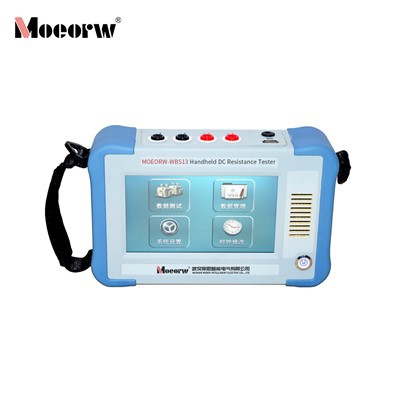
I know, I know, a lot of these tools feel like overkill if you’re just starting out. But here’s the thing: when I first started in this industry, I thought the same thing. I used a beat-up multimeter for everything, and I almost got shocked by a wire that had hidden insulation damage. That’s when I realized how important these testers are. Now, every tool I sell isn’t just a product—it’s something that’s gonna keep someone safe, and keep their business running.
Oscillatory Wave Partial Discharge Tester At the end of the day, electrical installations don’t run on guesswork. They run on accurate, reliable test data. A multimeter’s great for checking continuity or voltage, but when you’re dealing with something as dangerous as electricity, you need a tool that can measure the exact things that keep people and buildings safe. If you’re still on the fence, let’s chat. I can walk you through different models, answer all your questions, and help you pick the right one for your business. No sales pitch, just real advice from someone who’s been in this game a long time and has seen way too many avoidable problems. Don’t wait until something goes wrong—get the right tool now, so you can do the job right, every time.
References
- National Fire Protection Association (NFPA). (2023). Electrical Fires in the United States: Top Causes and Trends. Quincy, MA: NFPA.
- International Electrotechnical Commission (IEC). (2021). IEC 60364-6: Electrical Installations of Buildings – Part 6: Inspection and Testing. Geneva, Switzerland: IEC.
- Occupational Safety and Health Administration (OSHA). (2022). Electrical Safety Standards for General Industry. Washington, DC: OSHA.
- Institute of Electrical and Electronics Engineers (IEEE). (2020). IEEE Guide for Electrical Insulation Resistance Testing of Rotating Machinery and Associated Power Systems. Piscataway, NJ: IEEE.
Wuhan Moen Intelligent Electric Co., Ltd.
As one of the most professional insulation and earth resistance tester manufacturers in China, we’re featured by quality products and good price. Please rest assured to buy high quality insulation and earth resistance tester in stock here and get quotation from our factory. Customized orders are welcome.
Address: Building A, No.1, Fenghuangyuan 2nd Road, Donghu New Technology Development Zone, Wuhan, Hubei, China
E-mail: info@hvhipotsystem.com
WebSite: https://www.hvhipotsystem.com/
