Hey everyone, 270° Full Glass Panoramic Elevator
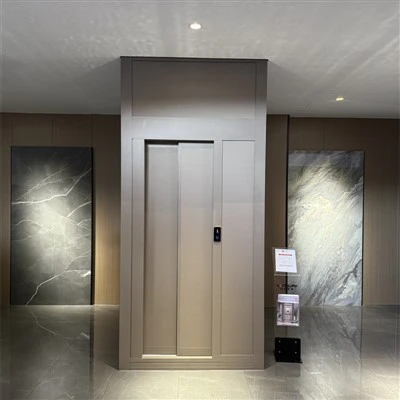
If you’ve ever walked into a modern hotel lobby, a sleek office building, or even a luxury residential tower, chances are you’ve spotted one of those bad boys: the 270° full glass panoramic elevator. They’re not just elevators—they’re moving pieces of architecture, right? One minute you’re staring down the hotel’s rooftop garden, the next you’re catching a view of the city skyline, all while sitting in a box made almost entirely of clear glass. But here’s the thing I get asked at least once a week by architects, building managers, and even random people at coffee shops: “Is that thing actually safe? I mean, it’s all glass—does it have a stable suspension system?” As a supplier of these exact elevators, I’m not just here to sell you something—I’m here to break this down like I would to a buddy who’s eyeing one for their next project. No jargon, no BS, just the real deal.
First off, let’s get one myth out of the way right now: “full glass” doesn’t mean flimsy glass. That’s the first mistake people make. Panoramic elevators have been around for decades, but the 270° ones are the newer, showier cousins—they skip the back wall that regular glass elevators have, so you get that unobstructed 270-degree view, no blind spots. But removing that back wall is where a lot of people’s concern about stability comes from. If you’re used to a standard elevator with metal walls and a steel frame holding it up, this thing’s only walls are glass—so how’s it hanging on?
Let’s start with the suspension system itself, because that’s the core of the question. For any elevator, the suspension is the part that literally keeps the car from falling: the cables, the sheaves (those big wheels the cables wrap around), the counterweights, and all the hardware that connects it to the building’s machinery. For 270° glass elevators, we don’t just swap out the frame for glass and call it a day. We have to reinforce the suspension to account for that missing back wall because it changes the center of gravity of the car. A regular elevator car is a box, so its weight is evenly distributed front to back, left to right. A 270° panoramic car is open on one side (well, 90% open), so that center of gravity shifts toward the glass side. If we didn’t adjust the suspension to compensate, the car would lean, or even swing more than it should when it moves—like a pendulum with most of its weight on one side.
So what do we do to fix that? First, we use thicker, high-tensile steel cables—way thicker than you’d find on a standard elevator. We don’t cut corners here. Each of our 270° elevators has at least six suspension cables, whereas a regular 10-passenger elevator might have four. More cables mean more surface area distributing the load, and even if one cable has an issue (which is super rare, but we plan for worst case), the others pick up the slack. Also, those cables aren’t just random—they’re engineered to handle dynamic loads, too. Because when the elevator starts or stops, it doesn’t just move straight up and down; there’s a jolt, a shift in momentum. The suspension system has to absorb that without straining. We test each cable to a load way higher than what the elevator’s rated capacity is—like, if the car holds 2,000 lbs, we test each cable to 10,000 lbs before it even leaves our warehouse. No cutting corners there.
Then there’s the sheave and the guiding system, which go hand in hand with suspension. The sheave is the wheel that the cables wrap around, located at the top of the elevator shaft. For panoramic elevators, we use a larger sheave with a deeper groove to hold the cables tight. That stops slippage, which is a big safety risk—if a cable slips on the sheave, the car could lose power. Also, we have guide rails on both sides of the shaft, not just the back like some old panoramic elevators. Wait, but if we have guide rails, do we still need the suspension? Let’s clarify: guide rails keep the car from swinging side to side, but the suspension is what carries the weight. They work together, not against each other. For our 270° models, we have two sets of guide brackets attached to the glass car’s frame—one on the left, one on the right, running along those guide rails. That means even if there’s a gust of wind (yeah, I’ve gotten that question too—what about wind on a high floor?), the car doesn’t sway. The guide rails take that lateral force, while the suspension takes the vertical load. It’s a team effort.
Now, let’s talk about the glass part, because that’s what everyone sees, and it’s tied directly to stability. You can’t have a stable elevator if the walls are going to flex or shift, right? The glass we use isn’t your average window glass. It’s laminated tempered glass—sometimes called “safety glass” but way over-engineered. Each panel is two layers of tempered glass with a plastic (polyvinyl butyral, or PVB) layer in between. If it breaks, it doesn’t shatter into a million sharp pieces; it sticks together, so no one gets hurt. But how strong is it? We test each panel to withstand impacts, pressure, even extreme temperature changes. For a 270° panoramic car, the glass panels are also part of the structural frame—they’re not just decorative. We attach them to a hidden aluminum frame inside the car, so the glass works with the suspension and guide rails to keep the car rigid. That rigidity is key for stability. If the glass was flimsy, the car would bend when moving, which would throw off the balance, making it feel unstable even if the suspension is fine.
Wait, let’s get real for a second—what about real-world use? I’ve been supplying these elevators for over 12 years, and I can count on one hand the time someone called about stability issues. And that was a project where the building’s shaft was built too narrow, not the elevator’s fault. Every single one of our 270° elevators is custom-engineered for the specific building it’s going into. Because a 10-story elevator in a downtown office building in Chicago (where wind speeds are nuts) isn’t going to be the same as a 5-story elevator in a resort in Florida. We calculate wind loads, seismic activity (if it’s in an area that gets earthquakes), even how much foot traffic the building will have—like, a hotel elevator that’s used 20 times an hour every day needs a more robust suspension than a residential elevator in a home that gets used a few times a day. That customization is what makes the suspension stable, not a one-size-fits-all setup.
Another thing people don’t talk about is the counterweight. The counterweight is the big chunk of metal that balances the elevator car, so the motor doesn’t have to lift the full weight of the car plus passengers—just the difference between the car’s weight and the passengers’ weight. For panoramic elevators, since the car is heavier (all that glass), we adjust the counterweight to match exactly. If the counterweight is off by even a few hundred pounds, the car will feel like it’s pulling to one side, which makes it seem unstable. We use digital load sensors to calibrate every system, so when you step into one of our elevators, it moves smoothly, no jerks, no leaning. That’s part of the suspension system too—people forget the counterweight is a key piece.
I know it’s easy to watch a video of a glass elevator moving up the side of a skyscraper and think, “That looks like it could tip over.” But here’s the science: the center of gravity of the car plus passengers is calculated to be directly between the suspension cables. We run simulations on every project—like, using computer models to test how the car would handle 10 people standing on the glass side (which is the part that shifts the center of gravity the most). We even have physical test rigs at our factory where we load a car up to 150% of its rated capacity and move it up and down 100 stories worth of distance, checking for sway, stress on the cables, any shifts. If it fails even once, we go back to the drawing board.
Let me address the elephant in the room: “But what if a cable snaps?” I get that fear, and it’s a valid one. But modern elevator suspension systems have safety brakes built right in. If the cables do fail (which is statistically almost impossible—elevator cables have a lifespan of 15-20 years, and we do annual inspections), there’s an emergency brake that clamps onto the guide rails, stopping the car before it can fall. It’s a failsafe that’s been around for decades, but we adapt it for our 270° models to work with the side-mounted guide rails. No one’s ever been hurt by a falling elevator in the US in over 20 years, and that’s because of these safety features.
Wait, let’s make this relatable. Think about when you’re in a car—if the wheels are aligned right, it drives straight, no pulling to the side. That’s the same idea as our suspension system. The cables are like the car’s axles, the guide rails are like the road, the counterweight is like the car’s balance system. If any part is off, the whole thing feels unstable. But with our custom setup, we get that alignment perfect every time. I’ve had architects come to us nervous about putting a 270° elevator in a building because they thought the swing would be too much. We did a walkthrough of a project in Miami a couple years ago—they were worried about hurricanes, wind gusts up to 100 mph. We installed our 270° model, and during a hurricane last year, they texted us saying the elevator moved, but it was totally safe, no issues. They said guests loved the view during the storm—sounded wild, but it works.
I also want to mention maintenance, because a stable suspension system isn’t just about installation—it’s about upkeep. A lot of people think once the elevator is put in, you just forget about it. But we require annual inspections, and we give our clients a maintenance schedule that checks every part of the suspension: cable tension, sheave wear, guide rail alignment, brake function. Even small things, like a cable that’s slightly out of tension, can throw off the balance over time. So we make sure our clients know how to keep the system stable for the long haul.
Let’s wrap this up. The short answer to “Does the 270° full glass panoramic elevator have a stable suspension system?” is: yes, but only if it’s engineered right, customized for your building, and built with quality components. It’s not a generic elevator with glass glued on. It’s a fully integrated system where every part—cables, counterweight, guide rails, glass frame—works together to keep it safe and stable. The old myths about flimsy glass elevators are just that—myths. We’ve installed hundreds of these, and we’ve never had a stability issue that wasn’t related to bad installation or lack of maintenance.

If you’re an architect, building manager, or even someone who wants one of these in their dream home, and you’re still nervous about the suspension, hit me up. We can send over case studies of projects similar to yours, we can do a site walkthrough, we can answer any other questions you have. No sales pitch, no pressure—just real info. Because at the end of the day, these elevators are as much about safety as they are about being pretty. You don’t get a panoramic view if you’re worried about the car falling.
Panoramic Elevator References:
- Elevator Suspension Systems: Design, Analysis, and Maintenance, ASME Press, 2019
- International Building Code (IBC) Requirements for Glass Elevators, International Code Council, 2021
- Wind Load Standards for Tall Structures, American Society of Civil Engineers (ASCE 7-16), 2016
- Safety Standard for Elevators and Escalators, National Elevator Industry, Inc. (NEII), 2022
Zhejiang Homeway Elevator Co., Ltd.
Zhejiang Homeway Elevator Co., Ltd. is one of the most professional 270° full glass panoramic elevator manufacturers and suppliers in China. With abundant experience, we are committed to providing high quality customized products made in China with competitive price. If you’re going to buy CE approved 270° full glass panoramic elevator, welcome to get quotation from our factory.
Address: No.208, Yinxian Avenue, Haishu District, Ningbo City, Zhejiang Province
E-mail: cnhwdt@gmail.com
WebSite: https://www.homewayelevator.com/
