When I started my wood wall panel business five years ago, I thought I’d spent enough time learning about wood materials, installation, and maintenance. But one question kept popping up from homeowners, remodelers, and interior designers alike—and it’s one I didn’t have a solid answer for at first: Can you wallpaper over wood wall panels? At first, I’d give a vague “sometimes” or a quick tip to check for smoothness, but over the years, I’ve walked dozens of clients through the process, learned from mistakes (both theirs and mine), and tested every angle of this debate. Today, I’m pulling back the curtain on what actually works, what doesn’t, and why as a wood wall panel supplier, I have a stake in giving you the unvarnished truth. Wood Wall Panel

Let’s start with the basics: Wood wall panels come in so many forms, it’s impossible to talk about them as a single category. There’s the smooth, medium-density fiberboard (MDF) panels you see in modern farmhouse renovations, the rustic, distressed solid pine panels with deep, uneven grooves, and the thin, laminated wood veneer panels used for accent walls in urban apartments. Each type has a unique surface, and that surface is the make-or-break factor when it comes to wallpaper adhesion. If your wood panels have a flat, even finish (like MDF or pre-finished veneer panels with a satin or matte coat), wallpaper can stick—but it’s not as simple as slapping paste on and going to work. If your panels have deep knots, raised grain, or heavy textures, wallpaper is almost never going to work well, and trying it will only lead to bubbles, tears, and a lot of frustration.
I learned this the hard way three years ago, when a contractor client ordered 200 square feet of our solid reclaimed oak panels for a client’s living room. They called me a week later, panicking: the wallpaper they’d applied was peeling off in strips, and they were convinced the panels were defective. When I drove to the site, I saw exactly what had gone wrong. The oak panels had deep, uneven grooves and raised grain that the contractor hadn’t prepped properly. They’d tried to force the wallpaper into those gaps, but the paste never fully bonded to the curved, rough edges of the wood, and humidity in the room caused the paper to expand and pull away. That day, I realized that the answer to “can you wallpaper over wood panels” isn’t a yes or no—it depends on three key steps: panel preparation, wallpaper selection, and long-term maintenance.
First, panel preparation is non-negotiable. Even the smoothest wood panels need to be treated before wallpaper goes on, and skipping this step is the number one reason projects fail. Let’s break that down: If your panels have a factory-applied finish (like our pre-finished white MDF panels, which have a smooth, powder-coated surface), you’ll need to lightly scuff the surface with 120-grit sandpaper. This creates tiny, subtle scratches that give the wallpaper adhesive something to grip onto—without sanding, the smooth finish will act like a barrier, and the wallpaper will fall off within a few months. After sanding, wipe the panels down with a lint-free cloth and a mild detergent to remove dust, then rinse with clean water and let them dry completely. Any leftover dust or moisture will prevent adhesion, so this step can’t be rushed.
If your wood panels are raw, unfinished, or have a old, peeling stain, you’ll need to seal them first. I always recommend a high-quality, oil-based primer or a shellac-based sealer for wood panels. These products soak into the wood grain, block out tannins (those sticky, yellowish compounds in hardwoods like oak that can bleed through wallpaper and leave unsightly stains), and create a uniform base for paste. A lot of people skip the sealer on smooth panels, but I’ve seen tannins bleed through even on pre-finished panels—especially in bathrooms or other high-humidity rooms. Last year, a client ordered our solid ash panels for a bathroom accent wall, skipped the sealer, and six months later, their blue floral wallpaper had faint yellow streaks all over it. The sealer would have prevented that, so it’s a small investment that saves you a big headache later.
Now, what about texture? If you have wood panels with grooves, beadboard details, or raised paneling, wallpaper can still work—but you’ll need to choose the right type. Smooth, thin vinyl wallpaper is your best bet here, because it’s flexible and can conform to subtle textures without bubbling. Heavy fabric-backed wallpaper or thick paper? They’re too rigid, and they’ll crack or pull away from the raised edges of the panels. I also advise against using any kind of vinyl wallpaper with a raised embossment—those raised patterns will show through the paper and look uneven on your wall, defeating the purpose of using wood panels in the first place. On the flip side, if you have flat, modern wood panels, you can use almost any wallpaper type—from bold patterns to delicate prints—because there’s no texture to work around.
There’s one big exception to all this, though: if your wood panels are installed in a room with high humidity (like a bathroom, kitchen, or basement), wallpaper is a risky choice, no matter how smooth the panels are. Even with proper sealing, moisture can get trapped behind the wallpaper, causing mold growth, peeling adhesive, and warping of the wood panels themselves. I’ve had clients come to me after a bathroom renovation where they tried to wallpaper over beadboard panels, and within a year, the panels had warped, and black mold was growing along the seams. If you really want wallpaper in a high-humidity space, your better bet is to paint the wood panels instead—paint is more durable, easier to touch up, and it won’t trap moisture. As a wood panel supplier, I always tell clients to prioritize the wood’s natural strength in these areas, and save wallpaper for low-humidity rooms like bedrooms, living rooms, and home offices.
Another common mistake I see is not testing the adhesive. Not all wallpaper paste is created equal, and some adhesives are too weak for wood surfaces. I recommend using a heavy-duty, clear acrylic-based adhesive, which is stronger than the traditional wheat paste most homeowners use. The acrylic formula bonds better to wood, is more resistant to humidity, and won’t leave sticky residues when you remove the wallpaper later (a big plus if you ever want to switch up your design). Always do a small test patch first: apply the adhesive to a scrap piece of your wood panel, stick a small piece of wallpaper to it, let it dry for 72 hours, and then check for peeling or staining. If it holds, you’re good to go; if not, you might need a different adhesive or to adjust your plan.
Now, let’s talk about when you shouldn’t wallpaper over wood panels. If your panels have deep, uneven grooves (more than 1/8 inch deep), or if they’re made of solid wood with a very rough, rustic finish (like barn wood with large knots and gaps), wallpaper is almost never going to work well. Trying to press wallpaper into deep grooves will create bubbles that are impossible to smooth out, and the paper will stretch unevenly, leading to visible lines and tears. In these cases, your best option is to work with the wood’s natural texture—paint it for a bold, cohesive look, or leave it unfinished for a rustic, organic vibe. As someone who sells all types of wood panels, I’d never push a client to wallpaper over a surface that’s not suited for it; part of my job is helping them pick the right material for their design goals, whether that means wood panels alone or paired with a different wall treatment.
I also hear a lot of questions about removing wallpaper from wood panels down the line. If you ever decide you want to go back to plain wood panels, it’s important to do it correctly to avoid damaging the surface. Never use a power steamer, which can warp the wood and lift the grain. Instead, use a gentle wallpaper remover solution (mix 1 part fabric softener with 4 parts warm water, for a natural, effective option), let it soak into the paper for 15-20 minutes, and peel it off slowly from top to bottom. Any leftover adhesive can be removed with a damp cloth and a mild detergent, then sand the surface lightly to smooth it out before refinishing or painting. This method has worked for dozens of my clients over the years, and it’s a great way to keep your wood panels in good shape for decades.
Over the years, I’ve learned that the biggest misconception about wood panels and wallpaper is that they’re incompatible. They can work beautifully together, but only if you do the prep work right and choose the right materials. Last year, a designer client ordered our smooth white MDF panels for a modern nursery, and paired them with a soft, animal-print wallpaper. They prepped the panels by sanding, priming, and using a heavy-duty acrylic adhesive, and the final result was stunning—warm, cohesive, and exactly what the client wanted. That project still stands out to me as a perfect example of how wood panels and wallpaper can complement each other, instead of working against each other.
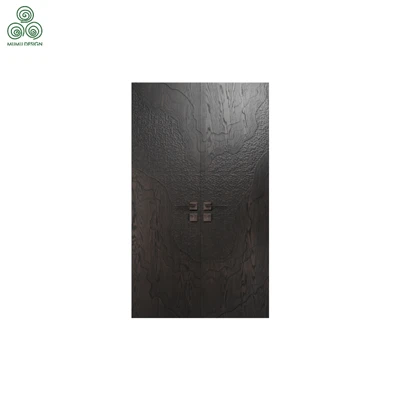
At the end of the day, my goal as a wood wall panel supplier isn’t just to sell you panels—it’s to help you create a space you love, with as little stress as possible. If you’re considering wallpaper over wood panels, take the time to check your panel’s texture, prep the surface thoroughly, choose the right adhesive and wallpaper type, and test a small patch first. If you have any questions about which wood panels work best for your project, or need advice on installation or prep, I’m here to help. Don’t guess at the best approach—reach out to me, and we can work together to make your vision a reality.
Wooden Doors References
- National Wood Flooring Association. "Wallcovering Application over Wood Surfaces." NWFA Technical Bulletin, 2022.
- Wallpaper Manufacturers Association. "Adhesion Best Practices for Textured and Wood Substrates." WMA Guidelines, 2021.
- US Department of Energy. "Moisture Control in Interior Finishes for High-Humidity Spaces." DOE Residential Construction Guide, 2020.
- Wood Products Council. "Surface Preparation for Wall Coverings on Wood Paneling." WoodTech Journal, 2019.
Dongguan MUMU Woodwork Co., Ltd.
Dongguan MUMU Woodwork Co., Ltd. is one of the most professional wood wall panel manufacturers and suppliers in China, featured by cheap products and good service. If you’re going to wholesale customized wood wall panel at low price, welcome to get quotation and free sample from our factory. Contact us for more discount information.
Address: Room No.2602, Universal Commerce Center,Dongguan, China 523073
E-mail: export@mumu-ing.com
WebSite: https://www.mumu-ing.com/
