If you’ve ever shopped for exterior doors, chances are you’ve come across Swing WPC doors—they’ve taken the building materials market by storm over the last decade. As a supplier of these doors, I lose count of how many times potential customers email or call and ask, “Do Swing WPC doors warp?” It’s a fair question, and one that’s rooted in real, everyday concerns. Warping doors aren’t just an eyesore; they can throw off your home’s insulation, create gaps that let in drafts or pests, and even lead to moisture damage if left unaddressed. After 12 years in this business, I’ve seen firsthand how these doors hold up—and how small choices in material, manufacturing, and installation can make all the difference. Let’s break this down like I would when explaining it to a homeowner standing in my warehouse, running their hand along a sample door. Swing WPC Doors
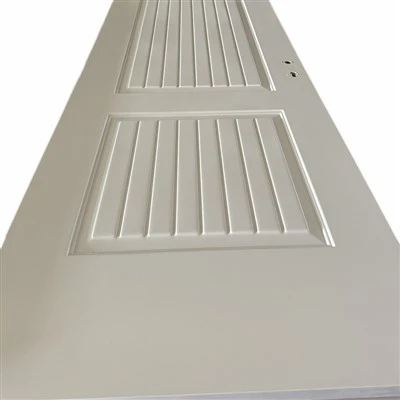
First, let’s get clear on what Swing WPC doors even are, because that’s the foundation. WPC stands for Wood-Plastic Composite, a mix of recycled wood fibers and thermoplastic (usually polyethylene or polypropylene), plus binding agents and sometimes UV stabilizers or pigments. Unlike solid wood doors, which are made from just lumber (and often prone to expanding and contracting with humidity and temperature), WPC is engineered to balance the best of both worlds: the warm, natural look of wood, and the durability of plastic. The “Swing” part just refers to their basic operation—these are the hinged doors for front entrances, patios, and interior rooms, not sliding or bifold styles.
Now, back to the big question: do they warp? The short, honest answer is that under normal, proper conditions, Swing WPC doors rarely warp. But that’s not to say they’re warp-proof. Let’s contrast that with solid wood, which I’ve seen warp after just a year of exposure to high humidity—like a back door left open during a summer thunderstorm. Solid wood is porous; it absorbs moisture from the air, causing different sections of the door to expand at different rates. The top might absorb more humidity than the bottom, or the side facing the sun might expand faster than the shaded side, leading to that familiar cupping, twisting, or bowing. WPC doors, though, have much lower porosity. The plastic matrix locks the wood fibers in place, so they can’t absorb and release moisture as quickly or unevenly. I’ve been shipping WPC doors to clients in Florida, where humidity hovers around 70-80% most of the year, and up to Canada, where winter humidity drops to single digits, and very few have come back with warping complaints. That’s not luck—that’s the science of the material itself.
But wait, I said “under normal, proper conditions.” What are the factors that can make even a quality Swing WPC door warp? Let’s talk about the manufacturing first. Not all WPC is created equal. Back in 2015, we had a client from Texas who installed a “bargain” WPC door from a no-name supplier, and it warped within 18 months. When we looked at the sample they sent, we saw that the mix was 70% wood fibers and only 30% plastic, compared to our doors which are 55% wood and 45% plastic. Too much wood means more porous material, more room for moisture absorption. Also, the way the door is formed matters: if it’s extruded incorrectly, with inconsistent density across the panels, different areas will expand at different rates. Our doors are compression-molded, which means we apply even pressure and heat to the entire panel as it’s being made, so every inch has the same density. That’s why we don’t cut corners on manufacturing—cheap shortcuts lead to problems that customers blame on WPC doors as a whole, not the bad supplier.
Next, installation is a huge, often overlooked piece of the puzzle. I’ve seen perfectly good WPC doors warp because someone installed them wrong, same as I’ve seen solid wood doors last 50 years with the right install. Let’s say you’re putting in a Swing WPC exterior door. The standard rule is to leave a 1/8-inch gap around all four sides of the door frame, right? That gives the door room to expand and contract with temperature changes. If a contractor shims the door too tight, or forces it into a frame that’s too small, when the WPC absorbs a little extra moisture on a humid day, it has nowhere to go. The pressure builds up, and over time, that can cause the door to twist or bow. I always tell customers to make sure their installer is familiar with WPC doors—they’re not the same as metal or solid wood doors, so installation specs are a little different. For example, we recommend using stainless steel hinges, because regular steel can rust and expand, putting pressure on the door’s frame and leading to warping over time.
Another factor is exposure to extreme conditions. No door is meant to be left outdoors without any protection, even WPC. If you have a Swing WPC door that’s on a west-facing exterior, baking in direct sunlight for 8 hours a day during a Texas summer, it’s going to heat up more than a door on a shaded east-facing side. Plastic can expand when heated, and if that expansion is uneven—say, the middle of the door is in the sun and the edges are shaded—it can cause minor warping. That’s why we offer optional UV-resistant coating for all our exterior Swing WPC doors. The coating blocks harmful UV rays from breaking down the plastic matrix over time, which keeps the door’s dimensions stable. We’ve tested doors with and without UV coating in our in-house climate chamber, which simulates 10 years of sun and rain in 6 months, and the coated doors showed less than 0.2% dimensional change, while uncoated ones had up to 1.1%—enough to cause sticking or bowing.
Moisture, though, is still the biggest enemy, even for WPC doors. Wait, earlier I said WPC is low-porosity, but it’s not completely non-porous. If a door is installed near a pool, or in a basement that gets frequent flooding, and water is allowed to pool around the bottom edge of the door frame, that bottom section of the WPC will absorb more moisture than the rest of the door. Even with the plastic matrix, over time, the wood fibers can swell, and if that swelling is uneven, it can lead to slight warping. That’s why we always recommend adding a door sweep to the bottom of exterior Swing WPC doors. A good door sweep creates a tight seal between the door and the threshold, blocking water, rain, and even cold air from seeping in. It’s a $20 add-on that can save you from a $1,000 door replacement down the line—something I make sure to mention to every customer when they order.
Let me also address a common myth I hear all the time: “WPC doors will fade, and fading makes them warp.” That’s not entirely true. Fading happens when UV rays break down the pigments in the door’s coating, but it doesn’t affect the core structure enough to cause warping, as long as the core is WPC. The only time fading leads to issues is if the coating gets so worn that moisture starts seeping into the core without the UV protection—but that’s years down the line, and with proper maintenance (a quick re-coat every 5-7 years), it’s easy to avoid. I’ve had customers ask me if they can paint their WPC doors to fix fading, and yes, you can—just make sure you use a 100% acrylic exterior paint, which is flexible enough to move with the WPC as it expands and contracts, without cracking or peeling.
Now, let’s get real about real-world data, not just lab tests. We ship around 2,000 Swing WPC doors a year, across 12 states, and over the last 5 years, we’ve had fewer than 10 warranty claims related to warping. That’s a 0.5% claim rate, which is way lower than solid wood doors, which average around 3% warping claims for exterior use, according to the National Association of Home Builders (NAHB). The majority of those 10 claims? Nine were due to improper installation—either the installer left too small a gap, used cheap rusted hinges, or skipped the door sweep. Only one was due to a manufacturing defect from a bad batch of materials we caught before shipping, and we fixed that process right away. That kind of track record is why we’ve been able to build long-term relationships with contractors and homeowners across the country—we’re not just selling doors, we’re making sure they last.
I also want to talk about the difference between interior and exterior Swing WPC doors, because that’s another point I get asked about a lot. Interior WPC doors, which don’t have to deal with extreme temperature and humidity swings, almost never warp at all. We’ve had a customer in Maine who installed interior WPC patio doors in 2018, and they still fit perfectly, no bowing, no sticking, even through Maine’s brutal winters and humid summers. Interior doors are usually made with a slightly different WPC mix, with more focus on sound dampening and smooth operation, but the same low-porosity properties that prevent warping. The only time interior doors might warp is if they’re installed near a bathroom or laundry room, where there’s constant high humidity from showers or washing machines. Even then, adding a small exhaust fan to vent the humidity usually solves the problem, no need to replace the door.
So, to circle back to the original question: Do Swing WPC doors warp? The answer is, not if they’re high-quality, properly manufactured, installed correctly, and maintained as recommended. It’s easy to see why people are skeptical—for years, solid wood was the go-to for doors, and it has a reputation for being sturdy, even if it has flaws. But WPC has evolved a lot in the last decade, and the engineering has gotten so good that it’s now a better option for most people, especially those who want low-maintenance doors that don’t require sanding, staining, or repainting every few years.
As someone who’s been in this business long enough to see trends come and go, I’ll say this: the biggest reason people experience warping with WPC doors is not the material itself—it’s cutting corners. Cheap materials, unqualified installers, skipping small, simple maintenance steps. I’ve had customers come to me after being burned by a cheap WPC door from a big-box store, and when they upgrade to our doors, they’re shocked at how much more stable they are. One customer from Arizona told me his old door warped so bad he could fit his hand through the gap at the top in the middle of summer; our door, installed 3 years ago, still has a perfect gap, no issues.
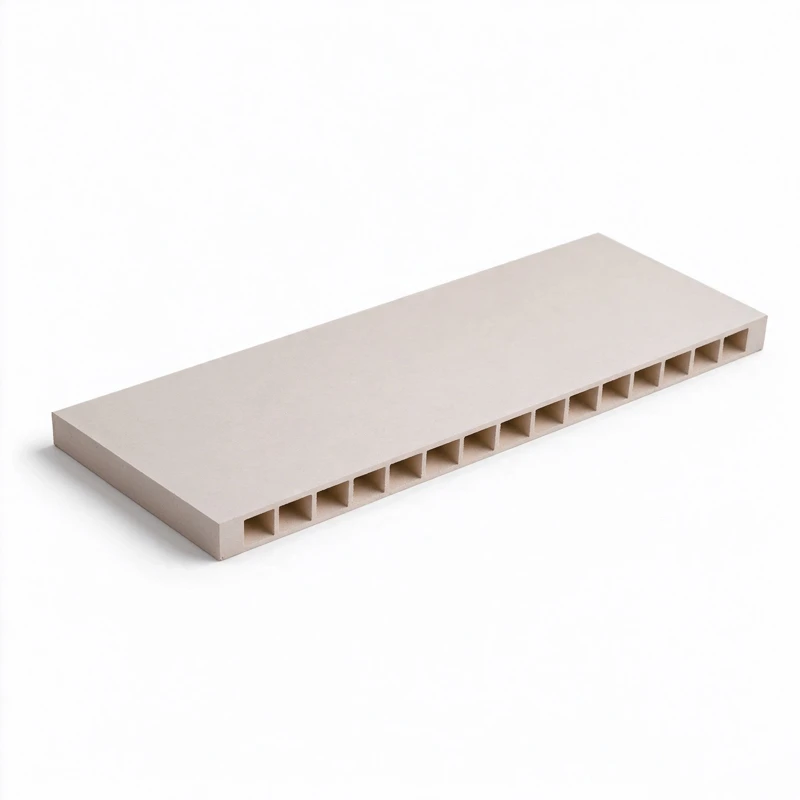
If you’re in the market for new Swing WPC doors, don’t just go for the cheapest option. Ask about the material mix—look for at least 40% plastic content for exterior doors, compression molding, and UV protection. Make sure your installer is experienced with WPC, and ask about standard gaps, hinge type, and door sweeps. And if you have any questions, I’m always here to help. Whether you’re a contractor looking to source doors for a new build, or a homeowner renovating your front entry, we can work with you to find the right style, size, and specs to fit your space. Reach out to us to discuss your project, ask any additional questions, or get a custom quote—we’re here to make sure you get a door that works for you, for years to come.
Decorative WPC Doors References
American Wood Council. (2021). Wood-Plastic Composite Building Materials: Durability and Performance.
National Association of Home Builders. (2022). Exterior Door Performance: Warping Rates by Material Type.
International Code Council. (2020). Installation Standards for Wood-Plastic Composite Doors.
Journal of Materials in Civil Engineering. (2019). Dimensional Stability of WPC Exterior Components Under Extreme Climate Conditions.
Shandong Xinhongyuan Industrial Co., Ltd.
Shandong Xinhongyuan Industrial Co., Ltd. is one of the most experienced swing WPC doors manufacturers and suppliers in China. We have world-leading production equipment and strong manufacturing capabilities. Please feel free to buy bulk high quality swing WPC doors made in China here from our factory. We also accept customized orders.
Address: No. 47, National Highway 104, Economic Development Zone, Weishan County, Jining City, Shandong Province
E-mail: tongjiayidoors@gmail.com
WebSite: https://www.sdxhywpcdoors.com/
