Hey there, if you’re in the market for clay brick machines, you’ve probably seen two main types thrown around: vacuum clay brick machines and non-vacuum ones. As a supplier who’s talked to hundreds of brick makers over the years, I get how confusing it can be to pick the right one for your operation. A lot of folks ask me, “Which is actually better?” — so let’s break this down without all the jargon, no fancy textbook stuff, just real stuff we see on the job every day. Clay Brick Machine
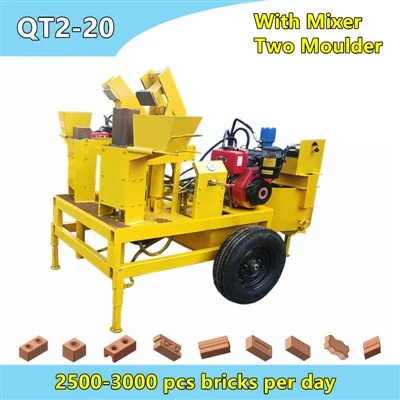
First, let’s keep it simple: what’s the actual difference between these two machines? Non-vacuum machines work like a big, old school pasta press, right? They shove clay through a die without pulling out any air bubbles that are trapped inside. Vacuum machines? They’ve got a built-in chamber that sucks almost all that air out of the clay before it gets pressed. That tiny step changes everything down the line — way more than most people realize at first.
I used to work with a brick maker in a small town who bought a non-vacuum machine because it was cheaper upfront. His first batch looked fine, but once they stacked ’em in the kiln, half cracked. Turned out those trapped air bubbles expanded when the clay heated up, and boom — bricks split down the middle. He ended up having to toss a third of his output. That’s not just lost time; that’s lost money. Vacuum machines fix that air bubble problem, full stop. No bubbles, no cracks in firing, which means way less waste. Waste kills profit, let’s be real.
But wait, don’t get me wrong — non-vacuum machines aren’t garbage. If you’re making super basic, hand-sized bricks for low-stakes jobs like small garden walls or temporary structures, they work. But for anyone scaling up, making bricks that’ll last 50+ years for homes and commercial buildings? Vacuum is non-negotiable. Let’s talk about durability first. Bricks from vacuum machines are denser, tighter. They don’t let water seep in, which is huge in places with freeze-thaw cycles. If water gets into a brick and freezes, it expands, and your wall crumbles. I’ve seen vacuum bricks hold up through three brutal New England winters without a scratch; non-vacuum ones? Most start chipping after one.
Then there’s the output side. Vacuum machines can press way more bricks in an hour, no cap. The clay is more consistent once air’s pulled out, so the press runs smoother, less jamming. A non-vacuum machine might knock out 1,000 bricks an hour, but a good vacuum? That’s 2,500+ — same amount of labor, way more product. And the bricks from vacuum machines don’t need as much trimming. The non-vacuum ones are a little lumpy around the edges because the clay isn’t evenly pressed, so you have to spend an extra worker 20 minutes trimming each batch. That’s extra labor cost every single day. I had a guy last year switch from non-vacuum to a vacuum machine and cut his labor costs for brick prep by 40% in the first month alone. That’s a return on investment that hits way sooner than you think.
Wait, but what about the cost? I know, upfront is scary. A vacuum machine is more expensive than a basic non-vacuum one — usually 20-30% more. But let’s do the math quick, no fancy spreadsheets. Let’s say your non-vacuum machine costs $10,000, vacuum is $13,000. The non-vacuum has 15% waste every batch (those cracked bricks we talked about), and vacuum has 2% waste. If you make 10,000 bricks a month, that’s 1,500 wasted non-vacuum vs 200 wasted vacuum. At $0.50 a brick, that’s $650 a month saved on waste with the vacuum. Plus, you make 1,500 more bricks a month with the vacuum, so that’s an extra $750 a month in revenue. In 3 months, you’ve already made back that extra $3k cost. And that’s before labor savings. It adds up fast.
I will say, non-vacuum machines have one small perk: they’re simpler to maintain. No vacuum chamber means fewer moving parts, less to break. But modern vacuum machines? The parts are built way tougher now, and we do routine check-ins for all our customers, so breakdowns are super rare. I haven’t had a customer whose vacuum machine was down for more than a day in the last 5 years. Non-vacuum machines can still jam if the clay’s too wet or too dry, but vacuum machines handle a wider range of clay moisture levels, too. Less adjusting, less messing around.
Another thing people sleep on: brick quality for sales. If you’re selling bricks, customers will pay more for consistent, durable ones. I’ve had a mason tell me he’d pick a $0.60 vacuum brick over a $0.40 non-vacuum one every time, because he doesn’t have to worry about callbacks or redoing walls. Your customers will be happier, you’ll have repeat business. Non-vacuum bricks might be fine for the budget side, but if you’re trying to build a name for yourself as a reliable brick maker, vacuum is the way to go.
Now, let’s be real — there are edge cases. If you’re only making a few hundred bricks a year, or testing a small side project? Non-vacuum might make sense. But 9 times out of 10, if you’re a serious operator looking to grow, vacuum clay brick machine is better.
At the end of the day, it’s not just about which is “better” in theory — it’s about what works for your bottom line. Non-vacuum is cheap upfront but costs you in waste, labor, and lower-quality output long term. Vacuum is a little more to start, but pays for itself fast and sets you up to scale.
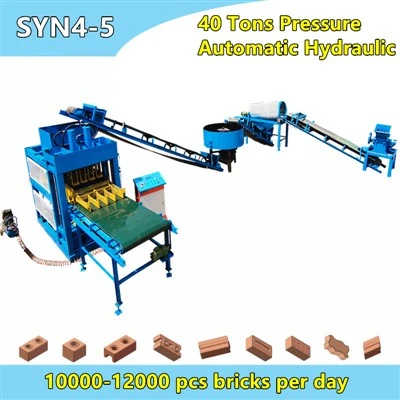
If you’re tired of wasting bricks, dealing with constant trimming, or missing out on revenue from low output, let’s chat. We can walk you through exactly what your operation needs, no pushy sales talk, just straight up advice. Hit us up to connect about how a vacuum clay brick machine fits your goals.
Movable Cement Block Laying Machine References:
- International Society for Soil Mechanics and Geotechnical Engineering. (2021). Clay Brick Density and Durability: A Comparative Analysis.
- Brick Industry Association. (2022). Operational Efficiency of Clay Brick Manufacturing Equipment.
- Journal of Materials in Civil Engineering. (2020). Effects of Air Bubble Removal on Fired Clay Brick Performance.
- Local Small Business Manufacturing Association. (2023). Return on Investment for Clay Brick Machine Upgrades.
Linyi GiantLin Machinery Co., Ltd.
Linyi GiantLin Machinery Co., Ltd. is one of the most reliable clay brick machine manufacturers and suppliers in China. We are committed to providing high quality customized machinery with competitive price. Please feel free to buy the newest clay brick machine made in China here from our factory. Also, price list is available.
Address: Linyi city, Shandong province, China.
E-mail: admin@giantlinmachinery.com
WebSite: https://www.linyigiantlin.com/
