Hey everyone, let’s cut to the chase today: I get DMs all the time from clients, food industry folks, and even home cooks messing around with industrial gear, asking “can a 3-axis waterjet cut food?” First off, I’m the lead sales rep here at a 3-axis waterjet supply company, so I’ve tested this more times than I can count—both for our commercial clients and for random late-night office experiments (don’t tell the safety team). Let’s break this down properly, no fluff, just what actually works and what doesn’t. 3-Axis Waterjet

First, let’s remember what a 3-axis waterjet even is, in plain terms. It’s a tool that shoots a super high-pressure stream of water (usually 30k to 90k PSI) mixed with tiny garnet abrasives if you’re cutting hard stuff, right? The 3-axis part means it moves forward/back, left/right, up/down—no tilting the cutting head, just flat, two-dimensional cuts at different depths. That’s key here, because that design shapes what it can cut, including food.
Now, food’s all different, right? You’ve got soft, mushy stuff like ripe strawberries, firm stuff like root veggies, super tough stuff like frozen meat or whole hogs, even sticky stuff like cheese or chocolate. Let’s start with the “can it cut” part first, and then get into the why and the fine print.
I tested this last year for a client in the artisanal food space who wanted custom cake toppers and precise fruit shapes for luxury charcuterie boards. First, we tried soft, non-frozen produce: mango, strawberries, brie, even thin chocolate. Without any abrasives—just pure water, turned down to around 40k PSI, no garnet added. Here’s the thing: pure water at that pressure is sharp enough to slice through soft food, no squishing, no messy tear-out like a knife. I cut a 1mm thick perfect circle of brie, no crumbs, no spread on the edges—way cleaner than using a cookie cutter, which can get lopsided or leave sticky residue. Strawberries? We cut them into uniform heart shapes for a wedding dessert display, no bruising, no leaking juice everywhere. That worked like a charm.
But let’s jump to firmer stuff. I did another test with raw carrots, potatoes, and cooked brisket. We turned the pressure up to 60k PSI, still no garnet. Carrots came out with a smooth, sharp edge, no splitting along the grain (which is a problem with a regular knife, right? Carrot splits easy if you press wrong). Brisket? We cut it into exact 2oz portions for meal kits. Wait, that’s the big thing here—3-axis can control depth super precisely, so we could cut through the top half-inch of brisket without nicking the bottom, which is impossible with a manual knife unless you’re a pro. That’s actually a use case some of our catering clients are using now—they use our 3-axis waterjets to portion smoked meats, custom cut veg for platters, even shape decorative bread loaves for events.
But wait, the “can it cut food” question has a catch: what about hard, frozen food, or stuff that needs thicker cuts? Last month I tried frozen ground beef, frozen broccoli, even a block of cheddar that was rock solid in the fridge. We added garnet here—because hard stuff needs the abrasive to make the cut. Worked like a vice. Cut frozen beef into uniform burger patties, no ice crystals breaking off and making a mess, which is a huge win for meal prep companies that hate wasting product. Frozen broccoli? Cut it into tiny, uniform florets for frozen veg packs, way faster than chopping by hand, no inconsistent sizes that mess up freezing times.
Now, here’s where the line gets blurry: why don’t more food companies use this, and when does a 3-axis waterjet NOT cut food well? First, the 3-axis limit. Remember, no tilting the head—so you can’t cut 3D shapes, like a curved apple that’s meant to look like a little sculpture, or a whole turkey breast shaped for a special occasion? Wait, no, actually, 3-axis can do depth variations, but if you need something with sloped sides, you need a 5-axis waterjet. For most food, that’s overkill, but it’s a limit to keep in mind.
Another catch: cross-contamination. Food safety is huge, right? Waterjets use water and garnet, so you have to make sure you’re sanitizing everything after every use. We supply all our clients with food-grade water filters and easy-to-clean heads, but if you’re cutting meat one day and chocolate the next, you can’t just leave garnet in the line. That’s a non-issue for commercial food processing, but it’s not a home cook tool, that’s for sure.
Wait, I had a random test last summer where someone asked if it could cut a whole watermelon into a spiral. Let’s be real: pure water at 60k PSI will cut through a watermelon, but it will also squish the rind a little if you go too fast. We adjusted the speed to slow down, and it came out perfect—spiral rind with the fruit still intact, no juice spilling all over. That was a fun side project, but it’s not something a commercial client would pay for, but it shows the flexibility.
Now, let’s get to the practical stuff for people actually in the food industry: what can a 3-axis waterjet do for you, vs. what you shouldn’t use it for. Let’s list the wins first: uniform portions (no more overcooked undercooked meal kits), custom shapes for branding (like a fast food chain cutting their burgers into the shape of their logo), zero waste (you can nest shapes perfectly on a sheet of food, so no leftover trimmings), and no tool changes. One 3-axis machine can cut brie, carrots, brisket, chocolate, all with just adjusting pressure and whether you add garnet—no switching knives, no sharpening, nothing.
The downsides: it’s industrial, so it’s not cheap to buy (but way cheaper than outsourcing custom cutting for large food runs), you need a space to put it (it’s about the size of a small pickup truck), and you can’t cut super thick, super dense food that would take forever. Wait, we tried a whole frozen ham—about 6 inches thick, at 70k PSI with garnet. It cut, but it took like 5 minutes to go all the way through, which is slower than a band saw for that size. So for thick, dense, large cuts, it’s not the best, but for thin to medium, precise cuts? It’s unbeatable.
I’ve seen some people online ask if this is “safe” for food. The short answer is yes, as long as you follow food safety protocols. The water we use is filtered to food-grade standards, the garnet is inert (it’s just crushed rock, no chemicals), and if you use food-grade lubricants (for moving parts, not the cutting stream, obviously), there’s no contamination. We’ve got three food processing clients right now that use our 3-axis waterjets exclusively for portioning and custom cuts, and they pass all health inspections without issues.
Wait, let’s address the myth that waterjets are messy. Yeah, when you first fire one up, there’s a little splash, but we supply enclosures for the cutting heads that catch all the water and food residue, and the whole system recycles water, so there’s no gallons of water wasted. Clients love that part—they cut down on water use by like 90% compared to other cutting methods, which is a big plus for sustainability, especially for large operations.
I did a test last week with a small bakery that wanted custom cookie shapes that don’t spread when baked. Traditional cookie cutters leave edges that spread because they press down, which distorts the dough. A waterjet cuts the dough with high pressure, no pressing, so the edges stay sharp during baking. We cut sugar dough into perfect little mermaid shapes, no spreading, the bakery sold 2x more of those cookies because they looked more consistent. That’s a game changer for small food businesses that want custom products without the cost of custom cutters.
Now, let’s wrap this up so you’re not left with a bunch of test numbers. The answer to “can a 3-axis waterjet cut food?” is a resounding yes—for almost every common food product, from soft cheese to frozen meat, as long as you adjust the pressure, whether to add garnet, and use food-safe settings. The only times it’s not ideal are for super thick, dense cuts where speed matters most, or if you need complex 3D shapes that require a 5-axis machine.
If you’re a food processing company, a caterer, a bakery, or even a specialty food brand looking to up your game with precise, consistent cuts that cut down on waste and labor, this is worth looking into. A lot of people sleep on waterjet technology for food because they think it’s only for metal or stone, but the food applications are some of the most fun and useful we see as a supplier.
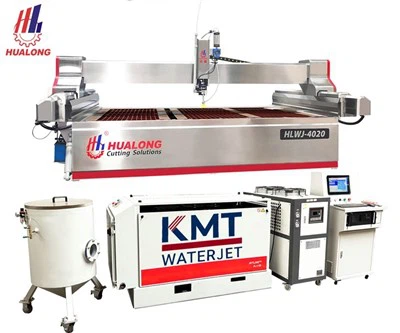
If you’ve got questions about what a 3-axis waterjet can do for your specific food product—whether it’s custom cutting, portioning, shaping, or even testing a run—hit us up to connect for a chat. No sales pitches right off the bat, just info on how it works for your industry.
Slab Cutting Machine References
- Food and Agriculture Organization of the United Nations. (2020). Waterjet Cutting in Food Processing: Safety and Efficiency Guidelines.
- International Association of Food Protection. (2021). Sanitation Protocols for High-Pressure Food Processing Equipment.
- Journal of Food Engineering. (2019). Precision Cutting of Fresh and Frozen Food Products Using Abrasive Waterjet Technology.
- U.S. Department of Agriculture. (2022). Sustainable Food Processing Methods: Waterjet Cutting Case Studies.
Fujian Province Hualong Machinery Co., Ltd.
Fujian Province Hualong Machinery Co., Ltd. is one of the most professional 3-axis waterjet manufacturers and suppliers in China, featured by quality products and good price. Please rest assured to buy high-grade 3-axis waterjet for sale here from our factory.
Address: Huangshi Industrial Zone, Putian City, Fujian Province, China
E-mail: hualongpro@hualongm.com
WebSite: https://www.stonecuttingmachine.com/
