If you’ve ever stood inside a mining operation, watched a paper mill run nonstop day and night, or seen a cargo ship lower its anchor smoothly into the sea, you’ve relied on something you probably don’t think about much: a modular industrial gearbox. For over a decade, I’ve been in the industrial gearbox supply business, helping facilities across industries keep their lines moving, and one of the most common questions I get from new clients is, “What makes a modular gearbox different from any other?” Let me break it down in plain terms, no overly technical jargon, and no flashy sales pitches—just what actually matters when your operation depends on gear reliability. Industrial Gearbox
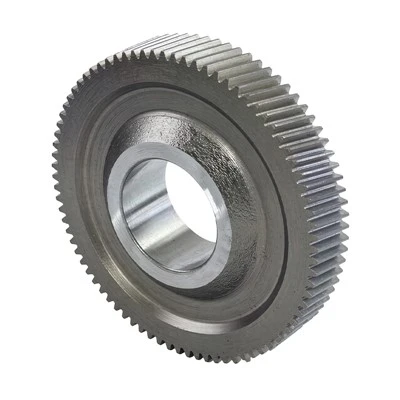
First, let’s start with the basics: every industrial gearbox does the same core job. It takes high-speed, low-torque power from a motor and adjusts it to low-speed, high-torque power that can move heavy loads. A conveyor belt carrying 50-ton loads of raw ore, a rotary kiln spinning 24/7 to process cement, a mixer blending thousands of gallons of food-grade syrup—none of these would work without that torque adjustment. But here’s the thing: not every load is the same. A mining operation might need a gearbox that can handle dust, extreme temperatures, and 10 years of almost no downtime. A food and beverage plant might need a gearbox that’s easy to sanitize, with parts that can be swapped out quickly during a shift change. A modular gearbox is built to adapt to all these different needs, without forcing you to replace the entire unit when one part breaks or your requirements change.
Let me explain how that works, because it’s not just a marketing buzzword. Traditional gearboxes are often assembled as a single, custom unit. When you order a traditional gearbox for a specific application, the housing, gears, shafts, and seals are all designed to fit exactly that job. If a gear tooth wears out after a few years, you have to order a whole new assembly, or pay to have the old one custom-machined—both of which cost time and money that most operations can’t afford. Modular gearboxes, though, are built with standardized, interchangeable components. The housing might be a single base unit that works for 10 different speed and torque ranges, the gears are sized to slot into that housing, the seals and bearings are off-the-shelf or pre-qualified parts that fit, not custom-made for one unit. That might sound simple, but the engineering behind it is tight—we don’t cut corners on strength to make parts interchangeable; every component is tested to meet the same heavy-duty standards as a traditional custom gearbox.
Let me give you a real example from a client I worked with last year. A regional paper mill in Wisconsin had a gearbox on their main pulp conveyor that kept failing every 18 months. They’d ordered a custom traditional unit, and when the primary gear wore out, the replacement part had to be machined overseas, taking 6 weeks to arrive. That meant the conveyor line was down for 6 weeks, and the mill loses about $120,000 a day when that line is shut down. We swapped that custom unit for a modular gearbox. The housing was a standard model that fit the existing motor mount, the primary gear was a standardized part that we kept in stock at our warehouse, and the bearings and seals were common industrial parts that the mill’s maintenance team could replace on their own. Six months later, a small gear on a secondary conveyor wore out. The maintenance team pulled the part off the shelf, swapped it in during a planned 4-hour weekend shutdown, and were back running without needing to ship anything in. That’s the real value of modularity, not just a feature on a spec sheet.
Now, I know what some of you are thinking: “If it’s standard, is it less durable than a custom gearbox?” That’s a fair question, and one I get all the time. When I started in this business 15 years ago, modular gearboxes had a reputation for being lower-quality, built for light-duty applications. That’s just not true anymore. The best modular gearboxes are tested to the same industry standards as traditional units—ISO 9001, AGMA (American Gear Manufacturers Association) standards, even custom testing for extreme environments. For a mining operation in Arizona that runs in 110-degree heat all summer, we can spec higher-temperature seals, wear-resistant gears, and a reinforced housing to handle that specific environment, all using the same modular base. For a pharmaceutical plant that needs gearboxes that won’t shed particles into their product, we can swap in food-safe, non-toxic seals and make sure all surfaces are easy to clean, still using the same modular platform. The standard parts are high-performance, and the modular design lets you customize the add-ons without rebuilding the whole unit.
Another big benefit of modular gearboxes is lead time and cost. When a client orders a custom gearbox, lead times can be 12 to 24 weeks, sometimes longer if there’s a supply chain delay. Modular units are built from stock, so we can ship them in 1 to 4 weeks, even for custom spec add-ons. That’s a huge difference when you’re dealing with an unplanned downtime emergency. And the cost? Modular gearboxes are typically 15 to 30 percent less expensive than custom units, upfront, and even more over the life of the gearbox because maintenance and replacement parts are cheaper and easier to source. I had another client in the energy sector a few years back who had a traditional gearbox on a wind turbine. When a bearing went bad, they had to fly a technician out to the middle of a wind farm, order a custom bearing that took 8 weeks to arrive, and pay $50,000 in downtime and labor. We swapped that unit for a modular gearbox, and when a bearing failed two years later, the technician had a standardized bearing in stock, replaced it in 2 hours, and the total cost was less than $2,000. Numbers like that stick with you; it’s not just selling a part, it’s helping a business save money.
Of course, modular gearboxes aren’t perfect for every application. If you need a gearbox for a very small, niche application—like a lab mixer that only handles a few pounds of material—modular might be overkill, and a custom unit could be cheaper. But for almost all industrial applications that need heavy torque, 24/7 operation, and long service life, modular is the way to go. Let’s be real: most industrial operations aren’t looking for a gearbox that works for one specific job for 10 years. They’re looking for a gearbox that can adapt if they expand their line, if they switch to a heavier load, if they upgrade their motor down the line. A modular gearbox lets you do that without ripping out the whole unit and starting over.
Over the years, I’ve helped hundreds of clients make the switch from traditional gearboxes to modular, and the feedback is almost always the same: less downtime, lower maintenance costs, easier repairs. I’m not here to say modular is the only option, but it’s the best option for most operations that want reliability and flexibility. If you’re tired of waiting weeks for custom parts, tired of paying exorbitant downtime fees, or just looking for a gearbox that will work as hard as your operation does, modular industrial gearboxes are worth considering.
I’ve seen too many operations get stuck with gearboxes that are either too rigid, too expensive to maintain, or not built to handle the realities of industrial work. Modular gearboxes solve those problems because they’re built with the user in mind, not just for a single sale. If you’re ready to find out if a modular gearbox is right for your application, I’m here to talk through your needs, answer any questions you have, and help you find the right solution for your operation.
Industrial Gearbox Reference
- American Gear Manufacturers Association. AGMA Standard 6011-C15: Classification for Industrial Enclosed Gear Drives. 2015.
- International Organization for Standardization. ISO 14551: Gears – Service Classification and Acceptance Criteria for Enclosed Gear Units. 2019.
- National Institute for Occupational Safety and Health. Maintenance Strategies to Reduce Industrial Equipment Downtime. 2021.
Taizhou Xinyue Transmission Co., Ltd.
As one of the most professional industrial gearbox manufacturers and suppliers in China, we’re featured by quality products and good service. We warmly welcome you to buy bulk customized industrial gearbox made in China here from our factory. If you have any enquiry about pricelist, please feel free to email us.
Address: Taizhou City, Zhejiang Province, China
E-mail: L15757628388@outlook.com
WebSite: https://www.xinyuegearbox.com/
