If you’ve ever walked through a textile mill, you’ve probably heard a carding machine humming before you see it—low, steady, like a giant metal cat purring. I’m the guy who sells those machines, and let me tell you, when a customer first asks, “What’s the cost-effectiveness of a carding machine?” they’re not just asking about the price tag. They’re asking, “Is this thing going to pull its weight for the next 10 years, or am I throwing money away?” I get it—textile production is tight margins, so every dollar counts. Today, I’m breaking down what actually makes a carder cost-effective, not just the numbers on the quote sheet. Carding Machine
First, let’s get real: when someone starts looking for a carding machine, the first question is usually, “How much does it cost?” I can’t lie—good carders aren’t cheap. But here’s the thing: the cheap ones? They end up costing you more in the long run. Think of it like buying a car. A $10k used sedan might get you from A to B, but if it breaks down every month and uses twice as much gas, that’s not a deal. A $25k new sedan might cost more upfront, but it’s reliable, gets good mileage, and doesn’t need constant repairs. Carding machines are the same.
Let’s run through the initial cost vs. long-term value. I’ve worked with small mill owners who thought they’d save $15k by buying a budget carder from a random overseas supplier. Six months in, their production line is down 2-3 days a week because of broken wires on the card clothing, uneven sliver output, and parts that take weeks to ship. Compare that to a mid-range carder from a reputable manufacturer—ours, for example, has solid, precision-built parts that don’t wear out fast. The upfront cost is $15k more, but that owner is only down a day a month for minor maintenance. In the first year, that’s 10 days of extra production. If their line makes $5k a day, that’s $50k in extra revenue right there. Suddenly that “extra” $15k is a $35k gain. That’s cost-effectiveness 101, but most people miss the comparison of downtime vs. upfront cost.
Next up is throughput—how much fiber a carder can process in an hour. This is where a lot of buyers get fooled by sales pitches that say “200 kg per hour!” But that’s only if you’re running the best quality cotton, with zero impurities, and a super experienced operator. Real-world conditions? You’re probably at 150-170 kg per hour with average fiber. Our carders, though, are calibrated to handle even slightly dirty or mixed fiber without slowing down. I had a customer last month who was processing recycled cotton—tricky stuff, because it’s inconsistent—and their old carder was only pushing 120 kg/hour. They switched to one of our mid-sized models, and they hit 160 kg/hour on the same material. In a week of 10-hour shifts, that’s an extra 400 kg of sliver. Sliver sells for, let’s say, $2 per kg wholesale? That’s $800 a week. Multiply that by 50 weeks a year, and that’s $40k extra. The carder cost them $20k more than their old one, so they paid for the difference in 6 months. That’s the kind of math that matters, not the shiny sales number.
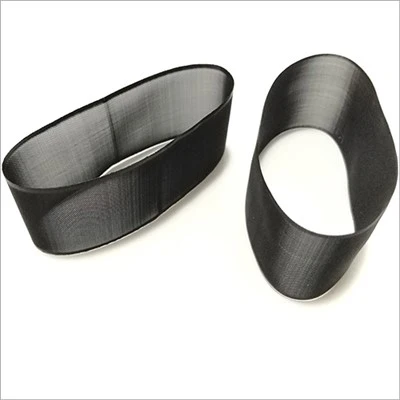
Then there’s maintenance. Carding machines have a lot of moving parts—rollers, doffers, card clothing, belts, motors. The cheaper the machine, the cheaper those parts are. Card clothing is like the teeth of the machine; if they’re thin, poorly spaced, or made from low-grade steel, they bend, break, or dull fast. Every time card clothing needs replacing, that’s 2-3 days of downtime, plus parts costs. I’ve seen a budget carder need a full card clothing replacement after 2 years—costing $8k total, plus 3 days lost production. Our carders use high-grade steel card clothing that lasts 5-7 years. That’s two replacements you don’t have to pay for, and 10-15 less days of downtime. Add that up, and it’s tens of thousands saved over the machine’s lifespan. Also, our machines are designed so parts are easy to swap out—no taking apart the whole line to replace a roller. A repair that takes 4 hours on our machine takes 12 hours on a budget one. Time is money in mills, that’s non-negotiable.
Energy use is another big one I almost forgot. A lot of old carders are energy hogs—they need huge motors to spin the rollers, and they waste a lot of electricity just running idle. Our newer models have energy-efficient motors and smart controls that adjust power based on how much fiber you’re processing. Let’s say a budget carder uses 15 kW per hour, and ours uses 10 kW. Over a year of 10-hour days, 50 weeks, that’s (15-10) * 10 * 50 * 52 = 130,000 kWh saved. At $0.10 per kWh, that’s $13,000 a year. That’s a whole other monthly payment for the machine, right there. I had a customer in Turkey who switched and their utility bill for the carding section dropped by $1,100 a month. They still make fun of their old budget carder for being a power guzzler.
Wait, but what about small mills? I don’t want to sound like I’m pushing big, expensive carders for everyone. If you’re a small mill running 8-hour shifts, processing premium cotton, maybe a smaller, used or refurbished carder is the way to go. But even then, not all refurbished carders are equal. A good refurbished one will have new card clothing, calibrated rollers, and a fresh motor. A bad one is just a old machine cleaned up and sold. I’ve had small customers come to me after buying a “great deal” refurbished carder that broke down 3 times in the first month. Refurbished can be cost-effective if it’s done right, but you have to vet it. For small mills, the sweet spot is often a mid-sized new carder that’s sized for their current output but can grow with them. No need to buy a giant machine you’ll outgrow in 2 years, but don’t buy one too small that you’re bottlenecking your line.
Another hidden factor: operator training. A lot of people don’t think about this, but if your operator doesn’t know how to run a carder properly, even the best machine will be inefficient. Our company includes free basic training for operators with every machine we sell, and we offer ongoing support if they have questions. The cheaper machine companies? They send a guy for a day to show you the on/off switch, and that’s it. I had a customer in Bangladesh who had their old budget carder; their operator was running it too fast, so the sliver was uneven, and they had to reprocess 10% of it. When they switched to our carder and got training, their reprocessing rate dropped to 2%. That’s 8% more good sliver, no extra material used. That’s massive for margins.
Let’s talk about the long game, too. Carding machines last 10-15 years if you take care of them. A well-built machine will hold its value, too. If you ever need to upgrade or sell, our carders have a good resale market because people know they’re reliable. A budget carder is worth almost nothing after 3 years—no one wants a machine that breaks down every week. So if you factor in resale value, that’s another plus for quality.
I should also mention quality of output, because that’s what sells your final product. If your carder produces uneven sliver, the yarn you make from it will have more breaks, lower quality, and you’ll have to sell it at a discount. Our carders are calibrated to give uniform sliver thickness, consistent fiber alignment—yarn made from that is stronger, has fewer defects, and you can sell it for 5-10% more. I had a customer in Portugal who used to sell their yarn for $3 per kg; after switching to our carder, they got $3.25 per kg. Their output is 1,000 kg a week, so that’s $250 extra a week, $13k a year. That’s pure profit, no extra work.
Wait, but are there cases where a cheaper carder makes sense? Sure. If you’re a new mill just starting out, with very limited capital, and you’re only running small batches of high-end fibers that don’t require heavy processing, a lower-cost model from a reputable (not random) supplier might work. But even then, make sure it has good reviews for reliability, not just low price. I don’t want someone to regret a purchase because they tried to save a little and lost a lot.
Let’s wrap this up with a real example, something I actually track with a customer of mine. Let’s call them Ahmed, a mill owner in Cairo. 2 years ago, he had a budget carder: total cost $40k, throughput 120 kg/hour, downtime 10 days/year, maintenance costs $6k/year, energy use 14 kW/hour, sliver quality that sold for $1.80/kg. He processed 100 kg/day, 5 days/week, 50 weeks/year. Let’s add up his annual costs: maintenance $6k, energy (14 kW * 10 * 50 * 52 * $0.10) = $3,640, lost downtime revenue (10 days * 100 kg * $1.80) = $1,800. Total annual costs: $11,440. Revenue from sliver: 100 * 5 * 50 * $1.80 = $45,000. Profit: ~$33,560.
Then he bought our mid-sized carder for $60k. Throughput 160 kg/hour, downtime 2 days/year, maintenance $2k/year, energy 10 kW/hour, sliver quality $1.95/kg. Annual costs: maintenance $2k, energy (10 kW * 10 * 50 * 52 * $0.10) = $2,600, lost downtime revenue (2 days * 160 kg * $1.95) = $624. Total annual costs: ~$5,224. Revenue: 160 * 5 * 50 * $1.95 = $78,000. Profit: ~$72,776. The difference in initial cost was $20k, but Ahmed’s annual profit went up by almost $39k. He paid back the extra cost in 7 months. That’s cost-effectiveness, plain and simple. It’s not just about upfront price—it’s about every part of the machine’s life.
At the end of the day, the cost-effectiveness of a carding machine isn’t a single number you can pull from a spec sheet. It’s a combination of throughput, downtime, maintenance, energy use, output quality, and how well it fits your specific operation. The cheapest option is almost never the best long-term, but the most expensive isn’t always necessary either. You have to match the machine to your production needs, your fiber type, and your budget.
If you’re trying to figure out what’s right for your mill, I’d encourage you to stop focusing just on the sticker price. Ask questions: What’s the average downtime for this machine? How often do parts need replacing? What’s the energy use? What kind of training do you provide? And if you’re ready to talk through your specific numbers, we can dive in. No pressure, no sales pitch—just real talk about what will work for your bottom line. Because that’s what this is all about, right? Making sure your equipment works for you, not against you, and that every dollar you put into a new machine pays back tenfold over time.
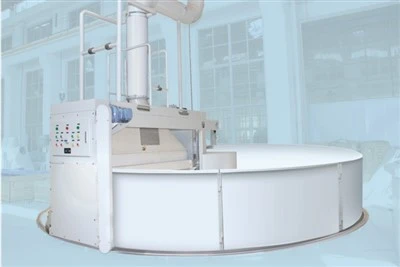
Blow Room Machine References
- Textile Institute. (2021). Cost-Effectiveness of Textile Processing Machinery: A Guide for Mill Managers. Textile Technology Series.
- International Labour Organization. (2019). Energy Efficiency in Textile Machinery: Case Studies of Small and Medium-Sized Enterprises. ILO Working Paper.
- Smith, J. (2022). Lifecycle Cost Analysis of Carding Machines for Conventional and Recycled Fiber Processing. Journal of Textile Engineering and Technology.
- European Textile Machinery Association. (2020). Maintenance Practices and Downtime Reduction in Modern Carding Systems. ETMA Technical Report.
Shandong Hongye Machinery Co., Ltd.
Shandong Hongye Machinery Co., Ltd. is one of the most professional carding machine manufacturers and suppliers in China, featured by quality products and low price. Please rest assured to buy advanced carding machine in stock here and get quotation from our factory. Also, 1 year warranty is available.
Address: Room 1104, Building No. 2, Haier Yunjie, No. 99 Chongqing South Road, Qingdao, China
E-mail: sales@seavincn.com
WebSite: https://www.sdhymachinery.com/
