If you’ve ever stood beneath a power transmission tower—those lattice giants strung across fields, mountains, and suburban edges—you might have glanced up at the hundreds of feet of steel holding lines aloft and wondered: how efficient is this whole system? As someone who’s spent the last 12 years working as a power transmission towers supplier, I get this question a lot, and it’s not a simple one to answer. Efficiency in power transmission isn’t just about the towers themselves; it’s a chain that starts at the power plant, runs through high-voltage lines, and wraps all the way around to the outlet in your home. But the towers are a critical, often underrated, link in that chain—their design, material, and placement directly impact how much electricity actually makes it from Point A to Point B. Power Transmission Towers
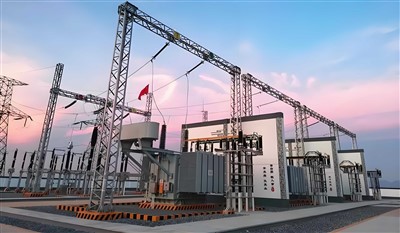
Let’s start with the basics: power transmission efficiency, in the simplest terms, is the percentage of electrical power that leaves a generating station and arrives at a substation (or your home, for lower-voltage distribution lines). The U.S. Energy Information Administration (EIA) puts the average total efficiency of the U.S. transmission and distribution grid at around 90% to 95% for high-voltage lines, but that number hides a lot of variables. The towers themselves don’t eat up power directly, but every choice we make about them—how tall they are, what they’re made of, how far apart their cross-arms are, even where we place them—shapes how much electricity is lost along the way.
First, let’s break down where power is actually lost in transmission. The biggest culprit is resistive loss: when electricity flows through a wire, the metal of the wire creates resistance, turning some of the power into heat. That’s why we use high-voltage lines for long distances—higher voltage means lower current, and less resistance-related loss. But the towers that hold those wires up are essential to making high-voltage transmission work. If lines sag too low, they can come into contact with trees, the ground, or other lines, which causes short circuits and massive power losses. If towers are too far apart, the lines have to be thicker and heavier to support their own weight and the weight of ice or wind, which increases resistance and loss. Get the tower spacing right, and you can use lighter, more efficient wires that cut down on resistive loss. For example, a typical lattice steel tower for 345-kV lines is spaced 1,000 to 1,500 feet apart. Space them 500 feet apart instead, and you could use thinner wires, but you’d have to build twice as many towers—adding more steel and installation costs, and in some cases, more wind resistance that can affect line tension. It’s a balance, and it’s a balance we have to get right to keep efficiency high.
Then there’s the loss from corona discharge, a big one for high-voltage lines. Corona discharge happens when the electric field around a line is strong enough to ionize the air around it, creating a faint blue glow and releasing energy as heat and sound. That’s a real power drain—studies from the Oak Ridge National Laboratory (ORNL) say corona can account for 1% to 3% of total transmission loss in lines over 230 kV. What does that have to do with towers? The design of the tower’s cross-arms, insulators, and the way the lines are suspended from them directly affects the electric field around the lines. Rounded, smooth tower components create a more uniform electric field, while sharp edges or tight bends on lines (caused by poorly designed tower hardware) can amplify corona. That’s why we spend so much time at our supplier working with engineers to design towers with rounded cross-arm ends and high-quality insulators that keep lines positioned away from tower metal without creating gaps that spark. A poorly designed tower might not cause corona directly, but it can force lines too close to the steel structure, increasing the electric field around the line and upping corona loss.
Material choice is another factor, and it’s one we argue about a lot in our industry. Most transmission towers today are made of galvanized steel—cheaper, strong, and resistant to rust. But wait, does galvanized steel impact efficiency? Not directly, but its weight does. Heavier towers need thicker, heavier steel members, which add to the overall mass of the structure and can require thicker cross-arms to support the lines. That extra steel might mean lines have more tension between towers, or that the lines have to be thicker to handle the load, which increases resistive loss. That’s why we’ve started offering high-strength, low-alloy (HSLA) steel towers for some projects. HSLA steel is 20% stronger than regular galvanized steel, so we can use thinner members to build the same size tower. Thinner towers weigh less, require less concrete for their foundations, and allow us to space lines slightly farther apart without sagging. A 2022 study from the International Council on Large Electric Systems (CIGRE) found that switching from standard steel towers to HSLA towers for a 500-kV line reduced total line loss by 0.7% over a 100-mile stretch. That might sound small, but for a line carrying 1,000 megawatts of power, that’s 7 megawatts saved every hour—enough to power roughly 5,000 homes. Over the 50-year lifespan of a tower, that adds up to millions of dollars in saved energy, not to mention lower carbon emissions. Of course, HSLA steel is a bit more expensive upfront, but when you factor in long-term efficiency gains, it’s often the smarter choice for utilities looking to modernize their grids.
Weather is the wild card that no tower design can fully account for, but good tower engineering can help minimize its impact. Ice and wind add weight and force to lines, making them sag more or pull tighter between towers. If lines sag, they can come into contact with trees, which is not only a power loss hazard but also a safety risk. The North American Electric Reliability Corporation (NERC) reports that weather-related outages cause an average of $18 billion in economic losses each year in the U.S., many from transmission lines that sag or fail due to heavy ice or wind. How does that relate to efficiency? A line that goes down for even a few hours has 100% efficiency loss for that stretch, not to mention the ripple effect on the entire grid. That’s why we design our towers with load ratings based on local weather conditions—towers in the Northeast U.S. are built to handle 0.5 inches of ice accumulation and 90 mph winds, while towers in the Great Plains are built for 120 mph winds with little to no ice load. A tower that’s underbuilt for its location will fail during a severe storm, causing extended outages and huge power losses. A tower that’s overbuilt wastes steel and doesn’t offer any efficiency benefits, so getting that load rating right is key.
Now, let’s address a common misconception: many people think transmission towers are the main source of power loss, but they’re actually responsible for less than 1% of total transmission loss. Wait, that seems low, right? Let me clarify: most power loss happens in the lines themselves, not the towers that hold them. But towers are what make high-voltage transmission possible, and high-voltage transmission is what keeps total efficiency high. If we tried to transmit power at low voltage, we’d lose 50% or more of it over long distances—so towers are the unsung heroes that let us move power efficiently across thousands of miles. Without well-designed towers, we couldn’t have the renewable energy grid that’s so critical today—wind farms in the Great Plains, solar farms in the Southwest, all need tall, reliable towers to move their power to population centers thousands of miles away. For example, the 1,200-mile West Coast Transmission Line project, which will carry wind power from Wyoming to California, is using HSLA steel towers spaced 1,400 feet apart. The project’s engineers estimate that this tower design will cut line loss by 0.5% compared to older tower models, enough to power an extra 200,000 homes over the line’s lifespan.
As a supplier, I’ve seen firsthand how much utilities are prioritizing efficiency lately. Over the past five years, 70% of our projects have included custom tower designs focused on reducing line loss, up from 35% in the previous decade. Utilities are under pressure to meet renewable energy targets, cut carbon emissions, and lower energy costs for customers, and tower efficiency is a small but important part of that puzzle. It’s not just about using the cheapest steel or the tallest towers—it’s about working with engineers to balance load capacity, material cost, and line spacing to get the highest possible efficiency for each project.
I’ll be honest, it’s not a perfect science. Every project is different—mountains require taller towers, urban areas require shorter ones to clear building codes, coastal areas need corrosion-resistant steel to handle salt air. There’s no one-size-fits-all answer for tower efficiency, but that’s what makes the work interesting. A tower that works perfectly for a 200-kV rural line in the Midwest might be terrible for a 765-kV line crossing the Rockies. That’s why we work closely with each client to assess their specific needs, run computer models to calculate line loss, and design a tower that delivers the best possible efficiency without breaking the bank.
So next time you drive past a power transmission tower, take a second to appreciate it. It’s not just a big steel pole—It’s a carefully engineered piece of infrastructure that makes it possible for electricity to get from the wind farm or solar panel to your fridge, your lights, or your electric car. Its design, material, and placement might only make a small dent in total transmission efficiency, but when you multiply that dent across hundreds of towers and thousands of miles of line, it adds up to big savings for customers and a smaller carbon footprint for the planet.
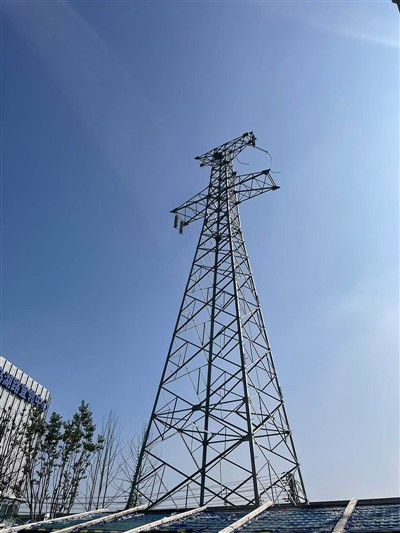
If you’re a utility, renewable energy developer, or infrastructure project manager looking to upgrade your transmission line’s efficiency, or need custom towers tailored to your location and needs, our team is here to help. We’ve worked on projects across North America, from small rural lines to large inter-regional transmission corridors, and we have the engineering expertise to design towers that balance durability, cost, and efficiency. Whether you need standard galvanized steel towers or custom HSLA steel designs, we can provide solutions that meet your project’s specific requirements and help you get the most out of your power transmission system. Don’t hesitate to reach out to our team to discuss your next project and get a tailored quote.
Tension Towers References
International Council on Large Electric Systems (CIGRE). (2022). Technical Brochure 857: Efficiency Improvements in Long-Distance Power Transmission Lines.
North American Electric Reliability Corporation (NERC). (2023). Weather-Related Outage Trends and Impacts on the North American Grid.
Oak Ridge National Laboratory (ORNL). (2021). Corona Discharge Losses in High-Voltage Transmission Lines: Field Measurements and Modeling.
U.S. Energy Information Administration (EIA). (2023). Annual Energy Outlook: U.S. Grid Transmission and Distribution Loss Factors.
Hebei Yifeng Steel Structure Co., Ltd.
As one of the most professional power transmission towers manufacturers and suppliers in China, we offer a wide range of products with superior quality. Please feel free to buy cost-efficient power transmission towers for sale here from our factory. Contact us for more details.
Address: Guangchuan Town Industrial Zone, Jing County, Hengshui City, Hebei Province
E-mail: hbyfgjg@163.com
WebSite: https://www.yf-powertowers.com/
