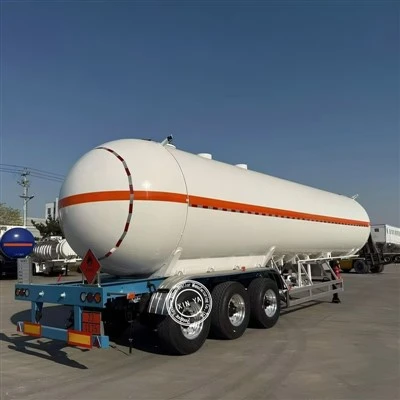
If you’re running a fleet of oil tanker trailers (or just managing a few for your own operations), parking them might feel like a straightforward task—until it doesn’t. I’ve been an oil tanker trailer supplier for over a decade, and I’ve seen way too many folks cut corners on parking rules, only to end up with damaged equipment, fines, or even safety hazards that shut down their whole route. That’s why I’m breaking down exactly what’s required to park these trailers safely, legally, and without costing you extra cash. No jargon, no confusing regulations, just real-world stuff I’ve picked up from clients and our own mechanics over the years. Oil Tanker Trailer

First off, let’s get one thing straight: oil tanker trailers aren’t regular semi-trucks. We build ’em to carry flammable liquids—gasoline, diesel, jet fuel, maybe even biofuels now—and that changes everything about where and how you park. It’s not just “find an empty spot” anymore. The first big requirement is location zoning. Every area—whether it’s a city, county, or even a small town—has specific rules about where you can park a tanker trailer. I had a client last year who parked their new trailer in a regular trucking lot near a residential neighborhood, and they got a $1,200 fine before they even finished their delivery run. The local fire department said residential areas are off-limits for tanker parking because a leak or fire could put neighbors at risk.
Here’s the thing: zoning rules aren’t universal. Some places let you park at a dedicated trucking terminal, others require you to park at least 500 feet from any building, school, or playground. A lot of states also have rules about parking on public roads—so never leave your tanker parked on a highway shoulder, even if you think it’s “just for 10 minutes.” I’ve seen that lead to impounded trailers and even more fees because the impound yard had to handle a hazardous load. If you’re not sure about your area’s rules, don’t guess—check with your local fire marshal or department of transportation. Trust me, that 10-minute call saves you way more than a fine.
Next up, surface conditions for parking. This isn’t just about not scraping your trailer’s undercarriage—though that’s a bonus. Oil tankers are heavy; a full trailer can weigh 40,000 pounds, empty it’s still around 15,000. So you can’t park on soft ground, gravel with big ruts, or anything that could shift. If the surface gives, your trailer could tip, or the wheels could sink enough to damage the fuel tank’s skid plate—something that’s not cheap to fix. I recommend paved surfaces, like asphalt or concrete trucking lots, that are rated for heavy loads. Also, make sure the spot is level. If your tanker’s parked on a steep incline, even with the parking brake set, it could roll. We always tell our clients to do the “spirit level test” before leaving the trailer: a small level on the top of the fuel tank should read perfectly flat. If it’s even a little off, move it. No load is worth a wrecked trailer or a crash.
Then there’s safety gear and parking procedures. This is non-negotiable for any oil tanker, big or small. First, you have to engage those trailer wheel chocks—every single time, no exceptions. A lot of drivers skip this because it feels like a hassle, but I’ve seen a trailer roll back into a loading dock because the parking brake gave out. Wheel chocks are cheap (we sell a set for under $50, fyi) and they’re the easiest way to prevent that. Also, you have to secure the trailer’s cargo. If you’re parking with a full load, close and lock all the tank valves—including the bottom discharge valve and the vent cap. And don’t forget to put on those amber or red marker lights if you’re parking on a public road after dark. The Department of Transportation requires that, and if another driver hits your parked tanker, you’re on the hook if your lights were out.
Wait, another big one: no open flames or smoking within 50 feet of a parked tanker. That’s a rule I can’t stress enough. I had a client’s driver light a cigarette while hooking up a hose at a parking spot, and the vapors from the diesel tank ignited—they burned the side of the trailer and had to replace the hose. It cost them $8,000 in repairs and lost work for a week. Even if you think the tank is empty, residual vapors are still there. So make sure your whole team knows: no smoking, no grills, no portable generators within that 50-foot zone. If you need to grab a smoke, move at least 100 feet away from the trailer.
Now, what about when you’re parking at a terminal or a dedicated yard? A lot of our clients use our trailers for long-haul runs, so they park ’em overnight. In that case, the yard needs to have proper spill containment. Spills happen—even the most careful driver might have a loose valve or a hose leak. If the parking area doesn’t have a containment pad (a waterproof surface that can hold up to 110% of the tanker’s total load), any spill could seep into the ground, contaminate water, and get you hit with environmental fines. A client of mine had a spill that seeped into a local creek, and they paid $20,000 in cleanup costs alone. So make sure wherever you park has containment, or bring your own portable spill kit (we include one with every new trailer, by the way).
Also, don’t forget about documentation. A lot of drivers keep their tanker’s registration, hazardous material (HAZMAT) endorsement, and any parking permits in their cab—but when you park overnight, you should have a copy in the trailer too. Some law enforcement or fire officials will check the trailer directly to make sure it’s legal, and if you can’t show proof of permits, they can tow it. If you’re parking at a third-party terminal, they might require you to have a copy of your insurance on file too. That’s just part of the paperwork that keeps everyone on the right side of the rules.
Let’s talk about common mistakes I see all the time. One is parking too close to other equipment. If you’re parking next to another tanker, make sure there’s at least 10 feet between you—enough space to open valves without hitting the other trailer. Another mistake: not maintaining your trailer’s brakes and parking brake. I had a client with an old trailer where the parking brake was worn out, and it rolled into another truck in the yard. It took out both trailers, and the cost was way more than just replacing the brake parts. So before you park, do a quick check: test the parking brake, make sure the chocks are in place, and do a walkaround to look for any loose valves or leaks.
What about parking for extended periods, like a week or more? If you’re leaving a tanker parked for a while, there are a few extra steps. First, make sure the tank is either completely empty (and cleaned, if it’s a flammable product) or sealed up tight. If there’s any product left, the pressure in the tank could build up and damage the vent. Also, disconnect the trailer’s battery to prevent it from dying—nothing worse than coming back to a dead battery on a Monday morning. And if your area has wildlife, you might want to cover the tank’s vents with a mesh screen to keep rodents out—they love to chew on wires, and that can cause electrical fires.
Now, why does all this matter for you as a tanker owner or operator? I’ve been in this game long enough to know that cutting corners on parking isn’t just a rule break—it’s a risk to your business. A single fine can eat into your profits for a month, an accident can put you out of work for weeks, and environmental damage can ruin your reputation with clients. The good news is, most of these requirements are straightforward—you just need to follow ’em consistently.
We build our oil tanker trailers to be reliable, but even the best trailer won’t survive bad parking practices. That’s why we don’t just sell trailers—we give our clients a free parking guide with every purchase, plus tips from our mechanics on how to keep their trailers in top shape. If you’re looking for a new oil tanker trailer, or you need to replace an old one, let’s chat. Whether you’re a small business with one trailer or a fleet with 20, we can help you find the right model that fits your needs, and we’ll go over all the parking requirements that apply to your area. No pressure, just real talk about what works for your operations.
When you’re running a tanker business, every detail counts—and parking is a big one. Don’t wait for a fine or an accident to fix your parking habits. Reach out, and we can walk through what you need to know to keep your trailers, your team, and your business safe.
Oil Tanker Trailer References
- U.S. Department of Transportation Federal Motor Carrier Safety Administration. “Hazardous Materials Parking Requirements for Tanker Trailers.” FMCSA Regulations 397.17, 2022.
- National Fire Protection Association. “Standard for the Storage and Handling of Flammable Liquids.” NFPA 30, 2021.
- American Trucking Associations. “Heavy Vehicle Parking Surface Load Requirements.” ATA Technical Bulletin 12, 2020.
- Environmental Protection Agency. “Spill Prevention, Control, and Countermeasure (SPCC) Rules for Hazardous Liquid Storage.” EPA 40 CFR Part 112, 2019.
Shandong Yuncheng Xinya Trailer Manufacturing Co., Ltd.
Shandong Yuncheng Xinya Trailer Manufacturing Co., Ltd. is one of the most experienced oil tanker trailer manufacturers and suppliers in China, featured by quality products and good service. Please rest assured to buy CE approved oil tanker trailer from our factory. Contact us for customized service and OEM service.
Address: No. 008, Hexie Road, Yangzhuangji Town, Yuncheng County, Heze City, Shandong Province
E-mail: fiona@xinyatrailer.com
WebSite: https://www.china-truckfactory.com/
