If you’ve ever priced PVC bathroom cladding panels for a renovation, new build, or commercial fit-out, you’ve probably asked this question at least once: “What’s the minimum order quantity (MOQ)?” As someone who’s spent the last seven years sourcing, producing, and supplying these panels to contractors, home renovators, and small business owners, I can tell you this isn’t a one-size-fits-all number. Too many suppliers hide behind vague MOQs that don’t account for what you actually need, so I’m breaking this down honestly—no corporate jargon, just real experience from someone who’s on the floor with my clients every week. PVC Bathroom Cladding Panels

First, let’s get one thing straight: MOQ for PVC bathroom cladding isn’t arbitrary. It’s tied directly to how these panels are manufactured, stored, and shipped, and that’s where most people get confused. Let’s start with the basics of how PVC cladding is made. Most of the panels I supply are 10mm or 12mm thick, cut to standard widths (250mm, 300mm, or 500mm) and lengths up to 3 meters—anything longer than that requires special processing because PVC is prone to warping when cut too long. We source virgin PVC resin from a certified manufacturer, mix in UV stabilizers and mold inhibitors (non-negotiable for bathrooms, since high moisture is a given), then extrude the panels through a die. Extrusion is a batch process: every time we change a color, finish, or thickness, we have to run a full production run, which means we can’t just pull one random panel off the line for a customer who only needs three. That’s the core reason MOQ exists here—it’s not to make you order more than you need, it’s to cover the cost of setting up that production run so we can keep selling panels at a fair price instead of marking up individual pieces to cover overheads.
Now, what’s the actual MOQ for most of my stock panels? For standard, in-stock sizes—think 250mm x 2.5m white matte, 300mm x 3m light grey woodgrain, the stuff that’s in high demand for small bathrooms and quick fixes—the MOQ is usually 20 linear meters. Wait, linear meters, not individual panels. That’s another common mistake people make: they ask for “panels” when we quote in linear meters because that’s how cladding is measured for installation. If you have a small bathroom that’s 2m wide and 2.4m high, for example, you’d need roughly 8 linear meters of cladding for the walls—plus maybe 2 linear meters for the ceiling if you’re cladding that too. So for that bathroom, 20 linear meters is exactly enough to cover the walls, the ceiling, and a few extra pieces for mistakes, cuts, or offcuts that you might need for plumbing around a toilet or vanity. That’s not a random number—it’s about a typical small residential bathroom, which is the bulk of my client base.
But here’s where it gets flexible, and where I think good suppliers differ from the ones who just want to move inventory. If you need custom sizes, colors, or finishes, the MOQ goes up—usually 100 linear meters minimum. Why? Because custom orders mean we have to flush out the extrusion line to get rid of any leftover stock from the previous run, switch to the exact color you want, test a small sample to make sure it matches, then run the production batch. That setup cost isn’t negligible, and 100 linear meters is the minimum we need to make that worth our while without charging you a premium. I’ll be honest: last quarter, a homeowner emailed me asking for 5 linear meters of custom dark oak PVC panels for their ensuite. I wanted to say yes, but if I’d run that small batch, I would’ve had to charge them almost twice the standard per linear meter price just to cover the setup. That’s not a rip-off—that’s basic supply and demand, and I’d rather be upfront about it than overcharge someone for a tiny order.
Then there’s commercial orders, which are a whole different ballgame. If you’re a contractor working on a 10-unit apartment block, a hotel refurbishment, or a senior living facility, your MOQ might be 500 linear meters or more. But here’s the thing: for commercial clients, we almost always adjust the MOQ based on their total project needs. Last year, I had a general contractor who was working on a 12-unit build, and he initially quoted me for 450 linear meters, but his electrician ended up needing a few extra pieces last minute, so we bumped his order to 500 and cut the per-linear-meter price by 10% because he was a repeat client. That’s the kind of flexibility you don’t get from big-box suppliers, who have rigid MOQs set by a corporate office thousands of miles away.
Now, let’s talk about what affects MOQ beyond production. Shipping is a huge one, especially for bulk orders. PVC panels are light, but they’re bulky—you can’t stack them too high or they’ll bend, so a pallet of panels is about 1,000 linear meters. If a local client is picking up their order from my warehouse, we can adjust the MOQ a little because we don’t have to pay for a full delivery truck. But if you’re ordering across state or internationally, we might bump the MOQ because LTL (less than truckload) shipping for small orders ends up being more expensive than the panels themselves. Last month, a customer in a regional town ordered 15 linear meters of panels, and the shipping cost was $120, which was almost half the cost of the panels. I explained that ordering 20 linear meters would bring the shipping cost down to $45 total, so the total order was cheaper for them. That’s not a trick—it’s math, and I’d rather save my clients money than make a small profit on a bad shipping deal.
Wait, but what if you really need less than the standard MOQ? I get this all the time. Homeowners doing a tiny powder room, people replacing a single damaged panel in their bathroom, or contractors who have a small repair job for a rental property. For these cases, I keep a section of my warehouse with offcuts and surplus panels from previous orders. Most of these are perfectly good—just from custom orders that didn’t get picked up, or a client canceled their order last minute. I sell these off at a discount, no MOQ required. Last week, a customer came in needing 7 linear meters of white panels for a powder room, and I had exactly that in stock in my offcut section, no questions asked. I don’t advertise this much because it’s limited, but it’s a lifesaver for people who can’t meet the standard MOQ. I also work with a few small independent suppliers who have surplus stock, so I can usually point a customer in their direction if I don’t have what they need.
Let’s bust a common myth here: some people think higher MOQ means better quality, or that a low MOQ is a sign of a bad supplier. Neither is true. The MOQ for PVC panels is purely about production and logistics, not quality. The virgin PVC panels I supply have a 20-year warranty against yellowing and mold, and they meet Australian Building Code requirements for moisture resistance, regardless of whether you order 10 linear meters or 10,000. I’ve seen clients get scammed by cheap suppliers who offer a 5-linear-meter MOQ, only to find the panels are made from recycled PVC that warps after six months and doesn’t meet building codes. That’s the real red flag—not the MOQ number.
So, how do you figure out what MOQ works for you? First, calculate exactly how much cladding you need for your project. Measure the height and width of each wall and ceiling, subtract any space taken by doors, windows, and fixtures like vanities or toilets, and add 10% extra for cuts and mistakes. That extra 10% is non-negotiable—you’ll always mess up a cut or need a spare panel for later. If your total is under 20 linear meters, check if I have an offcut section that has what you need. If not, we can usually adjust the MOQ for small residential orders, even if it means a small premium per linear meter. For custom orders, make sure you’re ordering enough to cover the setup cost—we can’t run a full production run for less than 100 linear meters, so don’t ask. For commercial projects, talk to me upfront about your timeline and total needs, and we’ll work out an MOQ that fits your budget and project.
At the end of the day, my job isn’t to sell as many panels as possible, it’s to get you the right panels for your project at a fair price, without hiding behind confusing MOQ rules. I’ve been doing this long enough to know that a client who buys 20 linear meters for a small bathroom will come back when they do their kitchen splashback, and a contractor who I help out with a small repair job will refer me to other builders. That’s how this business works—trust, not rigid MOQ policies.
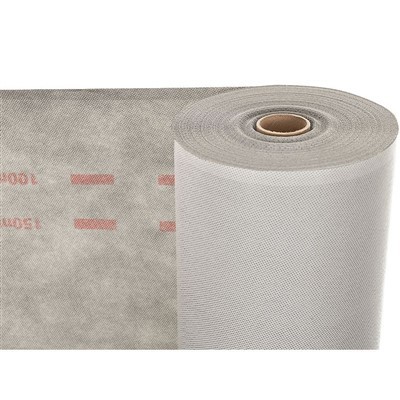
If you’re planning a bathroom renovation, need cladding for a new build, or have any questions about MOQ, panel sizes, or finishes, don’t hesitate to reach out. I can help you calculate exactly how much you need, work out the best order quantity for your budget, and make sure you get panels that are durable, code-compliant, and fit for your space.
Foil Vapour Barrier References:
- Australian Building Codes Board. (2022). Volume One: Building Code of Australia, Part 3.4 – Moisture Protection.
- PVC Association. (2023). Extruded PVC Products: Manufacturing Standards and Quality Guidelines.
- National Association of Home Builders. (2022. Residential Renovation Cost Guide – Bathroom Cladding.
- International Code Council. (2021. International Residential Code, Chapter 12 – Interior Finishes.
Hangzhou Eastopo New Marterial Technology Co., Ltd.
As one of the most professional pvc bathroom wall panel manufacturers and suppliers in China, we offer a wide range of products with superior quality. Please rest assured to wholesale custom made pvc bathroom wall panel from our factory. Good service and reasonable price are available.
Address: Room 304-20, Block B, Building 1,2,3&4, Kaixuan Jinniu Fang, Shangcheng District, Hangzhou, Zhejiang, China.
E-mail: mj@eastopo.com
WebSite: https://www.eastopo.com/
