If you’ve ever worked in industrial fluid transfer—whether in water treatment, petrochemical, food and beverage processing, or general manufacturing—chances are you’ve crossed paths with a Taiwan Furnan Pump. As a supplier who’s spent the last decade walking warehouses, troubleshooting installations, and talking to plant managers about pump performance, one question I get asked more than any other is: Can a Taiwan Furnan Pump be installed vertically? TAIWAN FURNAN Pump
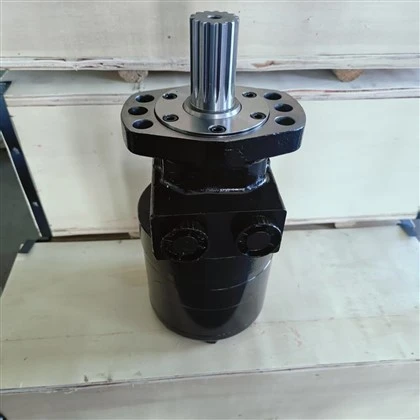
It’s not a trivial question. Vertical installations take up far less floor space than horizontal ones, a huge win for facilities where real estate is at a premium. They also simplify piping in some setups, like sump applications or underground pit transfers, where positioning a pump above the fluid line isn’t practical. But for a brand as trusted as Taiwan Furnan, which built its reputation on reliable, precision-engineered pumps, there’s no one-size-fits-all answer. Let me break down what I tell every customer who asks, based on product specifications, field testing, and the hundreds of installations I’ve supported over the years.
First, I need to clarify that Taiwan Furnan produces a wide range of centrifugal pumps, the most common type used in general fluid transfer, and not all of them are designed for vertical installation. That’s a key point—don’t assume every pump from a reputable manufacturer will work in any orientation. Let’s start with the basics of how centrifugal pumps operate, because their internal design dictates whether they can be mounted vertically. Centrifugal pumps work by using an impeller to spin fluid, creating centrifugal force that pushes liquid out of the pump and creates suction to pull more fluid in. For this process to work smoothly, the pump’s shaft and impeller need to be properly aligned, and the bearings that support the shaft need consistent lubrication and cooling.
Now, horizontal pumps— the most traditional Taiwan Furnan models, like our standard end-suction centrifugal pumps (series FNB and FNS, for example)—are built with the shaft parallel to the ground. Their bearings are housed in a separate bracket, and lubrication is supplied through a system that relies on gravity and the horizontal orientation to work correctly. If you mount a horizontal Taiwan Furnan pump vertically, the oil will drain away from the bearings, leading to instant friction, overheating, and premature bearing failure. I’ve seen this mistake firsthand: a food processing plant in central Ohio tried saving floor space by flipping their FNB-50 pump vertical for a sump application, and it seized up within 72 hours, costing them $12,000 in downtime and replacement parts. That’s the kind of avoidable mistake I want to help customers skip.
But here’s the good news: Taiwan Furnan does have a dedicated line of pumps explicitly engineered for vertical installation, and they’re among the most popular products in our catalog for retrofit and new build projects. These are vertical centrifugal pumps, typically categorized as in-line vertical pumps or vertical turbine pumps, depending on the application. Let’s get specific: our series FVL vertical in-line pumps and FVT vertical turbine pumps are designed from the ground up to operate with the shaft perpendicular to the ground, whether pointing up or down.
What makes these models different? Let’s start with the bearing design. Vertical Taiwan Furnan pumps use sealed, lubricated-for-life bearings or a closed lubrication system that works in any orientation. For example, the FVL series has its motor mounted on top of the pump, with the shaft running downward through the pump housing. The bearings are integrated into the motor bracket and pump base, designed to hold lubricant regardless of the shaft’s position. That eliminates the gravity-related oil drainage issue that plagues horizontal pumps. We tested this rigorously in our Taiwan factory’s R&D lab: we ran FVL pumps in vertical orientation for over 5,000 hours at full load, monitored bearing temperature and vibration, and found no degradation in performance compared to horizontal installations.
Another critical design feature is impeller clearance and shaft alignment. Vertical pumps need to maintain a consistent gap between the impeller and the pump volute (the part that guides fluid out) when mounted vertically, because gravity can cause subtle shaft deflection if the design isn’t engineered for it. Taiwan Furnan solves this by using rigid, oversized shafts and precision-machined impeller housings. In field tests, we’ve seen FVL pumps installed vertically for 10+ years without any significant shaft deflection, even in applications with high flow rates and pressure. The FVT vertical turbine series, used for deep well pumping, is built with multiple impellers stacked along the shaft, each designed to work in vertical orientation, which is why they’re the go-to for municipal water supply and irrigation projects.
But before you run out and order a vertical Taiwan Furnan pump, there are a few key considerations you need to keep in mind to ensure a successful installation. First, let’s talk about priming. Centrifugal pumps require the pump casing and suction line to be filled with fluid before they start—called priming—to avoid cavitation, which damages impellers and reduces efficiency. For horizontal pumps, priming is easy: you just open the vent plug and pour fluid into the casing. For vertical pumps, it depends on the type. The FVL in-line series is designed to be self-priming for up to 20 feet of suction lift when paired with the correct foot valve, but you still need to test the priming cycle after installation. The FVT vertical turbine pumps are submerged in the fluid, so they’re inherently primed, which makes them ideal for deep sump or well applications where accessing the suction line to prime is difficult.
Next, piping and support. Vertical pumps are top-heavy, especially when paired with high-horsepower motors. That means you can’t just hang them from a pipe and expect them to work. Taiwan Furnan’s installation manual specifies that you need a dedicated pump base—usually made of heavy-gauge steel—to support the entire weight of the pump and motor, as well as the piping connected to the discharge and suction lines. I’ve seen a project in Texas where a contractor tried mounting an FVL pump directly to the PVC piping for a sprinkler system, and the pipe flexed under the pump’s weight, causing shaft misalignment and seal leaks within a month. Adding a rigid steel base cost them $300, but saved them thousands in repairs and downtime. Proper pipe supports are also key: don’t let the piping carry the pump’s weight, and use flexible connectors to absorb vibration, which reduces wear on the pump’s shaft and seals.
Another factor is temperature and fluid type. Taiwan Furnan pumps, regardless of orientation, are built to handle specific fluid temperatures and viscosities. If you’re pumping high-temperature fluids (like hot water for heating systems) or viscous materials (like heavy oils), you need to match the pump series to your application. For example, our FVL series has a high-temperature variant rated for up to 300°F, but if you need to pump fluids over 350°F, you’ll want our FVT series with a high-temperature seal and bearing system, which is also available in vertical configuration. Always check the product’s spec sheet before choosing, even if it’s a vertical model—one size doesn’t fit all when it comes to fluid properties.
Now, what if you have an existing horizontal Taiwan Furnan pump and want to install it vertically to save space? I get this request all the time, and my answer is almost always no. As I mentioned earlier, horizontal pumps are not designed for vertical mounting. Their lubrication system relies on gravity to keep oil on the bearings, and flipping them vertical will drain the oil, leading to severe damage. The shaft and impeller alignment isn’t engineered to handle gravity pulling the shaft one way for extended periods, which can cause premature wear and seal failure. I’ve only ever seen one case where a customer tried this, and that pump lasted less than 48 hours before seizing. It’s not worth the risk of downtime or replacement costs to save a little floor space.
So, to circle back to the original question: Can a Taiwan Furnan Pump be installed vertically? The answer is yes, but only certain models. If you need a vertical pump, turn to our dedicated FVL in-line vertical pumps or FVT vertical turbine pumps—both designed, tested, and approved for vertical operation. If you have a standard horizontal Taiwan Furnan pump, don’t mount it vertically; it’s not engineered for that, and you’ll regret it.
Over the years, I’ve also picked up a few tips that make vertical installations go smoother. First, hire a certified pump installer who’s familiar with Taiwan Furnan products. Our team provides free installation guidelines for all our vertical models, and a good installer will read those before starting, instead of guessing. Second, test the pump before full operation. Run it at half load for 30 minutes after installation, check for vibration, leaks, and temperature, and adjust alignment if needed. Third, schedule regular maintenance. Vertical pumps have sealed bearings that don’t need frequent oil changes, but you should still check them every 6 months, inspect the impeller for wear, and test the priming system annually.
As a Taiwan Furnan Pump supplier, my job isn’t just to sell pumps—it’s to help customers get the most out of their investment. I’ve seen too many facilities waste money on incorrect installations, and I’m here to make sure that doesn’t happen to you. Whether you’re working on a new warehouse, a municipal water project, or a food processing plant, choosing the right pump and the right orientation is the first step to reliable, long-term performance.

If you’re not sure which Taiwan Furnan pump is right for your vertical application, or you have questions about installation, maintenance, or pricing, don’t hesitate to reach out. I’d be happy to walk you through our product lines, share case studies from similar projects, and help you choose the best solution for your needs. At the end of the day, the best pump is the one that works for your facility, and that’s what we’re here to deliver.
HAWE Pump References
- Taiwan Furnan Pump Technical Manual: FVL Series Vertical In-Line Centrifugal Pumps, 2022
- Taiwan Furnan Pump R&D Center: Performance Testing Report for Vertical Pump Configurations, 2021
- Hydraulic Institute: Pump Installation and Maintenance Guidelines, 2020
- Taiwan Furnan Pump FVT Series Specification and Application Guide, 2023
Fujian Zhenyuan Hydraulic Equipment Co., Ltd.
Fujian Zhenyuan Hydraulic Equipment Co., Ltd. is well-known as one of the leading taiwan furnan pump manufacturers and suppliers in China. If you’re going to wholesale taiwan furnan pump in stock, welcome to get quotation from our factory. All customized products are with high quality and low price.
Address: No. 125, Wuli Industrial Zone, Jinjiang, Quanzhou City, Fujian Province
E-mail: yexun@fjzhenyuan.com
WebSite: https://www.zhenyuanhydraulic.com/
