Hey there, fellow homeowners, builders, and anyone who’s ever stared at a sleek glass railing on a balcony or staircase and thought, “Wait… is that actually safe?” I’m gonna keep this real—because as a glass railing supplier, I get asked this question at least once a day, and I’m not here to push a product that I don’t truly stand behind. Let’s cut through the hype, debunk some myths, and get into the actual science and safety stuff that matters. First off, no, glass railings aren’t just a fancy trend—they’re designed with safety as the top priority, but like anything, it depends on how they’re made, installed, and maintained. Let’s break this down. Glass Railing
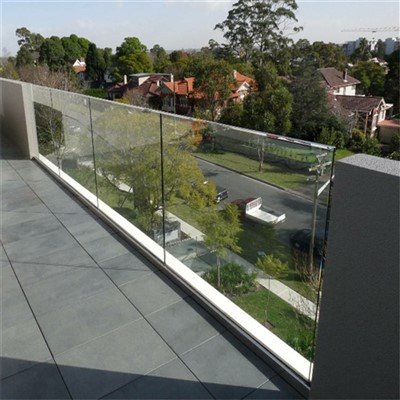
First, let’s talk about the glass itself. Regular window glass? That’s not gonna cut it for railings. We use tempered glass, right? Wait, actually, most of the time it’s laminated tempered glass—hold up, let me get the tech right. Tempered glass is heated super hot and then cooled quickly, so it’s way stronger than regular glass. Like, 4 to 5 times stronger, according to safety standards. If it does break, it shatters into tiny, round pieces instead of sharp shards. That’s a big plus, but even tempered glass can break if you hit it hard enough—so we add a layer of laminated vinyl between two sheets of tempered glass for railings. That’s the game-changer. If someone bumps or even leans on that laminated glass, if it cracks, the vinyl holds all the pieces together. No falling shards, no gaps where you could slip or get cut. I’ve seen this in action—last year, a customer’s kid swung on the railing (yeah, I know, not the best, but it happened) and the glass didn’t budge an inch. If it was regular glass, that would’ve been a disaster. If it was just tempered, it might’ve shattered, but with laminate, it stayed intact. That’s the safety part no one talks about enough.
Now, let’s get into building codes, because that’s non-negotiable for anything that’s part of a structure. In the US, that’s the International Building Code (IBC), and over in Europe it’s the EN standards, but the safety rules are pretty similar across most regions. For exterior railings (balconies, patios) and interior railings (staircases, lofts), the code says the glass has to withstand a certain amount of force—like 50 pounds per square foot, or a 200-pound load concentrated in a small area. Wait, let me confirm that—yeah, for balustrade systems, the IBC requires a minimum lateral load of 50 psf for residential and 100 psf for commercial. So the glass isn’t just thin stuff you can push in with your finger. Our railings are all engineered to meet or exceed that. We don’t skip steps here, because if a railing fails, it’s not just a product issue—it’s a liability thing, and more importantly, it’s a safety risk for people. I’ve had contractors come to me asking for cheaper glass to cut costs, and I always tell them no. At the end of the day, saving a few bucks isn’t worth someone getting hurt.
Another big concern people have is fall protection, especially for homes with kids or pets. The code also says that the gap between the glass panels and the ground, or between the top rail and the floor, can’t be more than 4 inches. Wait, no—wait, for balustrades, the maximum opening between balusters (or glass panels, since there are no balusters in glass railings) is 4 inches, so a kid’s head can’t get stuck. Also, the height of the railing has to be at least 36 inches for residential and 42 inches for commercial. Our systems all hit that mark. I had a client a few months back who was worried about their golden retriever puppy jumping through the railing—we installed our ½-inch thick laminated tempered glass, and there’s no gap bigger than 3 inches between panels, so the pup can’t even stick its nose through. That’s the peace of mind people don’t realize they’re getting with glass railings.
Wait, but what about if the glass gets damaged? Like, a rock hits it on a balcony, or a baseball shatters it. Is that a huge safety risk? With laminated glass, no. Because the vinyl layer holds it all together. I had a customer last year who lived on the second floor, and a storm knocked a tree branch into their balcony railing. The glass cracked, but it didn’t fall, and there were no sharp pieces. We replaced it for them in a day, and they didn’t have to worry about their kid falling through or getting cut. That’s way different than, say, a metal railing that might bend, or wood that might rot and break. Glass is actually pretty durable—resistant to UV rays, so it doesn’t fade or warp, resistant to water, so it doesn’t crack from freezing and thawing like some wood or metal can.
But here’s the thing—safety isn’t just about the glass. It’s about the installation. I’ve heard horror stories of people buying cheap glass railings online and hiring a handyman to install them, and that’s where problems happen. If the glass isn’t mounted properly in the brackets, if the brackets are made of cheap metal that rusts or bends, if there’s not enough support for long spans, the whole system can fail. For example, if you have a 10-foot long glass panel without a middle support, it might flex when someone leans on it, which over time can cause stress on the glass and lead to breakage. That’s why we work with contractors and builders who are trained to install our systems—we show them exactly how to mount the brackets, how to secure the glass, how to check for proper alignment. We don’t just ship the glass and say “good luck.” That’s part of being a reputable supplier—we stand behind the installation, not just the product.
Another myth I hear all the time: “Glass is slippery, so people will fall on it.” Wait, hold on—glass railings are the vertical part, not the floor. The floor is whatever you choose—tile, wood, concrete. The railing itself is vertical, so slip and fall risks come from the floor, not the glass. Unless you’re talking about the top rail, which we can make with a non-slip coating if you want it. Most people don’t even notice the top rail is glass unless it’s clear, and if you’re worried about it being slippery, we can add a matte or textured finish to it. That’s a custom option, not a standard, so it’s easy to adjust for safety.
What about commercial settings? Like offices, restaurants, retail spaces. Glass railings are super popular there because they look modern, they let in more light, they make small spaces feel bigger. But are they safe for high-traffic areas? Absolutely. We have commercial systems that are tested to hold up to thousands of people leaning on them, moving furniture around, even small collisions from carts. The laminated glass is thicker—we use ¾-inch or even 1-inch thick panels for commercial, depending on the span—and the brackets are heavy-duty stainless steel that doesn’t rust or bend. We did a project at a downtown restaurant last year, and their balcony glass railings have withstood years of outdoor use, crowds, even a few clumsy customers bumping into them. No issues at all.
Wait, let’s talk about maintenance, because that ties into long-term safety. A lot of people think glass railings are high-maintenance, but they’re actually super easy. You just wipe them down with glass cleaner every now and then, no sanding, no painting, no sealing. That means no rotting wood, no rusty metal, which can weaken over time. The only thing you have to check is the brackets every few years—make sure they’re still tight, no rust on the metal. That’s it. If you skip maintenance on a wooden railing, it can rot and become unstable in 5 years. A glass railing? It’ll last 20+ years, as long as it’s installed right and checked occasionally.
But I also want to be honest—nothing is 100% safe, right? Even metal railings can bend if you lean on them too hard, even wood can break. But glass railings are engineered to be among the safest balustrade systems out there, when done properly. The key is buying from a reputable supplier, using the right glass and materials, getting it installed by a trained professional, and following maintenance tips.
I’ve been in the glass railing business for 12 years now, and I’ve seen every scenario—from new construction homes to commercial high-rises, from people who are obsessed with modern design to families with little kids and pets. The ones who come to me worried about safety are the ones who are most likely to get the right system, because they ask questions, they do their research, and they want something that’s both beautiful and safe.
If you’re thinking about getting glass railings for your home or project, don’t let the rumors scare you. Yeah, there are cheap, poorly made systems out there that aren’t safe, but that’s not the fault of glass itself—that’s the fault of cutting corners. We test every single glass panel we sell, we use only industry-standard materials, and we offer installation guidance for every order. At the end of the day, safety is non-negotiable, and that’s why I’m passionate about what I do.
If you have more questions about glass railing safety, or you’re ready to get a quote for your project, feel free to reach out and talk to our team. We can walk you through the different glass types, the installation process, and make sure you get a system that meets all safety standards and fits your needs.
Cable Railing References:
- International Code Council. (2021). International Building Code (IBC). Chapter 16: Structural Design, Chapter 17: Structural Tests and Special Inspections.
- American Society for Testing and Materials. (2020). Standard Specification for Laminated Glass for Structural Use (ASTM A1117-20).
- Glass Association of North America. (2019). Safety Glazing Certification Council (SGCC) Standards for Balustrade Systems.
- European Committee for Standardization. (2018). EN 1991-1-1: Eurocode 1: Actions on Structures – General Actions – Densities, Self-weight, Imposed Loads for Buildings.
ZP Aluminum Co., Ltd.
ZP Aluminum Co., Ltd. is one of the most professional glass railing manufacturers and suppliers in China. With abundant experience, we warmly welcome you to wholesale customized glass railing made in China here from our factory. If you have any enquiry about quotation, please feel free to email us.
Address: LEPING INDUSTRIAL ZONE, SANSHUI DISTRICT, FOSHAN, GUANGDONG, CHINA
E-mail: general@zp-aluminum.com
WebSite: https://www.zp-railing.com/
