Hey there! I’m a supplier of spring steel wire, and I’ve been in this biz for quite a while. One question that comes up a lot is how the diameter of spring steel wire affects a spring’s performance. So, I thought I’d dive into it and share some insights from my experience. Spring Steel Wire
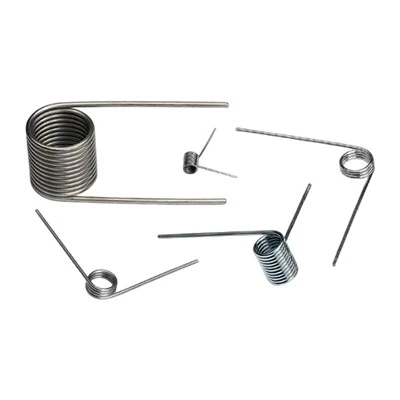
Let’s start with the basics. A spring is essentially an elastic object that stores mechanical energy when it’s deformed and releases it when it returns to its original shape. The diameter of the spring steel wire used to make the spring plays a crucial role in determining how well the spring performs.
1. Stiffness
Stiffness is one of the most important properties of a spring. It refers to how much force is required to deform the spring by a certain amount. In simple terms, a stiffer spring is harder to compress or stretch.
The diameter of the spring steel wire has a direct impact on the spring’s stiffness. As the diameter of the wire increases, the spring becomes stiffer. This is because a thicker wire has more material, which means it can resist deformation better. For example, if you have two springs with the same number of coils and the same outer diameter, but one is made with a thicker wire, the spring with the thicker wire will require more force to compress or stretch it.
Let’s say you’re designing a suspension spring for a car. You need a spring that can support the weight of the car and provide a smooth ride. If you use a wire with a small diameter, the spring may be too soft and won’t be able to support the weight of the car effectively. On the other hand, if you use a wire with a very large diameter, the spring may be too stiff, and the ride will be harsh. So, finding the right wire diameter is crucial for getting the desired stiffness.
2. Load Capacity
Load capacity is another important factor to consider when it comes to spring performance. It refers to the maximum amount of force that a spring can withstand without permanent deformation.
Just like stiffness, the load capacity of a spring is also affected by the diameter of the spring steel wire. A spring made with a thicker wire can generally handle a higher load than a spring made with a thinner wire. This is because a thicker wire has more cross – sectional area, which means it can distribute the load more evenly and resist failure.
For example, in a heavy – duty industrial application, like a crane or a large machinery, you’d want springs with a high load capacity. Using a spring with a small – diameter wire would risk the spring deforming permanently under the heavy load, which could lead to equipment failure. So, suppliers like me often recommend using thicker – diameter wires for high – load applications.
3. Fatigue Life
Fatigue life is the number of cycles a spring can undergo before it fails due to repeated loading and unloading. It’s a critical factor, especially in applications where the spring is constantly in use, such as in engines or vibrating machinery.
The diameter of the spring steel wire can have a significant impact on the fatigue life of a spring. Generally, a spring made with a thicker wire has a longer fatigue life. Thicker wires are more resistant to the formation and propagation of cracks that can lead to fatigue failure.
Imagine a spring in a piston engine. It’s constantly being compressed and released with each engine cycle. A spring made with a thin wire may develop cracks more quickly due to the repeated stress, leading to a shorter fatigue life. Using a spring made with a thicker wire can help ensure that the spring lasts longer and reduces the need for frequent replacements.
4. Deflection
Deflection refers to how much a spring deforms when a force is applied to it. The diameter of the spring steel wire affects the deflection characteristics of a spring.
A spring made with a thinner wire will generally have a larger deflection for a given force compared to a spring made with a thicker wire. This is because the thinner wire is more flexible and easier to deform. In some applications, such as in a pogo stick, a larger deflection is desired to provide more bounce. So, thinner – diameter wires may be more suitable for such applications.
On the other hand, in applications where precise control of the deflection is required, like in a measuring instrument, a spring made with a thicker wire may be a better choice. Thicker wires provide more stability and less deflection variation under load.
5. Cost
Of course, we can’t forget about cost. The diameter of the spring steel wire also has an impact on the cost of the spring. Generally, thicker – diameter wires are more expensive than thinner – diameter wires. This is because they require more raw material and may also be more difficult to process.
When choosing the wire diameter for a spring, you need to balance the performance requirements with the cost. For example, if you’re making a low – cost consumer product where the spring doesn’t need to withstand extremely high loads or have a very long fatigue life, using a thinner – diameter wire can help keep the cost down. However, for high – performance applications where reliability is crucial, investing in a thicker – diameter wire may be worth the extra cost.
As a spring steel wire supplier, I’ve seen all sorts of situations where the right choice of wire diameter can make a huge difference in the performance of the spring. Whether you’re an engineer designing a new product or a manufacturer looking for the best materials for your springs, understanding how the wire diameter affects spring performance is essential.
If you’re in the market for spring steel wire and need help choosing the right diameter for your application, don’t hesitate to reach out. I’m here to share my expertise and assist you in finding the perfect wire for your springs. We can discuss your specific requirements and come up with a solution that balances performance and cost. Contact me to start a conversation about your spring steel wire needs.
Spring Steel Wire References
- "Spring Design Handbook", Authored by Clarence H. Ham, McGraw – Hill Professional
- "Mechanical Springs: Their Design, Manufacture, and Testing", By A. M. Wahl, Industrial Press Inc.
Baoding Zhongxin Spring Manufacturing Co., Ltd.
We’re known as one of the most reliable spring steel wire manufacturers and suppliers in China. With abundant experience, we warmly welcome you to buy durable spring steel wire made in China here and get pricelist from our factory. All customized springs are with high quality and competitive price.
Address: West Side, 200 Meters North of Chenzhuang Gas Station, Pangkou Town, Gaoyang County, Baoding City, Hebei Province, P.R. China
E-mail: 13292951555@163.com
WebSite: https://www.zhongxinind.com/
