When I first started as a rolling door supplier back in 2007, I used to hear my customers ask the same question every week: “Do I really need a fire-rated rolling door, or will the regular one work?” Back then, I didn’t have all the answers straight—just the ones I’d picked up from installing a few doors and dealing with a couple of code violations down the line. Over the past 16 years, though, I’ve installed hundreds of both types, worked with fire marshals in three states to figure out what makes a door actually “fire-rated,” and talked to enough small business owners who thought they could save a few bucks only to get hit with massive repair bills. Today, I want to break down the cost difference between regular and fire-rated rolling doors, not as a textbook, but as someone who’s stood on a job site at 2 a.m. fixing a door that didn’t pass inspection, and listened to a shop owner cry because he bought the wrong door. Rolling Door

Let’s start with the basics: what’s actually the difference between a regular rolling door and a fire-rated one, beyond the label? A regular rolling door—what we call a “standard commercial rolling door”—is made from 24-gauge steel, usually with a single layer of metal, no insulation, and a basic break-down mechanism. It’s designed to keep out weather, block noise, and stop people from walking in when you’re not around. That’s great for a retail storefront, a garage that doesn’t have any flammable materials, or a warehouse where the only thing inside is office supplies. But a fire-rated rolling door? That’s built for a totally different job. It has double-layered steel, often with a core that expands when exposed to heat to seal gaps, a reinforced frame that doesn’t warp when temperatures hit 1,000 degrees Fahrenheit, and it has to pass a three-hour fire resistance test by a third party—we use UL 10B or NFPA 80 standards, for anyone who cares about the numbers. It’s not just a label; it’s a door that’s been proven to slow fire and smoke from spreading between two spaces for the exact time period it’s rated for.
Now, the cost difference. I get it—money matters. When a shop owner is budgeting $15,000 for a new storefront, an extra $2,000 for a “special” door can feel like a waste. But let’s be real: there’s upfront cost, and then there’s hidden cost. I’ll break this down into two parts: upfront purchase and installation cost, and long-term cost. That’s the part most suppliers will skip, because they just want to sell you the door that gives them the highest markup.
Upfront, a standard 10-foot-wide by 10-foot-tall regular rolling door will run you between $1,200 and $1,800, depending on the gauge of steel and the motor you pick. Fire-rated doors for the same size? That’s $2,500 to $3,500. So on the surface, that’s a $1,300 to $1,700 difference. But wait—installation cost? For a regular door, installation is $300 to $500. For a fire-rated door, the installation process takes longer. We have to frame the door with fire-resistant blocks around the sides and top, make sure the gap between the door and the frame is no more than 1/8 inch, and test the actuation mechanism to make sure it closes automatically when the fire alarm goes off. That adds another $400 to $600 to installation. So now the total upfront difference is between $1,700 and $2,300 for that same 10×10 door. Still a chunk of change, right? But let’s talk about the stuff you don’t see on the quote.
First, code compliance. If you’re installing a door in a space that requires a fire-rated door—like a self-storage facility, a warehouse with palletized wood, a restaurant kitchen door leading to a storage area, or a multi-story commercial building—you have to have that third-party certification. In my time, I’ve had three customers who tried to cut corners with a regular door and got a $12,000 fine from the fire marshal. One of them was a self-storage owner in Dayton, Ohio, who installed regular doors on four units. The fire marshal showed up during a routine inspection, saw the doors weren’t rated, and shut down half the facility until they replaced them. He ended up paying a $5,000 fine, plus $8,000 to replace four doors with fire-rated ones. That’s $13,000 he could’ve avoided if he’d just spent an extra $6,000 upfront. I remember that guy—he called me a week after the fine, and he was so mad at himself. He said he’d seen a competitor quote a cheaper regular door, so he went with them, and regretted it immediately.
Then there’s the long-term maintenance. A regular rolling door is super low-maintenance. You wipe it down once a year, lubricate the chain, and that’s it. A fire-rated door? You have to get it inspected every year by a certified fire protection technician. That inspection costs between $150 and $250 a year. Also, if something does go wrong—like if the motor stops working, or a part of the door gets dented—you can’t just replace it with a regular part. Fire-rated doors require parts that are also fire-rated, which are more expensive. For example, a regular rolling door motor costs $200, but a fire-rated door motor costs $450. Last year, I had a customer in Indianapolis whose fire-rated door motor died. He tried to install a regular motor from a hardware store, and when the fire marshal did his annual inspection, he failed the door because the motor wasn’t UL-listed for fire resistance. So he had to buy the correct motor, which cost $450, plus a $300 re-inspection fee. That’s $750 he wouldn’t have spent if he’d just bought the right door in the first place.
Another big one: insurance. Most commercial insurance policies charge lower premiums if you have fire-rated doors. Why? Because they reduce the risk of fire spreading, which means fewer claims. I’ve had customers who switched from regular doors to fire-rated ones and saw their insurance go down by 5 to 10 percent a year. For a $1 million policy, that’s $5,000 to $10,000 a year in savings. Over 10 years, that’s $50,000 to $100,000. That’s way more than the extra $2,000 you pay upfront for the door. But most people don’t think about insurance when they’re buying a door—they only think about the immediate cost.
Wait, but let’s not pretend fire-rated doors are always necessary. There are plenty of places where a regular rolling door works just fine. If you’re installing a door for a backyard workshop that’s 100 feet away from the main house, if you have a garage that doesn’t store any flammable materials, or if you’re putting a door on a storage unit that’s in a space with no other units nearby, a regular door is totally fine. The problem is when people use the wrong door for the wrong space. I had a customer last year who owned a small bakery in Columbus, Ohio. He wanted to put a door between his kitchen (where he stores flour, oil, and baking sheets—super flammable) and his walk-in cooler. He tried to get a regular door because it was cheaper, but his architect told him he needed a fire-rated one. He fought it for a month, then finally caved. When we installed the door, he told me he was glad he did, because he’d seen a bakery down the street have a small grease fire in their kitchen. The fire spread to their storage area, but the fire-rated door between the kitchen and storage stopped it from getting to the front of the shop. He said it would’ve been a total loss if he’d gone with the regular door.
I want to be clear here: I’m not pushing fire-rated doors on every customer. I’ve sold regular doors to people who didn’t need them, and I’ve sold fire-rated doors to people who did. The key is knowing the difference, and knowing when the extra cost is worth it. Let’s do a quick cost comparison over 10 years, using that 10×10 door we talked about earlier. Regular door: upfront cost $1,500, maintenance $100 total over 10 years (just lubrication and cleaning), no insurance savings. Total cost over 10 years: $1,600. Fire-rated door: upfront cost $3,000, annual inspections $2,000 over 10 years, parts replacement $1,000 over 10 years, insurance savings $7,500 over 10 years. Wait, that adds up to $3,000 + $2,000 + $1,000 – $7,500 = -$1,500. So over 10 years, you actually save money with a fire-rated door? That blows most people’s minds when I show them the numbers. But that’s the reality—when you account for all the hidden costs, the fire-rated door is cheaper in the long run for most commercial spaces that need one.
I’ve also had customers argue that a fire-rated door is too heavy, or harder to operate. But modern fire-rated doors are actually as easy to use as regular ones. We use the same motor systems, the same remote controls, the same break-down mechanisms. The only difference is the steel thickness and the certification. A lot of people think they have to crank a fire-rated door manually, but that’s not true anymore. The technology has come a long way in the last 10 years.
Another thing to consider: resale value. If you’re a business owner looking to sell your property, having fire-rated doors on all your commercial openings is a big selling point. It tells the next owner that you’ve complied with all safety codes, and that the property is less risky to insure. I had a customer who sold his auto repair shop in Cincinnati last year, and the buyer offered him $15,000 more because all the doors were fire-rated. The buyer said he didn’t have to spend $20,000 to replace all the doors with fire-rated ones, so he was willing to pay more. That’s a return on investment most people don’t think about.
Now, let’s talk about common myths. A lot of people say “a regular door will stop a small fire, right?” No. I’ve seen a test where a small grease fire was set behind a regular rolling door. After 10 minutes, the steel door warped, and the fire went right through to the other side. The same test with a fire-rated door: after three hours, the door was still intact, and the fire never spread. Another myth: “fire-rated doors are only needed in big buildings.” No. A small restaurant, a self-storage unit, a home workshop that’s attached to the main house—all of these can benefit from a fire-rated door, depending on their use.
At the end of the day, the cost difference isn’t just about the price tag on the door. It’s about risk, compliance, long-term savings, and safety. If you’re a small business owner, a warehouse operator, or someone managing a multi-unit property, the extra cost of a fire-rated rolling door is worth every penny. It’s not just a door—it’s peace of mind.
I’ve been in this business long enough to know that saving a few bucks upfront can lead to years of headaches, fines, and even loss of property. I’ve seen it happen too many times. That’s why I always tell my customers: don’t look at the initial quote. Look at the total cost over the life of the door, and look at what’s at risk if you get it wrong.
If you’re not sure which door is right for your space, reach out to us. We’ll send someone out to assess your property, tell you exactly what you need, and give you a transparent quote that includes all the costs—upfront, maintenance, and compliance. We don’t push unnecessary products, but we do make sure you’re protected.
When I started this business, I promised myself that I’d be the kind of supplier that tells customers the truth, even if it means losing a sale. That’s why I still remember the self-storage owner in Dayton who got fined—he came back to me last year when he needed new doors, and he told me I was the only supplier who’d warned him about the code in the first place. I didn’t charge him extra for that advice, and I didn’t make him feel bad for making a mistake. That’s the kind of relationship we build here.
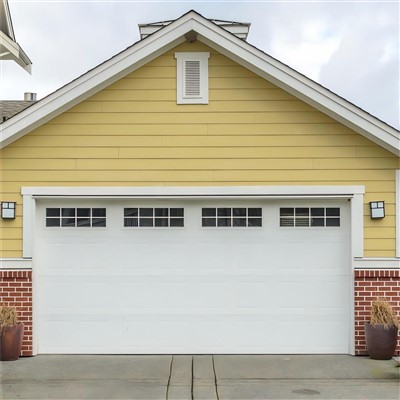
Insulated Garage Door So if you’re shopping for rolling doors, take the time to ask questions. Ask about certification, ask about code requirements in your area, ask about long-term costs. Don’t just go with the cheapest quote. Because when it comes to your business, your property, and the safety of your employees and customers, the extra few thousand dollars for the right door is the best investment you can make.
Hangzhou Shenborui Industry & Trade Co., Ltd.
We are one of the most professional rolling door manufacturers and suppliers in China, specialized in providing high quality custom service for global clients. We warmly welcome you to buy high-end rolling door at competitive price from our factory.
Address:
E-mail: markrod@163.com
WebSite: https://www.markrod.com/
