As a functional display rack supplier who’s spent the past 12 years designing, manufacturing, and delivering these racks to retail chains, grocery stores, electronics brands, and even pop-up event planners, I can’t tell you how often I get asked one thing: “What are the typical dimensions of a commercial functional display rack?” It’s a question that sounds simple, but the answer is anything but one-size-fits-all. When I first started in this industry back in 2011, I’d try to give a generic height and width, only to get a follow-up call from a client in Portland whose 1,200-square-foot boutique had a 9-foot ceiling, or a chain of convenience stores in Texas where overhead clearance for loading docks meant no rack could be taller than 7 feet. That’s why, after thousands of custom orders and repeat clients, I’ve learned to break down dimensions not just by “standard” numbers, but by the space they fit, the products they hold, and the rules of commercial use that dictate every inch. Functional Display Rack

First, let’s start with the two most non-negotiable dimensions for any commercial display rack: height and width. These are the ones that tie directly to the physical space the rack lives in, and that’s where 90% of my clients go wrong when they try to source from a generic big-box retailer. Most commercial spaces have unwritten rules, or in some cases strict building codes, for how much floor space a display can take up. For narrow storefronts, like the ones that line Main Streets in small towns, you can’t get a rack that’s wider than 24 inches—any more, and it will block foot traffic, which is the lifeblood of small retail. That’s our most popular narrow format: 24 inches wide, which is perfect for placing next to checkout counters, along hallway walls, or in the entryway of a convenience store where there’s only a 2-foot gap between the doorframe and the end cap of a neighboring fixture. It’s also the standard for endcap displays that hold small, high-margin items: lip balms, phone chargers, snack bars, or travel-sized toiletries. The depth for these racks usually lands at 12 inches, which is just enough to hold two rows of products without making the back row impossible to reach.
But for mid-sized retail spaces—think a neighborhood grocery store’s aisle endcap, or a clothing boutique’s floor display—the sweet spot for width jumps to 36 inches. That’s the gold standard for endcaps in grocery and drug stores because it balances visibility with floor space. A 36-inch wide rack lets you fit a full shelf of canned goods, a stack of cereal boxes, or a row of folded t-shirts, without taking up too much of the aisle. For larger operations, like big-box stores or warehouse clubs, we do 48-inch wide display racks, often used as freestanding island displays in the middle of aisles. We only recommend those for spaces with at least 4 feet of aisle clearance on each side, because a 48-inch wide rack can easily block carts if the aisle is too narrow.
Height is even more dependent on ceiling clearance and how customers interact with the display. The biggest mistake I see is someone ordering a 10-foot tall rack for a store with an 8-foot ceiling. Not only is it unsafe (all commercial racks have weight limits that change with height, since a taller center of gravity makes the rack more prone to tipping), but any part of the rack higher than eye level is wasted space. Studies we’ve worked with retail clients on show that customers can’t see or reach items above 68 inches without standing on their toes, which only 15% of shoppers are willing to do. So for low-ceiling spaces (under 9 feet), our go-to height is 60 inches. That puts the top shelf right around eye level for an average adult, and leaves enough clearance for ceiling-mounted lighting that’s required in most commercial spaces. For mid-ceiling spaces (9 to 11 feet), we use 72-inch tall racks. This adds a 12-inch upper shelf that customers can still reach if they’re tall, and it fits nicely under standard fluorescent or LED ceiling fixtures that hang 18 to 24 inches below the ceiling. For high-ceiling spaces, like warehouses, pop-up event halls, or a department store’s open floor, we do 84-inch or 96-inch tall racks—but only if the client confirms the space has at least 12 feet of total clearance. We never go taller than 8 feet for any freestanding display in a retail space where carts or foot traffic will be constant; those 8-foot and up racks always require optional anti-tip brackets that we engineer right into the design, so clients don’t have to add extra hardware later.
Now, the third dimension that’s just as important, but rarely talked about: depth. This is where a lot of new suppliers cut corners, and where we’ve built our reputation by getting it right. Depth is measured from the front edge of the rack to the back, and it determines how much product you can display without items falling off or being hidden. For front-facing displays, like the ones that line grocery store aisles, 15 inches is the industry standard. That’s enough depth to hold a standard 12-ounce soda can, a cereal box, or a 12-inch product shelf with 3 to 4 rows of items. But for countertop display racks, the ones that sit on checkout counters, we keep depth to 10 inches max. Counter space is at a premium—even a 12-inch deep rack can take up half of a standard checkout counter, which needs space for scanners, payment terminals, and cash registers. For clothing racks, the depth shifts too: a single-tier clothing display rack for t-shirts has a depth of 18 inches, while a double-tier rack for dresses or jackets is 24 inches, because garments need space to hang without overlapping.
What about custom dimensions? I get this question all the time, especially from new clients who have a unique space or a specific product line. The beauty of being a functional display rack supplier is that we don’t just stick to “typical” dimensions—we work with clients to adjust based on their exact needs. For example, a craft beer distributor in Denver came to us last year with a space in a grocery store’s specialty beer aisle that was only 22 inches wide, between a wine display and a refrigerated case. We built a custom 21-inch wide rack, with a 14-inch depth, to fit exactly in that gap, and added adjustable shelf dividers for the different beer can sizes. Another client, a pop-up brand that sells reusable water bottles, needed a tall display rack for a trade show booth, but they wanted it to be light enough to transport. We built a 70-inch tall rack (2 inches shorter than our standard mid-height) with a depth of 12 inches, which made it easy to pack for trade shows while still holding 40 bottles across four shelves. The only time we can’t adjust dimensions is when it comes to compliance: all commercial display racks have to meet ASTM International safety standards for weight capacity and stability, so we can’t make a rack narrower than 18 inches wide (that would make it too top-heavy for standard retail use) or taller than 10 feet without additional structural reinforcements.
Let’s also talk about the typical dimensions for specialized functional display racks, because not all displays are for small goods or clothing. Cooler display racks, the ones that hold beverages or dairy products in grocery stores, have their own set of standards. Those racks are usually 12 to 18 inches deep, designed to fit inside standard commercial refrigerated cases, and they’re built with lightweight, rust-resistant materials that can handle the constant humidity and temperature changes. For point-of-purchase (POP) display racks, the small, eye-level stands that hold candy, batteries, or skincare products at checkout, the standard dimensions are 18 inches tall, 12 inches wide, and 6 inches deep. Those are engineered to fit exactly on checkout counters, and their small size is intentional—they’re meant to catch the eye of a shopper waiting in line, not block the counter space they need.
I’ve learned over the years that the “typical dimensions” people ask for are just a starting point. A client in a small boutique might need a 22-inch wide, 60-inch tall rack, while a national grocery chain needs 36-inch wide, 72-inch tall endcaps, and a food truck might need a 15-inch wide, 48-inch tall counter rack. That’s why our process starts with a free consultation: we ask clients to measure their space, tell us what products they’re displaying, and share any concerns about foot traffic, clearance, or transport. We don’t just send a catalogue of standard racks—we design a solution that fits their exact needs, because that’s what functional display racks are for: they’re supposed to work for your products and your space, not the other way around.
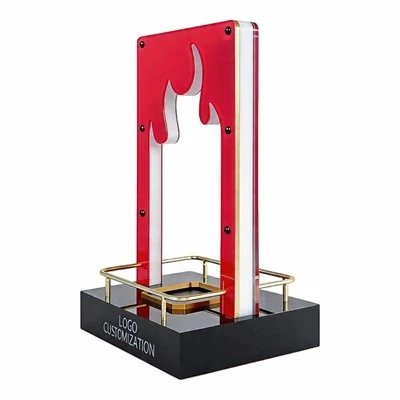
If you’re not sure what dimensions will work for your store, event, or brand, or if you’re looking for custom functional display racks that fit your unique space, we’re here to help. Our team can walk you through the options, adjust dimensions to meet your needs, and make sure your display is safe, visible, and functional. Reach out to our team today to start a conversation about your display rack needs.
Office Supplies References
- ASTM International. (2021). Standard Safety Specification for Commercial Display Racks. ASTM F2058-21.
- National Retail Federation. (2022). Retail Space Optimization Guidelines for In-Store Displays. NRF Retail Operations Report.
- Food Marketing Institute. (2023). Endcap Display Dimensions and Aisle Clearance Standards. FMI Store Design Manual.
- Pop-Up Association. (2022). Trade Show Display Design and Portability Guidelines. Pop-Up Industry Best Practices.
Shenzhen Xingzhong Display Products Co., Ltd.
As one of the most professional functional display rack suppliers in China, we’re featured by quality products and good service. We warmly welcome you to buy customized functional display rack made in China here from our factory. If you have any enquiry about quotation and free sample, please feel free to email us.
Address: 80 Tangkeng Road, Biling Street, Pingshan District, Shenzhen, Guangdong Province
E-mail: leo@xzdisplay.com
WebSite: https://www.xzdisplay.com/
