Hey there, if you’re deep in the market for high speed spindle bearings—whether you’re a machine shop owner, a manufacturing engineer, or someone just trying to wrap your head around why those tiny, critical parts cost what they do—chances are you’ve stared at a quote and thought, “Wait, that’s a huge range.” As a supplier that’s been in this game for over a decade, I field this question every single day: What’s the actual price range for these things? Let’s cut through the confusion, skip the jargon, and talk real numbers, real factors, and what you’re actually paying for when you pick a bearing for your spindle. High Speed Spindle Bearings
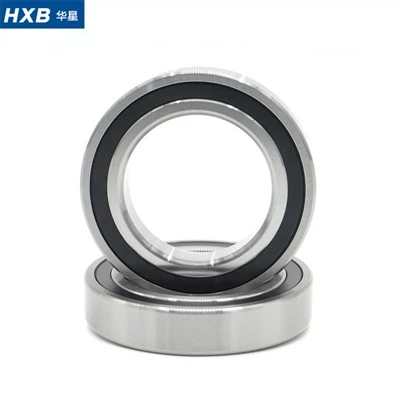
First off, let’s level set—high speed spindle bearings aren’t your average ball bearings you’d grab for a garage door or a cheap fan. These are the workhorses that keep CNC mills, lathes, routers, and even medical device machinery spinning at 10,000 RPM or more, sometimes way higher. A dud bearing here doesn’t just make noise; it can wreck a $10,000 part, shut down production for days, and cost you way more in downtime than the bearing itself. So pricing isn’t just “expensive vs. cheap”—it’s tied directly to what your spindle needs to do. That’s the biggest mistake I see new buyers make: shopping for the lowest number without matching the bearing to their application.
Now, let’s get to the range. Most people split these into three buckets, and that’s a good way to frame it because there’s a reason each bucket exists. The entry-level stuff starts around $50, right up to about $200 per bearing. Wait, hold on—before you think that’s a steal, let’s be clear: these are the standard, off-the-shelf bearings, usually made of regular chrome steel, with basic precision grades (think ABEC 1 or ABEC 5, if you know those numbers). They work great for low-demand, low-RPM applications—like a hobbyist CNC router that only cuts soft wood, or a small lathe that runs at 8,000 RPM max, no heavy cuts, no 24/7 operation. I’ve seen a lot of guys jump on these because they’re cheap, but here’s the catch: they don’t last. Push them too hard, run them above their rated speed, or use them for metal cutting, and they’ll burn out in a few months. I had a customer last year who bought a set of these for his 12,000 RPM milling spindle and called me a week later because they seized up mid-job. He saved $150 upfront, but lost a $2,000 aluminum part and a full day of production. That’s the kind of math that never adds up.
Next up is the mid-range, and this is where most professional machinists and small to mid-sized manufacturing teams land. These run from roughly $200 to $800 per bearing. What makes this different from the entry stuff? First, the material: most are made of high-grade chrome steel or sometimes silicon nitride ceramic balls, which are lighter, run cooler, and handle higher speeds. The precision grade jumps to ABEC 7 or P4, which means tighter tolerances—less vibration, more consistent part quality. There’s also better sealing; these bearings come with contact or non-contact seals to keep out metal shavings, coolant, and dust, which is non-negotiable for industrial use. I sell a lot of this tier to job shops that run 8-hour shifts, cut steel and aluminum, and need bearings that last 1 to 3 years with regular maintenance. The other day, a customer from a local aerospace shop told me he’d been buying entry-level bearings for his production mills and replacing them every 6 months. Switched to mid-range, and now he only has to change them every 2.5 years. The math here works: $600 per bearing vs. $100, but over 2 years, that’s $1,200 vs. $1,200 plus downtime. It’s a no-brainer once you factor in the hidden costs.
Then there’s the top tier, and this is for the big players, high-precision applications, and extreme conditions. These bearings start around $800 and go all the way up to $5,000 or more per bearing. What justifies that price? Let’s break it down. First, the materials: a lot of these use full ceramic construction—inner ring, outer ring, balls, all silicon nitride. Ceramic is way harder than steel, so it resists wear, runs 20-30 degrees cooler, and can spin at 20,000 RPM or higher, no problem. They also handle high loads without deforming, which is critical for heavy-duty metal cutting or high-precision work like medical implants or aerospace components where even a 0.001mm vibration ruins a part. The precision grade here is P2 or even P4 Ultra, which is way tighter than what most people need. There’s also customization: these can be engineered for specific spindles, modified for unique mounting, or paired with advanced lubrication systems (like grease that’s formulated for high speeds, or even oil mist). I sold a set of these last year to a company that makes surgical routers—their spindles run at 50,000 RPM, and if a bearing fails, it’s not just a part lost; it’s a safety risk for patients. Those bearings cost over $4,000 each, but they go 5 years without replacement. When your work can hurt people or cost millions in product recalls, that price is nothing.
Wait, but before you go writing that number off as crazy, let’s talk about the hidden factors that shift pricing even within these tiers. The first big one is speed rating. A bearing rated for 10,000 RPM is way cheaper than the same model rated for 30,000 RPM. The higher the speed, the more engineering goes into the design—smaller balls, modified raceways, better sealing to handle centrifugal force. Then there’s the load capacity. If you’re cutting thick steel, you need a bearing that can handle radial and axial loads without flexing. That extra strength adds to the cost. Material is another huge one: ceramic balls can double the price of a steel bearing, and full ceramic is even more. Precision grade is a big one too—ABEC 7 is standard for industrial, P4 is for high-precision, and P2 is for ultra-high-precision, with tolerances so tight you can barely feel a difference if you roll them between your fingers.
Also, don’t forget about the quantity. If you’re buying 10,000 bearings at a time for a mass production line, you’ll get a way better per-unit price than if you’re a hobbyist buying 2 for your home shop. And brand? Wait, I know a lot of guys will say “I’ll buy a no-name bearing from Alibaba for $30,” but here’s the thing: most of those aren’t actually high speed spindle bearings. They’re repackaged standard ball bearings, mislabeled. I’ve tested a bunch of them, and they seize up at half their rated speed. When you’re buying from a reputable supplier, you’re not just paying for the metal—you’re paying for testing, quality control, and a warranty. If a good bearing fails under normal use, I’ll replace it no questions asked. That’s worth something.
Let me also clear up a common myth: more expensive doesn’t always mean better. I’ve had customers come to me saying they bought a $1,500 bearing because someone told them it’s the best, but it’s overkill for their application. If your spindle only runs at 8,000 RPM, cuts soft wood, and is only used part-time, a $200 mid-range bearing will work just as well as a $1,500 top-tier one, and you’ll waste money. The key is matching the bearing to your exact needs, not just chasing the highest price tag.
So, to wrap up the actual range: for most people—small to mid-sized manufacturing, job shops, hobbyists running professional CNCs—you’re looking at $50 to $800 per bearing. If you’re doing high-speed, high-precision work or extreme conditions, it can go higher than that. The worst mistake you can make is guessing at the price or going for the cheapest option without doing your homework.
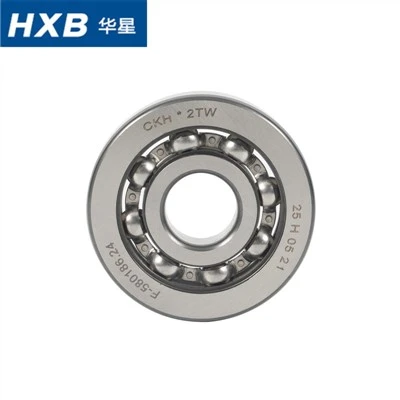
At the end of the day, these bearings are the backbone of your spindle. A good one lets you run faster, make better parts, and spend less time replacing parts. A bad one costs you downtime, ruined parts, and headaches. If you’re not sure which tier is right for you, or you want a customized quote for your specific spindle, hit me up to chat through your needs. No hard sells, no confusing jargon—just real talk about what will work for your operation.
Deep Groove Ball Bearings References:
- Harris, T. A., & Kotzalas, M. N. (2007). Rolling Bearing Analysis (5th ed.). Wiley.
- American Bearing Manufacturers Association. (2020). Precision Ball Bearing Standards.
- Shimizu, T. (2018). Ceramic Bearings for High-Speed Industrial Spindles. Tribology International.
- VDI 2843. (2019). Design and Operation of High-Speed Spindles in Machine Tools.
Hangzhou Huaxing Kechuang Holding Group Co., Ltd.
Hangzhou Huaxing Kechuang Holding Group Co., Ltd. is one of the leading manufacturers and suppliers of high speed spindle bearings in China, featured by quality products and good service. Please rest assured to buy bulk durable high speed spindle bearings from our factory. Welcome to view our website for more information.
Address: No.553 Yingbin Road, Linping, Hangzhou, 311100, China
E-mail: wmb@huaxingbearing.com
WebSite: https://www.hxbbearing.com/
